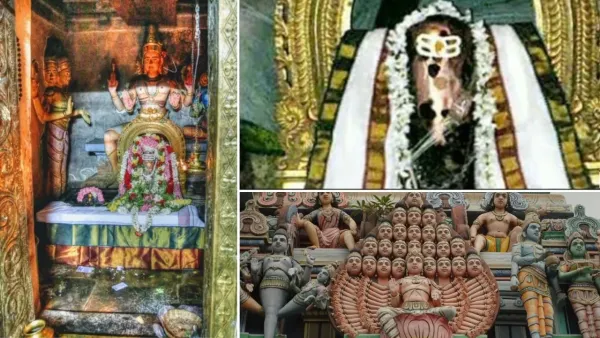
New Delhi: In the quiet village of Nallur near Thanjavur stands Kalyanasundaresar Temple, a sacred space known for an extraordinary daily ritual. The Shivalinga worshipped here is believed to change colour five times over the course of a day, drawing devotees at different hours. Each shift aligns with specific prayers and forms of worship, turning time itself into part of devotion. The experience feels deeply personal and rooted in faith.
Beyond its spiritual pull, the temple carries centuries of history, multiple rituals, and strong local belief. Visitors arrive not just to pray, but to witness a rare phenomenon that continues without explanation. The temple remains open to people of all faiths, offering a space where reverence, curiosity, and tradition quietly meet. Here is everything you need to know.
Key highlights of Kalyanasundaresar Temple
Kalyanasundaresar Temple location
Kalyanasundaresar Temple is located around seven kilometres from Thanjavur in Tamil Nadu. Nallur village, though small, holds several important shrines, making it a familiar stop for pilgrims travelling across the region. The temple architecture reflects classical South Indian style, marked by detailed stone carvings and age-old sculptures.
Temple dedicated to Shiva and Muruga
The shrine honours Lord Shiva as Kalyanasundaresar and also holds significance for Lord Muruga. Historical records trace the temple’s origins to nearly a thousand years ago, during the reign of Rajaraja Chola I. Over time, renovations have preserved its structure while keeping its spiritual practices intact.
Black Pagoda and its two lingams
The temple is often called the Black Pagoda due to the presence of two black stone lingams. One rests inside the sanctum and is covered with gold. The second stands closer to the entrance and is coated with sandalwood paste every morning. By mid-morning, it takes on a glowing appearance that welcomes devotees arriving for worship.
Five forms of worship
The presiding deity is believed to appear in different forms across the day. Morning prayers present Lord Shiva as Vaidyanatha, adorned with a golden crown and accompanied by Nandi. Afternoon worship focuses on other revered forms, with devotees offering flowers and sandalwood paste according to tradition.
Shivalinga and its changing colours
The most striking belief surrounding the temple centres on the Shivalinga’s changing colours. It appears black during morning rituals, white in the afternoon, red in the evening, light blue at night, and bright green during the midnight service. Visitors arriving at different times witness a distinct hue, adding meaning to each visit.
Belief behind this phenomenon
Devotees see the colour changes as a divine act guided by Lord Shiva himself. There is no accepted scientific explanation, nor any suggestion of human intervention. This belief strengthens the temple’s spiritual importance, as the phenomenon is viewed as natural, sacred, and beyond control.
Kalyanasundaresar Temple continues to stand as a place where time, colour, and devotion come together. Its rituals invite patience, belief, and presence, offering visitors a reminder that faith often lives in quiet, changing moments rather than fixed answers.
-
Universities In South Korea Are Rejecting Top Applicants With A History Of Bullying

-
4 Zodiac Signs Attract Abundance & Luck On February 1, 2026

-
Mumtaz’s ‘Tajmahal necklace’ on the neck of the Hollywood actress! ‘Return the loot’, came the sharp sarcasm

-
How To Pre Order WWE 2k26

-
Weekly Business News: Everything from Startup Layoffs to UPI’s Global Leap