For people who are interested in cars as more than basic transportation, the temptation to modify and customize their vehicles can often be too hard to resist. The modifications themselves can be small and simple or extensive projects like engine swaps. Some of the mods might be performance-focused, while other mods can greatly improve the car in non-performance aspects.
No matter what type of modifications you are considering, doing research is key, because very often mods can have downsides you might not consider. They might make your car ride worse, lower its resale value, void its warranty — and in some extreme cases, even prevent a car from being legally able to drive on the road.
Likewise, other mods will simply end up making your car look tacky, cheap, or uncool. Now obviously taste is subjective when it comes to car modifications, and one person’s tacky might be another person’s super-cool. But by and large, there are some aftermarket modifications in particular that have a fairly wide-reaching reputation for making a car look tacky and cheap. A lot of these mods will have other issues besides just a tacky image, and we’ve rounded up five particularly bad offenders that are likely to be looked down upon by the car enthusiast community.
Fake badges
Obviously, there are going to be mixed opinions on some of these selections, but if there’s one tacky and cheap modification that receives near universal condemnation from car enthusiasts, it’s putting fake or misleading badges on your car. The act of putting fake badges on a car to make it look like something it’s not has been around for a long time. It might be a base model V6 Mustang with “GT 5.0” badging on the fender or a lowly commuter-grade Honda Civic lazily trying to pass itself as a Type R.
Globally, though, it’s probably BMW owners who have a reputation for being the biggest offenders when it comes to faking the legendary BMW ‘M’ badge onto lesser, non-M models. In their defense, BMW itself has been a lot more liberal with its M-branding in recent years, but that’s still no justification for trying to cheaply cosplay a base-model 3-series into being an M3.
On a more psychological level, this is also a bit of a catch-22 situation. In the real world, the only people who would actually care or be impressed by your car’s badging are likely the same people who know enough about a BMW M3 or Mustang GT to see that your badges are fake. In other words, the only person you’ll truly be fooling with this mod is yourself.
Blacked out headlights and taillights
There are a lot of reasons why you probably want to avoid blacking out or tinting your car’s headlights or taillights. For starters, it can be very unsafe and increase the likelihood of being rear-ended. Depending on where you live, tinted or smoked lights can also be illegal. There’s also the aesthetic factor. Are blacked-out headlights or taillights actually better-looking? Or is it just that they’re different?
It’s not just the aesthetics or safety factor that turns off a lot of car enthusiasts, either. The online consensus among a lot of car enthusiasts is that blacked-out lights are both tacky and dated. There’s also a sense that blacking out your lights is something done only because it’s a cheap and easy way of “modding” a car to look different .
As a general rule of thumb, car modifications should never be done just for the sake of modifying. And if that’s the only reason you are considering a modification, it’s almost certainly worth stepping back and re-evaluating your plans. With that said, if you want darker aftermarket lights that don’t look tacky, you have options. For most popular cars, you can find more tasteful, dark-finished, or black housing versions of headlights and taillights that can be installed without looking cheap or impeding safety.
Excessively loud exhaust
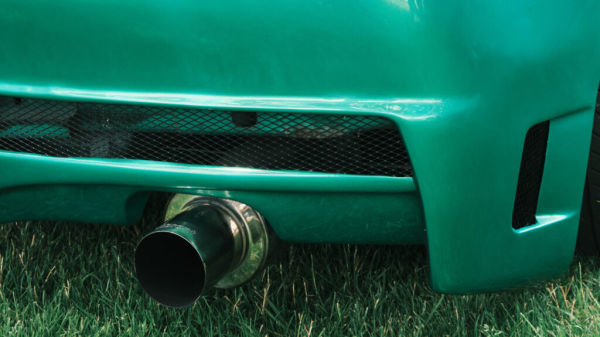
A great-sounding or properly amplified exhaust note can be one of the best things about a car. Conversely, an obnoxiously loud or poor-sounding exhaust can also be one of the absolute worst things about a car. Louder for the most part does not equal better, and sometimes tackiness can be about sound rather than just looks.
Loud exhausts are more acceptable on a car built primarily for track use or something that’s strictly a weekend toy. But on a daily driver, an unnecessarily loud exhaust can is likely to be a noise nuisance to the general public and could get you a ticket from the cops. Likewise, the enthusiast community is often unapproving of cheap, loud exhaust setups that bring unwanted noise and attention at car meets and can make a car feel like it’s ‘all bark and no bite.’
As with fake badges, in the real world, there probably aren’t too many people who are going to be impressed by an obnoxious, tacky exhaust system on an otherwise normal car. There’s also the aesthetic factor of the muffler itself to consider, including its size, location, and how it fits the bumper. All of these factors can take an exhaust system from being the perfect upgrade to a recipe for pure annoyance.
Cheap aftermarket tires
Wheels and tires can make or break a car, and that potential is a big reason why aftermarket wheels and tires are one of the most popular modifications out there. But when modifying your car, it’s important not to treat tire selection as an afterthought or to cheap out with a low-quality tire brand.
Even as basic replacement tires for everyday vehicles, many cheap Chinese brands have a poor reputation for quality. And things get even worse when you’re putting them on a modded car that you should be aiming to make look better and drive better than it did before. Cheap tires also project inconsistency, in that you cared enough about your car to want to install custom wheels and tires, but not enough to go with a halfway decent tire brand.
For some car enthusiasts, seeing a modded car with off-brand tires can be a red flag and a sign of cheapness, with off-brand tires suggesting that corners have been cut and that your other modifications may have been done with a similar mindset. This isn’t to say that you won’t be able to get by with cheap, off-brand tires on your modified vehicle, but they will stand out. You may not think so, but the enthusiast community will likely notice that your modded car is running Linglong or Triangle tires. Avoiding this tacky image is just one of the many reasons you’re better off spending a bit more for some good tires.
Fake knockoff wheels
Super cheap aftermarket wheels are best avoided for many reasons, but when it comes to looking tacky, running cheap copies of name-brand wheels is even worse. For some serious car enthusiasts, the loyalty and respect toward wheel brands can be as strong as that toward carmakers themselves. And in these groups, running fake or replica wheels is seen not just as tacky, but perhaps even fraudulent, in that it harms the companies making the originals.
Now, not all replica wheels are created equal. In some cases, replica wheels are more acceptable, like when they are based on an OEM or racing design that was discontinued decades ago, or when they are loosely inspired by, but not directly copying, another wheel from the past. The worst offenders by far, though, are the cheap wheels that are direct copies (at least visually) of a more expensive, original wheel that’s readily available, like the Enkei RPF1 or Volk Racing TE37.
Even if these fakes look the same as the originals to the untrained eye, they are obviously not made with the same quality standards or construction as the originals. Aftermarket wheels are expensive, and obviously not everyone can afford the high-end brands. But rather than buying a fake copy of a wheel you like, we suggest either saving and waiting, or at least picking a different budget wheel that’s not directly copying an existing design.