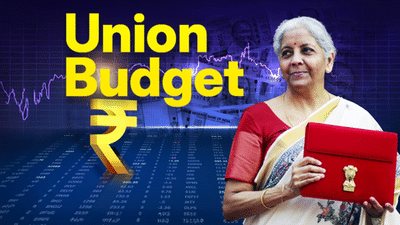
Finance Minister Nirmala Sitharaman increased the tax-free income limit to ₹12 lakh in last year's budget. This provided significant relief to the common people. This change is a milestone in the history of the Indian tax system. But to understand the significance of this relief, we need to turn the pages of history to a time when earning more was considered almost a crime, and the government would collect almost the entire income as tax.
There was a time when the 'maximum marginal rate' in the country was so high that only a nominal amount was left in the earner's pocket.
When only ₹2.25 was left out of ₹100 earned
Today, when income up to ₹12 lakh is tax-free, the period of 1973-74 seems frightening. At that time, income tax rates in India were at their peak.
• The 97.75% tax era: In 1973-74, the maximum income tax rate was set at 85 percent. Including the surcharge, this rate reached 97.75 percent.
• Empty pockets: This meant that above a certain limit (₹2 lakh), out of every ₹100 earned, the government would take ₹97.75, and only ₹2.25 would be left in the earner's pocket.
Compared to that 'socialist era', today's ₹12 lakh tax-free limit is nothing short of a major achievement for taxpayers.
The limit was only ₹1500 at the time of independence.
The journey of the Indian income tax has been exciting. The first budget of independent India was presented on November 16, 1947, by the first Finance Minister, R.K. Shanmukham Chetty. At that time, only income up to ₹1500 was tax-free. This journey from ₹1500 in 1947 to ₹12 lakh today is a testament to the country's economic progress and changing policies. When Taxes Were Based on Children and Marriage
Today's tax system is quite simple, but historically, governments have experimented with various forms of 'social engineering' through taxation:
1. Higher burden on bachelors: In 1955, the government introduced a unique rule to increase the population. Under this rule, income up to ₹2000 was tax-free for married individuals, while this exemption was only ₹1000 for unmarried individuals.
2. Tax exemption based on the number of children: In 1958, India became the only country in the world to determine taxes based on the number of children. If a married person had no children, the exemption was up to ₹3000. This exemption increased to ₹3300 for one child and ₹3600 for two children.
From the era of 97.75% tax in 1973-74, we have reached a point today where income up to ₹12 lakh is tax-free. The changes made by various governments over time have played a significant role in reducing the tax burden on the common man. This new change will certainly increase the spending power of the middle class.
Share your thoughts
Disclaimer: This content has been sourced and edited from Amar Ujala. While we have made modifications for clarity and presentation, the original content belongs to its respective authors and website. We do not claim ownership of the content.
-
Finance Minister Unveils Ambitious Container Manufacturing and Waterway Initiatives

-
'Yuva shakti–driven' Budget 2026: Big push for jobs, education, tourism

-
Budget 2026: 20-year tax holiday to draw data center investments

-
Union Budget 2026-27 Highlights: Centre sets record capex to fuel growth across strategic sectors
-
Budget 2026 gives strong push to logistics, manufacturing and Viksit Bharat: Industry leaders