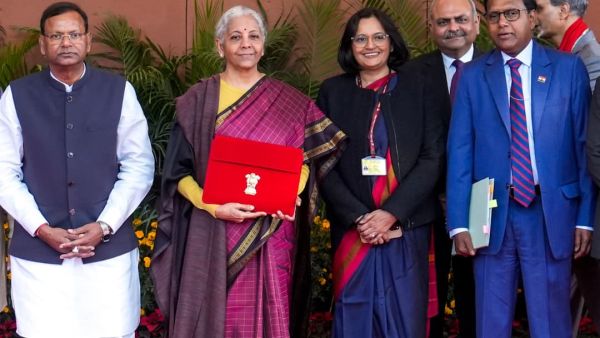
Education Budget 2026: Finance Minister Nirmala Sitharaman is set to present the Union Budget 2026-27 today on February 1, marking her ninth consecutive budget speech. The budget is expected to outline measures aimed at sustaining economic growth, ensuring fiscal prudence, and pushing reforms that could help the Indian economy withstand global trade uncertainties, including pressures arising from US tariff policies.
Following the presentation, Sitharaman will interact with nearly 30 college students representing different regions of the country. These students will also witness the live budget presentation from the Lok Sabha Gallery, giving them direct exposure to one of the most significant legislative events of the year. Participants come from diverse academic backgrounds such as commerce, economics, medical education, and vocational studies, reflecting a broad cross-section of India’s higher education ecosystem.
Education Budget 2026: Expectations
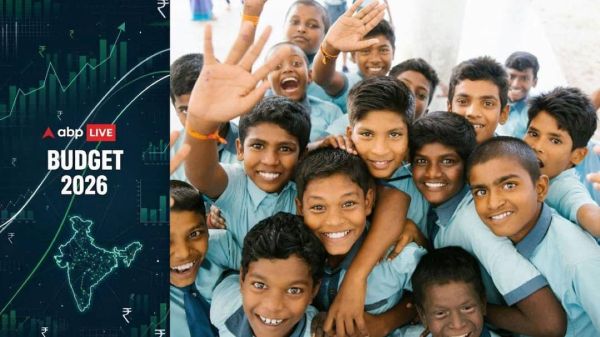
The education sector is likely to remain a key focus area in the Education Budget 2026, especially in light of concerns raised in the Economic Survey 2025-26. While India has made considerable progress in achieving near-universal enrolment at the elementary level, retention remains a challenge beyond Class 8. The survey highlights that the secondary age-specific net enrolment rate (NER) stands at just 52.2 per cent, underlining the need for targeted interventions to keep students engaged through secondary education.
In this context, policymakers may prioritise schemes aimed at improving school retention, enhancing learning outcomes, and strengthening secondary and higher secondary education infrastructure.
Education Budget 2026: Promises Made
In the previous Union Budget, the BJP-led government committed to expanding medical education by adding 75,000 new medical seats over a five-year period. It also announced plans to upgrade infrastructure at Indian Institutes of Technology (IITs) established after 2014. These commitments were positioned as long-term investments to address capacity gaps in professional and technical education.
Financially, the Centre allocated Rs 1,28,650.05 crore to the education sector in 2025, reflecting a 6.65 per cent increase compared to the previous year. This rise signalled continued emphasis on education as a driver of human capital development.
Education Budget 2026: Key Changes Ahead
The Economic Survey 2025-26 has drawn attention to the disconnect between enrolment gains and actual learning outcomes, particularly beyond the elementary stage. Although school enrolment levels are high, the transition to secondary education remains uneven, raising concerns about dropouts and skill preparedness.
As Sitharaman outlines the Education Budget 2026, expectations are that allocations and policy measures will address these structural gaps focusing on retention, quality of education, and capacity building in higher and professional education. The budget could also reinforce commitments made in previous years while aligning education reforms with broader economic priorities for the 2026-27 fiscal year.
-
Pakistan: 15 soldiers, 92 militants killed in Balochistan operations

-
Octogenarian woman who urged Hizbul Mujahideen son to surrender dies

-
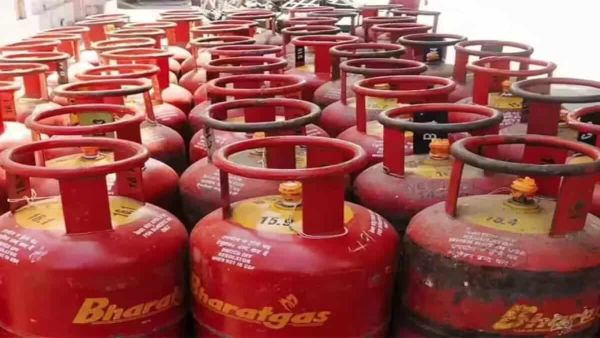
Commercial LPG cylinder prices rise by Rs 49 from Feb 1
-
No T20 World Cup? Bangladesh Create New Tournament To Keep Players Engaged

-
Union Budget 2026: Nirmala Sitharaman Wears Deep Plum Kanjivaram Saree For Her Ninth Budget Presentation