Scrutiny mounts on AAIB as 2023 crash report stuck
Sanjeev Kumar | February 1, 2026 11:21 AM CST
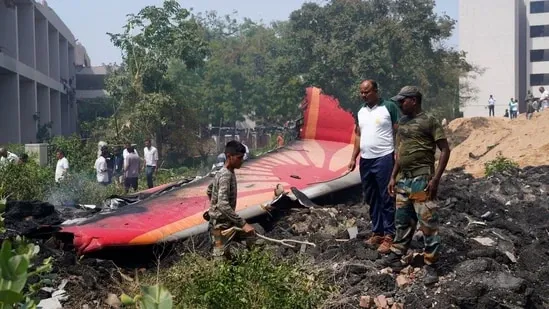
New Delhi : The civil aviation ministry's 2024-25 annual report states that of 104 accidents, investigations into 91 had been completed by December 31, 2024, with 88 final reports made public.
As per International Civil Aviation Organization (ICAO) norms, investigations such as these require a final report within a year of the incident.
HT looked back at Aircraft Accident Investigation Bureau (AAIB) final reports and found that among the delayed reports is that of a September 2023 runway accident involving VSR Aviation, the company from which Maharashtra deputy chief minister Ajit Pawar chartered the Learjet 45 that crashed on Wednesday, killing him and four others.
The delay has raised questions about AAIB's capacity, but more critically, experts said the missing findings could have determined if VSR Aviation required stricter oversight long before the Baramati crash.
"It is still unclear whether the 2023 incident was purely weather-related or linked to technical issues. Had the final findings been released, it would have clarified whether corrective action was required," said an aviation professional, requesting anonymity.
The September 2023 accident saw a VSR Learjet 45, registration VT-DBL, break into two pieces during a heavy rain landing at Mumbai airport. All six occupants survived with injuries. AAIB issued a preliminary report one month after the crash, stating that flight recorder data had been downloaded and records relating to maintenance, crew, radar, air traffic control communications and the enhanced ground proximity warning system had been sent for analysis.
However, 16 months later, the final findings have not been released.
The ministry report also shows that of 123 serious incidents, 108 investigations were completed with 107 final reports released, leaving at least one report delayed and 15 pending probe. The September 2023 incident, with no fatalities, was classified as an "accident", while the Baramati crash, and incidents that involve the potential of mass casualties, are likely to be considered as a "serious incident" .
Investigation backlogs and resource constraints
JS Rawat, former joint director general of the Directorate General of Civil Aviation (DGCA), said every accident occurs due to a unique set of factors as he stressed on the need for stricter timelines. "The sole purpose of an investigation report is to understand what went wrong and how such incidents can be avoided in the future," he said. "The weather conditions in Mumbai and Baramati were different. That said, as per norms, the report should have been released within a year. Since there were no fatalities in the Mumbai aircraft skid, the authorities should have completed the investigation in accordance with the rules."
Rawat emphasised: "It is high time that a reasonable timeline should be defined for completing an investigation".
One former bureaucrat familiar with the agency said AAIB is beset with staff shortages, functions "barely with 8-10 people". "With the aviation sector expanding rapidly, the AAIB needs adequate staffing. Its role is vital, yet it has not received the attention it deserves," he added.
Unregulated boom?
Pilots and former regulators pointed to deeper problems now exposed by the Baramati crash: oversight of non-scheduled operator (NSOP) ecosystem.
A former pilot, familiar with VSR Aviation's practices, said operators like it "wait for the aircraft to break and then fix it, with very poor oversight in CAMO [Continuing Airworthiness Management Organisation], maintenance and quality. Pilots are manipulated to fly poorly maintained aircraft".
VSR did not respond to requests for a comment.
Another pilot said under-reporting of flight hours is common among many NSOPs to delay expensive maintenance.
A sector expert said this was an open secret. "It is widely known that operators like them under-report aircraft and engine hours to prolong maintenance. The OEM 'on-condition' rules are ignored until components fail. Engines fly with high vibration and low temperature margins; I have seen fan blades chipped beyond limits," said Mark D Martin of Martin Consulting.
Martin added that several chartered jets operate with critical equipment inoperative. "Unlike airlines, NSOPs must pay upfront cash for parts costing $30,000 to $150,000. The mantra is not maintenance but 'paisa-vasool'," he said.
The former bureaucrat quoted above said VSR is alleged to maintain multiple log books shown to DGCA inspectors. "By under-logging hours, it is obvious that the maintenance cycle is also delayed," he said. "This is a clever way to deal with the annual surveillance and spot checks by the DGCA. However, there is a need for the regulator to seek flight plans from the Airports Authority of India to cross-check the operators' claims. This will ensure that NSOPs do not take safety for granted."
A former DGCA official cautioned against painting all NSOPs with the same brush. "Big corporate operators - such as Reliance or Bajaj - do not compromise on safety. The problem lies with jet operators and their attitude," one official said.
But a second official agreed: "The recent crash has highlighted the need for a change of the system. Neither should pilots agree to fly such planes, nor should operators stretch them to do so. But if the majority of NSOPs are frequent in such violations then an accident or incident will remain unavoidable."
READ NEXT
-
Russia not a mediator in resolving Pakistan’s ties with India, Afghanistan: MFA

-
Pune car crash: SC grants bail to three accused of swapping blood samples
-
Donald Trump fans say 'there's something very wrong' after worrying appearance

-
Bangladesh: Jamaat's regressive stance on women's leadership exposes its gender bias
-
Supreme Court Takes on Anti-Conversion Laws: A Landmark Challenge