Mumbai: The BSE Sensex is recovering after plunging 81,681.86 2354.01 points to 80,212.36 as Finance Minister Nirmala Sitharaman presented the Budget on Sunday. The Union Budget 2026-27 failed to lift the investors’ mood. The NSE Nifty dropped 291.50 points to 25,127.00. Earlier, the broader index plummeted 631.60 points to 24,787.30.
The markets crashed as FM proposed to raise Securities Transaction Tax to 0.05 per cent on commodity futures from 0.02 per cent. The government will tax buyback proceeds for all types of shareholders as capital gains, Sitharaman announced in her Budget speech.
“The increase in Securities Transaction Tax (STT), especially in futures and options, is likely to act as a marginal negative for foreign portfolio investor (FPI) flows in the near term, particularly for high-frequency and derivative-focused global funds,” Aakash Shah, Technical Research Analyst at Choice Equity Broking, said.
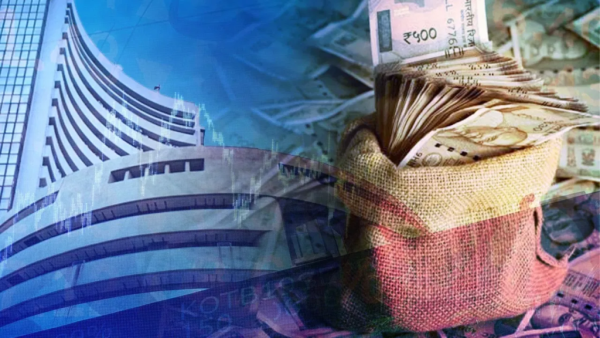
Stock Market crashed on February 1, 2026 (Pic: News9)
Stock Market LIVE updates
- Gainers from the Sensex pack: Sun Pharma, Sun Pharma, Kotak Mahindra Bank, and Tata Consultancy Services. Laggards included, Bharat Electronics tanked 6.50 per cent. State Bank of India, HCL Tech, Tata Steel, Asian Paints, and Eternal.
- “Markets are likely to remain highly volatile, with sharp moves possible in either direction depending on key announcements around fiscal policy, capex push, sector-specific incentives, and the fiscal deficit target (expected around 4.3–4.4 per cent of GDP for FY27),” Ponmudi R, CEO of Enrich Money, an online trading and wealth-tech firm, said.
- Foreign institutional investors pumped in Rs 2,251.37 crore to buy equities on Friday.
- Gold, silver prices hit lower circuit levels in futures trade ahead of Union Budget 2026-27 presentation.
- The benchmark indices Sensex and Nifty settled lower on Friday. The BSE Sensex dropped 296.59 points to end at 82,269.78. The 50-share NSE Nifty went down 98.25 points to close at 25,320.65 in a volatile session.
- The BSE and NSE have informed that the Market timings will be as per the regular schedule followed during the weekdays.
| Trading sessions | Time |
| Block Deal session 1 Open | 08:45 hrs |
| Block Deal session 1 Close | 09:00 hrs |
| Pre-open session (Regular) Open | 09:00 hrs |
| Special Pre-open session (SPOS | 09:00 hrs |
| Pre-open session (Regular) Close | 09:08 hrs |
| T+0 Market Open Time | 09:15 hrs |
| Normal / Odd lot market Open | 09:15 hrs |
| Call Auction Illiquid session (6 sessions of 1 hour each) From | 09:30 hrs |
| Special Pre-open session (SPOS) Close | 09:45 hrs |
| T+0 Market Close Time | 13:30 hrs |
| T+0 Trade modification end time | 13:45 hrs |
| Auction market Open | 14:00 hrs |
| Block Deal session 2 Open | 14:05 hrs |
| Block Deal session 2 Close | 14:20 hrs |
| Auction market Close | 14:30 hrs |
| Normal / Odd lot market Close | 15:30 hrs |
| Call Auction Illiquid session (6 sessions of 1 hour each) | 15:30 hrs< |
| Closing session Open | 15:40 hrs |
| Closing session Close | 16:00 hrs |
| Trade Modification cut-off time * | 16:15 hrs |
- Economic Survey 2026 has projected India’s economy to grow by 6.8-7.2 per cent in the fiscal year starting April. The survey reaffirms the country’s status as the world’s fastest-growing major economy despite geopolitical tensions, tariff wars clouding the outlook.
- In January 2025, NIFTY50 closed in the red mark with a decline of about 3 percent. The main reasons behind the decline are global tension, tariffs, geo-political tension, relentless selling by FIIs and weakness in the Rupee. However, last week, the India-Europe Free Trade Agreement (FTA), helped recover from lower levels. The volatility index went above India VIX 14, which indicates that on the budget day the market may see sharp fluctuations. Currently VIX has closed around 13.6, so a move of about 1 percent on Budget Day is considered possible.
(Disclaimer: This article is only meant to provide information. News9 does not recommend buying or selling shares or subscriptions of any IPO, Mutual Funds, gold, silver, crypto assets and commodities like Copper, aluminium.)
-
Andrew has just shamed the Royal Family and Britain - there's only one thing left to do
-
Dhurandhar's Netflix Release Confirms A Wild Rumour About Ranveer Singh; Check It Out

-
GB News issues breaking news alert - and it's major blow to Keir Starmer
-
What happened at Grammy Awards 2026 - Trump fury, naked celebs and Ozzy Osbourne tears

-
SC orders Centre to set up tribunal for Pennaiyar river dispute