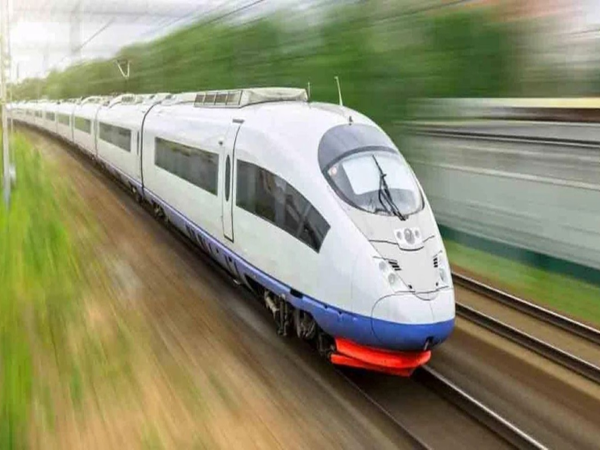
Seven new high-speed rail corridors will be built in the country. Finance Minister Nirmala Sitharaman announced this on Sunday. The Finance Minister said that this will increase connectivity between economic and cultural centers. The budget includes connecting several cities across the country with high-speed rail corridors. The aim is to connect the country's major metropolitan areas with industrial and religious cities.
In the budget, the government has stated that it will develop these corridors separately. This simply means that it is an attempt to reduce the pressure on road and traditional rail networks.
How many cities will the high-speed rail corridor connect?
The 7 high-speed rail corridors announced by the Finance Minister in the budget will connect major cities and metropolitan areas of the country. These include Mumbai, Pune, Hyderabad, Bengaluru, Chennai, Delhi, Varanasi, and Siliguri. The Finance Minister said that this corridor will connect financial centers, IT centers, and manufacturing clusters.
Why are these 8 cities special?
The 8 cities that the government has connected through the high-speed rail corridor have their own unique characteristics. Let's find out what they are.
1- Mumbai: The Financial Capital of the Country
Mumbai is called the financial capital of the country and is also a metropolis. The RBI (Reserve Bank of India), SEBI, BSE, and NSE are all located here. The stock market, bonds, mutual funds, and insurance are directly linked to Mumbai. Almost all major Indian banks and private banks have their headquarters/main offices in Mumbai. Major operations of giant companies like Reliance, Tata, Adani, and L&T are also based here. Mumbai also plays a crucial role as a port and trade gateway. Along with this, the Bollywood, TV, OTT, and advertising industries conduct business worth billions of rupees, providing tax revenue to the government and jobs to the common people. The country's most expensive and active real estate market is also located here. The government has included it in the high-speed rail corridor plan.
2- Pune: Hub of Auto, Engineering, and MSME Sectors
After Mumbai, Pune is considered the second-largest economic engine of Maharashtra. The government has focused on manufacturing in its budget. Pune is also known for this. Here, companies like Tata Motors, Bajaj Auto, Mahindra, Mercedes-Benz, and Force Motors are operating. Millions of jobs are generated from the auto, engineering, and MSME sectors. Hinjewadi IT Park, Magarpatta, and the Khadki-Talegaon belt are major IT clusters. AI, fintech, and deep-tech startups are growing rapidly here. It is also a center for auto components, machine tools, pharmaceuticals, and defense manufacturing. In terms of education, it is called the Oxford of the East. Institutions like COEP, Symbiosis, and Savitribai Phule Pune University, which contribute to the skill economy, are located here.
3- Hyderabad: Drug Capital of India
It is known as an IT and global tech hub. Companies like Microsoft, Google, Amazon, Meta, Apple, Infosys, TCS, and Accenture are present here. Hyderabad is called the Drug Capital of India. Billions are earned from the export of medicines and vaccines manufactured here. The city is also a center for pharma parks, medical device parks, and electronics manufacturing. In terms of the startup and innovation ecosystem, it has incubation centers like T-Hub and WE-Hub. Hyderabad alone generates a large portion of Telangana's GSDP.
4- Bengaluru: Silicon Valley of India
It is the backbone of Karnataka's economy. Bengaluru, known as the Silicon Valley of India, is home to major companies in the IT sector. The largest share of India's IT/software exports comes from here. The country's highest number of startups and unicorns is from Bengaluru. It is a leader in fintech, SaaS, AI, deep-tech, agri-tech, and health-tech. Institutions like IISc, IIM-B, NAL, ISRO, and DRDO labs are located here. Kempegowda International Airport is among the fastest-growing airports in Asia.
5- Chennai: Automobile Capital of India
Chennai has large plants of leading automobile companies. This includes companies like Hyundai, Renault-Nissan, BMW, Daimler, TVS, and Ashok Leyland. It is known for auto exports, coal, LNG, and container cargo. It is a hub for automotive, electronics, heavy engineering, and petrochemicals. Companies like TCS, Infosys, Wipro, and Accenture are located here. In terms of skilled workforce and education, it has institutions like IIT Madras, Anna University, and NIT. It is also known for its metro, expressways, industrial parks, and dedicated logistics infrastructure. Chennai is the backbone of Tamil Nadu's economy.
6- Delhi: The National Capital that sets the direction for the entire country.
Mumbai may manage the money, but the national capital Delhi, makes the rules and drives the market. This is why Delhi plays a crucial role in shaping the economic direction of the country. As the capital of the country, all major ministries, regulators, and policy-making bodies are located here. The decisions made here directly impact investment, industry, and markets. It is a hub for consulting, legal, media, education, healthcare, and research sectors. It is a major center for expressways, rail networks, and air cargo. It is also known for its international connectivity.
7. Varanasi: The Religious Capital of India
Varanasi is considered the religious capital of India and one of the oldest cities in the world. It is a center of Hindu faith, home to the Kashi Vishwanath Temple, the Ganga Aarti ceremony, and 84 ghats (riverfront steps). Millions of devotees visit every year, and the revenue generated from religious tourism strengthens the local economy. It is an important part of the Buddhist circuit (Sarnath). The government has also made announcements regarding the Buddhist circuit this year. BHU (Banaras Hindu University) is one of the top institutions in the country. Varanasi has played a significant historical role from the Mauryan period to modern India.
8. Siliguri: The Logistics Gateway to the Northeast
This is India's most strategically sensitive corridor. Siliguri connects to eight states of Northeast India. The supply chain for the northeastern states depends on Siliguri. This is why it is called the logistics gateway to the Northeast. It is a major trading center for Darjeeling tea and agricultural produce from North Bengal. It is the largest urban and commercial hub of North Bengal.
Disclaimer: This content has been sourced and edited from TV9. While we have made modifications for clarity and presentation, the original content belongs to its respective authors and website. We do not claim ownership of the content.
-
Four-member gang from Odisha arrested for selling ganja in Hyderabad
-
Air India launches Shanghai-Delhi flight after gap of about six years

-
Budget 2026 draws praise from farm sector, edible oil industry unhappy

-
You won’t believe where this iconic Tere Naam scene was actually shot

-
Bollywood Classics 'Devdas', 'Tere Naam' And 'Yuva' Return To Theatres This February