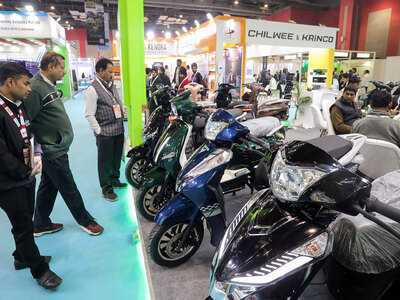
New Delhi [India], February 2 (ANI): The three-time increase in allocation for the Production Linked Incentive (PLI) scheme for automobiles and auto components in the Union Budget 2026 is likely to significantly support electric vehicle (EV) penetration and localisation of component manufacturing, according to a report by Axis Asset Management.
In the Union Budget 2026, the allocation under the PLI scheme for automobiles and auto components has been increased threefold to Rs 59.4 billion for FY27, compared to Rs 20 billion in FY26.
As per report, this sharp rise in allocation reflects the government's continued focus on strengthening domestic manufacturing and accelerating the transition towards electric mobility.
According to the report, EV penetration in India is still at a relatively early stage. Currently, electric vehicles account for around 5-6 per cent of total sales in the two-wheeler segment and about 3-4 per cent in passenger vehicles.
The report believes that the higher PLI allocation should positively support further EV adoption, while also encouraging localisation of auto component manufacturing across the value chain.
The report also pointed to the government's strategic focus on critical minerals and components through the planning of rare-earth magnet corridors. Under this initiative, the Centre will support states such as Odisha, Kerala, Andhra Pradesh and Tamil Nadu.
The move is aimed at reducing India's dependence on imports of rare-earth magnets, which are critical components for electric vehicles. Strategically, this initiative is expected to help build reliability in the EV supply chain by ensuring the availability of key resources domestically.
In addition, the report highlighted supportive measures announced for battery manufacturing.
The Budget has extended the basic customs duty exemption on capital goods used for manufacturing lithium-ion cells for batteries to include capital goods used for manufacturing lithium-ion cells for battery energy storage systems as well.
This extension is seen as a positive step for the development of lithium-ion battery manufacturers in the country.
The report also noted that this measure supports the expansion of battery manufacturing beyond electric vehicles and into battery energy storage systems, thereby widening the scope and potential demand for domestic lithium-ion cell makers.
The report noted that the sharp increase in PLI allocation, combined with policy support for rare-earth minerals and battery manufacturing, is directionally positive for the auto and auto components sector. (ANI)
-
Put stuff on the microwave? You are not causing danger without your knowledge!

-
18th or 19th February, when will the month of Ramadan 2026 start?

-
Rashtrapati Bhavan’s Amrit Udyan is opening for you from 3rd February, know how to get free tickets and what is the timing.

-
Oppo K14x entry confirmed, launch date and features shared.

-
From semiconductor to satellite, Gujarat’s youth became the creators of the ecosystem: Modhwadia
