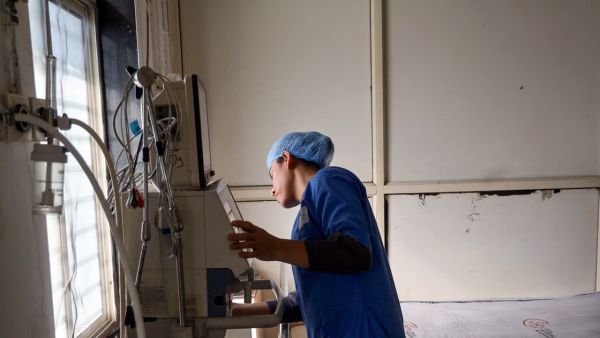
The Union Health Budget 2026 aims to make India a self-reliant global healthcare hub with a Rs 10,000 crore Biopharma Shakti initiative, enhanced research via NIPERs, streamlined regulations, and customs duty exemption on life-saving drugs.
The Union Health Budget 2026 has unveiled a push to the healthcare sector that will make the country self-reliant and globally credible in the long term.

Push for Biopharma and Global Leadership
"The Union Budget 2026-27 lays a strong foundation for positioning India as a global hub for life sciences innovation and advanced biopharma manufacturing. The Rs 10,000 crore outlay under the Biopharma Shakti initiative, coupled with the expansion and upgradation of NIPERs, will significantly strengthen India's research, talent and innovation ecosystem in high-value biologics and advanced therapeutics. Measures to enhance CDSCO capabilities and streamline clinical trial compliances are particularly encouraging, as they will improve regulatory efficiency and global credibility. The integrated focus on innovation and manufacturing scale-up will accelerate innovation-led pipelines and enable deeper global collaborations," said Mayank Singhal, Vice Chairperson & Managing Director, PI Industries.
According to Dr GSK Velu, Chairman & Managing Director, Trivitron Healthcare, Maxivision Eye Hospitals & Neuberg Diagnostic, "Budget 2026 positions India to accelerate its transition from volume-driven production to value-driven global leadership across pharmaceuticals, biopharma, and medical devices, with Biopharma Shakti as its anchor and a renewed focus on regulatory and manufacturing reforms that assure reduced compliance."
"The ₹10,000 crore commitment to strengthening the biopharma, biotech, and life sciences ecosystem, alongside support for the drug regulatory framework and biopharma R&D, creates a strong foundation for raising quality benchmarks and aligning Indian innovation with global standards. This integrated approach will help move ideas from the laboratory to the bedside more efficiently, while encouraging closer collaboration between industry, academia, and care providers," he explained.
Focus on Patient Affordability and Education
JS Shinde, President, and Rajiv Singhal, General Secretary, of the All India Organization of Chemists and Druggists (AIOCD), stated that in the interest of patients, the proposal to grant complete exemption from Basic Customs Duty (BCD) on 36 life-saving medicines used for cancer and other serious diseases is a highly sensitive and humane decision. This will lead to a significant reduction in treatment costs and make critical therapies more affordable.
"Similarly, the inclusion of 37 new medicines and 13 new programmes under patient assistance initiatives clearly reflects the Government's commitment to placing patient welfare at the highest priority," they said.
"The proposal to establish three new National Institutes of Pharmaceutical Education and Research (NIPERs) and to upgrade seven existing institutions will provide fresh momentum to pharmaceutical education, quality research, innovation, and the development of skilled human resources. In the long run, this will serve as a strong bridge between industry and academia," they further added.
Strengthening the Healthcare Workforce
Dr Gowthami AV, CEO, Yatharth Hospital, Noida, said, "The Union Budget 2026's focus on upgrading existing institutions for allied health professionals is a highly progressive step towards strengthening India's healthcare delivery ecosystem. By enhancing training infrastructure, modern curricula and hands-on skill development, this initiative will help bridge the critical workforce gap across diagnostics, rehabilitation, emergency care and clinical support services. A stronger allied health workforce will improve patient outcomes, reduce pressure on doctors and hospitals, and ensure more accessible, high-quality care across urban and rural regions alike."
(ANI)
(Except for the headline, this story has not been edited by Asianet Newsable English staff and is published from a syndicated feed.)-
Joint military–civil trek to Topo Gonov concludes, highlights national integration in Arunachal Pradesh

-
Chelsea sent clear Cole Palmer transfer message after Man United links - 'Don't see why'

-
Amanda Owen shares throwback wedding photo as she bickers with Clive over detail

-
Chessington World of Adventures unveils World of PAW Patrol as child wanted to test rides

-
A1 Bedfordshire closure LIVE: Commuter road to be closed for hours after car hits tree