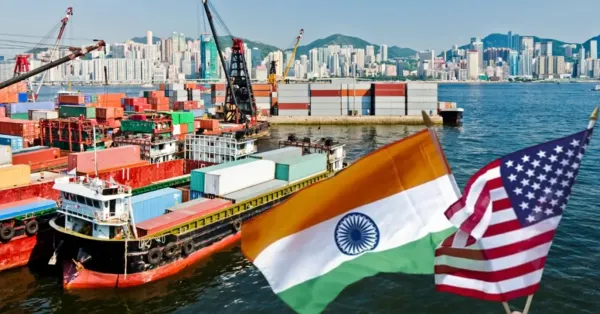
TradeDeal – The U.S. Chamber of Commerce has welcomed recent progress in trade discussions between the United States and India, calling it a positive and long-awaited step for businesses on both sides. The development follows announcements from leaders in both countries indicating agreement on measures aimed at easing trade barriers and improving market access.
In a statement issued on Tuesday, the Chamber said the latest movement reflects years of engagement by American and Indian companies that have pushed for a more predictable and balanced trade framework. Business leaders see the changes as an opportunity to deepen commercial ties between two of the world’s largest economies.
Business community reacts to tariff reductions
Suzanne P. Clark, President and Chief Executive Officer of the U.S. Chamber of Commerce, praised both governments for advancing steps to lower tariffs and address non-tariff obstacles that have historically complicated bilateral trade. She noted that these actions are expected to support job creation and business growth in both countries.
Clark said the Chamber views the announcement as a constructive signal for companies that operate across borders and depend on stable trade policies. According to her, easing restrictions could help firms expand operations, reduce costs, and improve supply chains that link American and Indian markets.
Hopes rise for a broader trade framework
Beyond the immediate tariff changes, Clark expressed optimism that the current agreement could serve as a foundation for a more comprehensive trade pact in the future. She said such an outcome could unlock greater collaboration between private sectors in both countries, encouraging investment and innovation.
The Chamber indicated it plans to closely examine the details of the arrangement as they become available. Clark also reiterated the organization’s readiness to work with both governments during the implementation phase to ensure the intended benefits reach businesses and workers.
Long-standing advocacy for closer ties
The U.S. Chamber of Commerce and its U.S.-India Business Council have consistently supported stronger economic engagement between the two nations. Clark highlighted that this position is rooted in years of dialogue with policymakers and industry leaders.
Last year, she visited Delhi and Mumbai, where she met with Indian officials and executives to discuss trade priorities. During those meetings, she emphasized the need for an agreement that reflects the scale and strategic importance of the U.S.-India economic relationship.
Economic and strategic importance underscored
Clark described the commercial relationship between the United States and India as one of the most significant globally, not only for economic growth but also for broader international stability. She said a durable trade agreement could contribute to stronger supply chains, technological cooperation, and shared prosperity.
The U.S. Chamber of Commerce, which represents businesses ranging from small enterprises to multinational corporations, sees India as a key partner in the global economy. The organization believes improved trade conditions would reinforce confidence among investors and manufacturers in both countries.
Leaders confirm agreement details publicly
The renewed focus on trade followed comments made by former U.S. President Donald Trump, who stated that the United States and India had reached an understanding to adjust reciprocal tariffs. According to his remarks, the tariff rate would be reduced from 25 percent to 18 percent, citing goodwill and mutual respect.
Trump shared that he had spoken with Indian Prime Minister Narendra Modi earlier in the day and referred to the Indian leader as a close friend and respected figure on the global stage.
India welcomes reduced tariffs on exports
Prime Minister Modi later confirmed the discussion in a public post, saying he was pleased with the outcome of the conversation. He welcomed the decision to lower tariffs on Indian-made products, describing it as a positive development for the country’s exporters.
Modi expressed appreciation for the move and said the reduction would support Indian businesses seeking greater access to the U.S. market. The announcement was framed as a step that reflects the strength of bilateral relations and the shared interest in expanding trade.
As details of the agreement continue to emerge, business groups on both sides are watching closely, hopeful that the progress signals a more stable and forward-looking phase in U.S.-India economic relations.
-
ICC T20 World Cup Warm-Up Matches: Full Schedule For February 3, 2026
-
ABP Live Pet First | 7 Vet-Approved Homemade Dog Food Recipes For A Healthier Pup

-
CBI Takes Over Probe Into Ankita Bhandari Murder Case After Uttarakhand CM’s Recommendation
-
Dream Sports Championship Table Tennis U-15 Day 3 Witnesses Thrilling Five-Set Battles

-
CMFRI Mumbai Opens Doors On 79th Foundation Day, Showcases Marine Biodiversity And Research