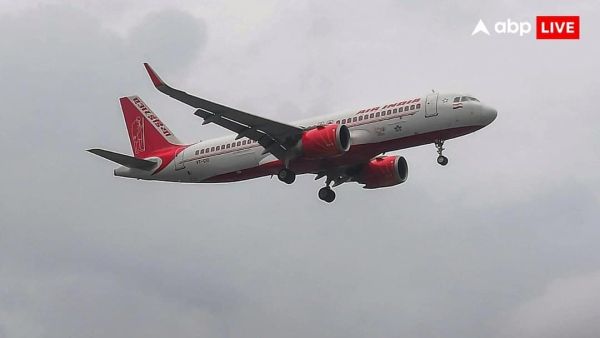
An Air India Boeing 787-8 has been grounded for detailed checks after a pilot reported a possible malfunction involving the aircraft’s fuel control switch, a component currently under scrutiny following last year’s devastating Dreamliner crash.
The aircraft in question operated flight AI132 from London to Bengaluru and landed safely on Monday morning with more than 200 people on board, reported PTI citing sources. However, concerns were raised during the flight regarding the functioning of the fuel control switch, prompting immediate precautionary action.
What Happened on Flight AI132?
According to the report, the fuel control switch on the left engine failed to remain in the ‘RUN’ position and moved towards the ‘CUT OFF’ position. In aviation terminology, ‘RUN’ is used to start and keep the engine operating, while ‘CUT OFF’ is used to shut it down.
It remains unclear at what stage of the London–Bengaluru flight the possible malfunction was detected. The airline has not specified whether the issue occurred during take-off, cruise, or landing. What is clear, however, is that the aircraft completed the journey safely.
Air India confirmed in a statement that it was aware that one of its pilots had reported a possible defect in the fuel control switch of a Boeing 787-8 aircraft.
"After receiving this initial information, we have grounded the said aircraft and are involving the OEM (Original Equipment Manufacturer) to get the pilot's concerns checked on a priority basis. The matter has been communicated to the aviation regulator, DGCA," the airline said.
Why the Fuel Control Switch Matters
The functioning of the fuel control switch is currently under heightened attention due to the fatal crash of Air India flight AI171 last June.
In one of the worst aviation disasters in India, 260 people, including 241 passengers, died when Air India’s Boeing 787-8 operating flight AI171 to London Gatwick crashed shortly after take-off from Ahmedabad on June 12, 2025.
The Aircraft Accident Investigation Bureau (AAIB), which is probing the crash, released its preliminary report on July 12 last year. According to the report, the fuel supply to both engines was cut off within a gap of one second soon after take-off, leading to confusion in the cockpit.
The cockpit voice recording revealed that one of the pilots asked the other why he had cut off the fuel. The other pilot responded that he had not done so.
While investigators are still examining the exact sequence of events, the fuel control switch has become a focal point in understanding what went wrong.
Safety Checks Across the Fleet
Air India stated that following a directive from the Directorate General of Civil Aviation (DGCA), it had earlier inspected the fuel control switches on all Boeing 787 aircraft in its fleet and had found no issues.
The airline currently operates 33 Boeing 787 aircraft, comprising 26 legacy Boeing 787-8s and 7 Boeing 787-9s, including six inherited from Vistara and one newly inducted aircraft.
Air India’s Boeing 787-8 configuration includes 256 seats.
Boeing, the aircraft manufacturer, said it was in contact with Air India and was supporting the airline’s review of the reported issue. There was no immediate comment from the DGCA.
Safety Foundation Flags ‘Abnormal Behaviour’
Not-for-profit group Safety Matters Foundation also commented on the development. In a statement issued on Monday, the organisation said that during the operation of the flight, the crew reported abnormal behaviour of the left engine fuel control switch.
According to the group, during engine start, the switch failed to remain locked in the RUN position on two attempts and moved towards CUT OFF, a malfunction that, under specific conditions, could potentially result in an inadvertent engine shutdown in flight.
The statement underscored that while such a scenario is conditional and does not automatically imply immediate danger, the behaviour warrants detailed examination.
Broader Industry Context
The Boeing 787 programme continues to be closely watched globally. In 2025, Boeing delivered 14 Boeing 787 aircraft to various airlines, including 12 Boeing 787-9s.
For Air India, which is undergoing a major fleet transformation, safety remains under intense scrutiny following the June crash. Every reported anomaly, particularly involving engine systems, is likely to draw heightened regulatory and public attention.
-
Sri Lanka's Independence Day: Rebuilding economy, confidence and stability

-
What is Grok AI and why did French police raid Elon Musk's X office over it?

-
Centre 'attempting to silence' Rahul Gandhi: Karnataka CM Siddaramaiah

-
Google Account Security Guide: How to Change or Recover Your Password Safely

-
Step-by-Step Guide to Updating Your Instagram Username Without Losing Your Identity