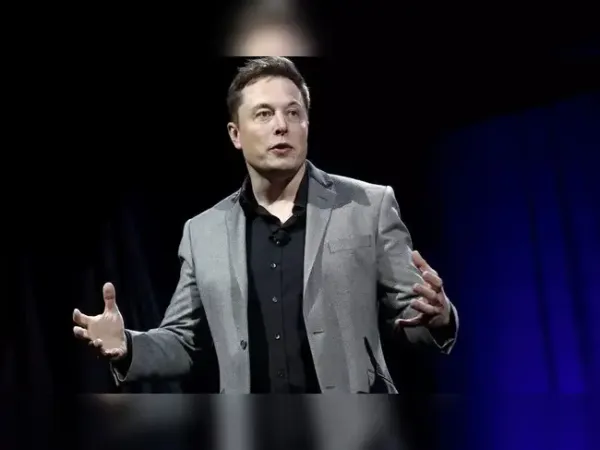
Elon Musk said on Monday that SpaceX is acquiring his artificial intelligence (AI) company xAI. The Grok-maker now becomes a wholly owned subsidiary of SpaceX in a deal that creates one of the most valuable private companies in the world.
Details
SpaceX has acquired xAI in a deal that rolls all of xAI’s equity into SpaceX, making xAI a wholly owned subsidiary under the SpaceX corporate umbrella.
Musk is presenting this combined entity as a single, integrated platform that brings together rockets, satellites, advanced AI models, and the social media assets connected to xAI.
Reports pegged the valuation of the merged entity at $1.25 trillion, with SpaceX at about $800 billion and xAI at $200-230 billion.
Nevada corporate records cited in reports show SpaceX assuming management control of the xAI holding entities, confirming it as an outright acquisition rather than a merger.
What does the combined entity comprise?
The combined entity brings together SpaceX’s launch business, Starlink satellite broadband network, and space infrastructure with xAI’s large language models (including Grok), training supercomputer projects, and its controlling stake in the social media platform X. That means rockets, satellites, AI models, and a major social platform are now effectively housed under a single private corporate structure anchored by SpaceX.
But why?
This merger goes a long way in fuelling Musk's main ambition, which is to build orbital data centres and space‑based AI infrastructure that can go beyond Earth's limitations on energy, cooling technology, and land.
It's a goal that Musk suggested could become easier to reach with a combined company. “In the long term, space-based AI is obviously the only way to scale,” Musk wrote on SpaceX's website Monday, then added in reference to solar power, “It’s always sunny in space!”
Musk said in his announcement he estimates “that within 2 to 3 years, the lowest cost way to generate AI compute will be in space.”
Combining SpaceX’s launch and satellite capabilities with xAI’s compute‑heavy models and hardware spend will form a vertically integrated engine for AI and space. Musk has claimed over the past year that this will eventually become cheaper and more scalable than terrestrial data centres.
How does this tie into xAI’s compute plans?
xAI, the company behind Grok, is dialing up expenditure on chips and data centres, including a large AI supercomputer project (often described as a “Colossus‑style” system) to train its Grok models. The merger lets that infrastructure be tightly coupled with Starlink connectivity and potential orbital data centres launched on SpaceX rockets, effectively turning SpaceX into the physical and financial platform for xAI’s compute needs.
What does this mean for SpaceX?
This comes before what's expected to be a massive initial public offering for the business later this year.
It was reported that SpaceX is weighing a mid-June initial public offering, aiming to raise as much as $50 billion at a valuation of roughly $1.5 trillion.
On a call with about 100 SpaceX investors on Monday, CFO Bret Johnsen gave assurances that the deal wouldn't delay the IPO.
The agreement could draw scrutiny from regulators and investors over governance, valuation and conflicts of interest given Musk's overlapping leadership roles across multiple firms, as well as the potential movement of engineers, proprietary technology and contracts between entities.
SpaceX also holds billions of dollars in federal contracts with NASA, the Department of Defense and intelligence agencies, which all have some authority to review M&A transactions for national security and other risks.
How does the merger affect X (formerly Twitter) and Grok?
xAI’s Grok chatbot and related models are tightly integrated with X as a real‑time data firehose and product surface. With xAI now inside SpaceX, the space company indirectly controls this AI-social media loop.
Details
SpaceX has acquired xAI in a deal that rolls all of xAI’s equity into SpaceX, making xAI a wholly owned subsidiary under the SpaceX corporate umbrella.
Musk is presenting this combined entity as a single, integrated platform that brings together rockets, satellites, advanced AI models, and the social media assets connected to xAI.
Reports pegged the valuation of the merged entity at $1.25 trillion, with SpaceX at about $800 billion and xAI at $200-230 billion.
Nevada corporate records cited in reports show SpaceX assuming management control of the xAI holding entities, confirming it as an outright acquisition rather than a merger.
What does the combined entity comprise?
The combined entity brings together SpaceX’s launch business, Starlink satellite broadband network, and space infrastructure with xAI’s large language models (including Grok), training supercomputer projects, and its controlling stake in the social media platform X. That means rockets, satellites, AI models, and a major social platform are now effectively housed under a single private corporate structure anchored by SpaceX.
But why?
This merger goes a long way in fuelling Musk's main ambition, which is to build orbital data centres and space‑based AI infrastructure that can go beyond Earth's limitations on energy, cooling technology, and land.
It's a goal that Musk suggested could become easier to reach with a combined company. “In the long term, space-based AI is obviously the only way to scale,” Musk wrote on SpaceX's website Monday, then added in reference to solar power, “It’s always sunny in space!”
Musk said in his announcement he estimates “that within 2 to 3 years, the lowest cost way to generate AI compute will be in space.”
Combining SpaceX’s launch and satellite capabilities with xAI’s compute‑heavy models and hardware spend will form a vertically integrated engine for AI and space. Musk has claimed over the past year that this will eventually become cheaper and more scalable than terrestrial data centres.
How does this tie into xAI’s compute plans?
xAI, the company behind Grok, is dialing up expenditure on chips and data centres, including a large AI supercomputer project (often described as a “Colossus‑style” system) to train its Grok models. The merger lets that infrastructure be tightly coupled with Starlink connectivity and potential orbital data centres launched on SpaceX rockets, effectively turning SpaceX into the physical and financial platform for xAI’s compute needs.
What does this mean for SpaceX?
This comes before what's expected to be a massive initial public offering for the business later this year.
It was reported that SpaceX is weighing a mid-June initial public offering, aiming to raise as much as $50 billion at a valuation of roughly $1.5 trillion.
On a call with about 100 SpaceX investors on Monday, CFO Bret Johnsen gave assurances that the deal wouldn't delay the IPO.
The agreement could draw scrutiny from regulators and investors over governance, valuation and conflicts of interest given Musk's overlapping leadership roles across multiple firms, as well as the potential movement of engineers, proprietary technology and contracts between entities.
SpaceX also holds billions of dollars in federal contracts with NASA, the Department of Defense and intelligence agencies, which all have some authority to review M&A transactions for national security and other risks.
How does the merger affect X (formerly Twitter) and Grok?
xAI’s Grok chatbot and related models are tightly integrated with X as a real‑time data firehose and product surface. With xAI now inside SpaceX, the space company indirectly controls this AI-social media loop.