AI boom effect: Apple’s electronics supply chain dominance is ending?
Sanjeev Kumar | February 3, 2026 8:21 PM CST
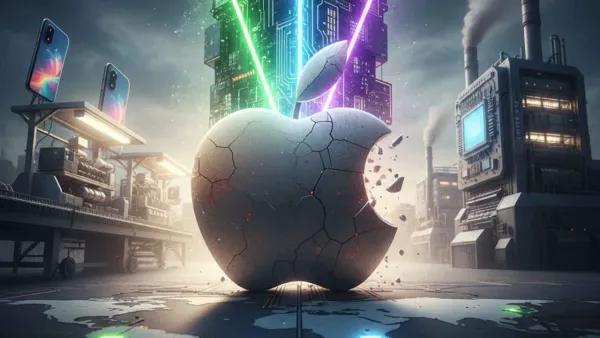
For over a decade, Apple's seat at the head of the global supply chain was undisputed. Its massive order volumes and legendary logistics prowess allowed it to dictate terms, squeeze margins, and effectively "own" the world's most advanced fabrication plants.
However, as of February 2026, that era of absolute hegemony is showing cracks. The explosive demand for AI infrastructure has birthed a new class of "Golden Clients" - Nvidia, Microsoft, and Amazon - who aren't just matching Apple's spending; they're outbidding it for critical resources.
The power shift at TSMC
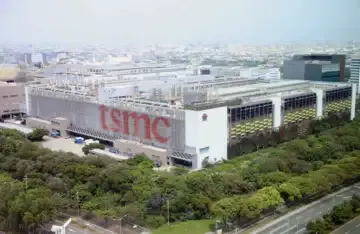 The most visible shift is occurring at Taiwan Semiconductor Manufacturing Company (TSMC). Nvidia has reportedly overtaken Apple as TSMC's largest customer by revenue, shifting the foundry's priority toward high-performance computing and AI chips. These high-margin AI accelerators justify price tags that Apple's consumer-focused hardware simply cannot absorb. As a result, Apple is losing its historical exclusivity and is even exploring alternative foundries like Intel and Samsung for its lower-end processors to mitigate this new reliance. This move would mark the first time since 2014 that an iPhone or Mac processor has come from a manufacturer other than TSMC.
The most visible shift is occurring at Taiwan Semiconductor Manufacturing Company (TSMC). Nvidia has reportedly overtaken Apple as TSMC's largest customer by revenue, shifting the foundry's priority toward high-performance computing and AI chips. These high-margin AI accelerators justify price tags that Apple's consumer-focused hardware simply cannot absorb. As a result, Apple is losing its historical exclusivity and is even exploring alternative foundries like Intel and Samsung for its lower-end processors to mitigate this new reliance. This move would mark the first time since 2014 that an iPhone or Mac processor has come from a manufacturer other than TSMC.
Navigating the 2026 memory crunch
This industry-wide "memory crunch" is forcing a dramatic change in Apple's product strategy. With manufacturers like Samsung and SK Hynix diverting capacity toward AI-critical High-Bandwidth Memory (HBM), Apple faces an estimated cost hike of $57 per unit for the upcoming iPhone 18. During a recent earnings call, CEO Tim Cook acknowledged that Apple is seeing less flexibility in the supply chain than normal, as memory prices are forecast to quadruple by the end of the year. To protect its margins, reports suggest Apple has pushed the standard iPhone 18 launch to the first half of 2027, choosing instead to focus its 2026 roadmap on premium, high-margin devices like its first-ever foldable iPhone and the Pro series.
Prioritising the iPhone Fold
 The decision to delay the vanilla iPhone 18 is a calculated risk to ensure the success of the iPhone Fold. Producing a foldable device involves more complex industrial techniques and new materials, such as specialized glass and hinges, which are also seeing increased demand from AI hardware startups like OpenAI. By focusing on only three high-end models in 2026-the Pro, Pro Max, and Fold-Apple can optimize its limited supply of advanced node chips and premium components. This pivot suggests that Apple is moving away from its "volume-first" strategy and toward a model where cutting-edge, high-price hardware compensates for the rising costs of raw materials.
The decision to delay the vanilla iPhone 18 is a calculated risk to ensure the success of the iPhone Fold. Producing a foldable device involves more complex industrial techniques and new materials, such as specialized glass and hinges, which are also seeing increased demand from AI hardware startups like OpenAI. By focusing on only three high-end models in 2026-the Pro, Pro Max, and Fold-Apple can optimize its limited supply of advanced node chips and premium components. This pivot suggests that Apple is moving away from its "volume-first" strategy and toward a model where cutting-edge, high-price hardware compensates for the rising costs of raw materials.
Strategic resilience in India
While Apple's dominance is being challenged, the company is doubling down on geographic resilience in India. India's share of global iPhone production has already reached 25%, and new tax exemptions in the Indian Budget 2026 are making it easier for Apple to scale up "Made in India" premium devices. The government has introduced a five-year tax exemption for companies that provide high-end machinery to local contract manufacturers, allowing Apple to modernize its Indian production lines at a significantly lower cost. Apple isn't failing, but it is no longer the sole dictator of the supply chain. In a world where AI giants are writing blank silicon checks, Apple is now forced to compete and adapt to a changing global order.
READ NEXT
-
The ground feels solid but deep below, Earth is slowly changing

-
UK naval chief says Russia’s Northern Fleet investment remains strong

-
Quant Mutual Fund announces appointment of Mahendra Jajoo as whole time director on AMC board

-
‘Single mom with 3 kids driving Uber’: What this Hyderabad man saw during a cab ride left thousands moved

-
Paris prosecutors raid X offices as part of an investigation into child porn, deepfakes and more