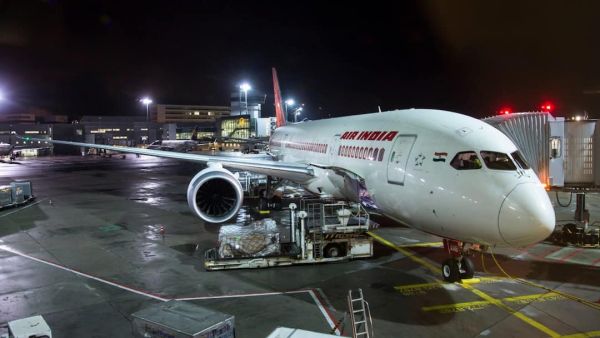
An Air India Boeing 787-8 operating flight AI-132 from London to Bengaluru recently reported a minor cockpit control concern during engine start, prompting a detailed inspection after landing. The crew observed unusual behaviour in a fuel control switch while preparing for departure in London, though the flight proceeded safely with no warnings or system alerts. The matter was formally logged upon arrival and later reviewed by Boeing and Indian aviation regulators, who concluded that the issue was linked to handling technique rather than any design defect.
Switch Did Not Lock Initially, Flight Continued Safely
The incident occurred as the crew attempted to start the engines on the Boeing 787-8 aircraft. During initial checks, the fuel control switch did not lock firmly into the RUN position on the first two attempts when light pressure was applied. On the third attempt, the switch locked correctly and remained stable.
Before continuing with the procedure, the crew manually verified that the switch was fully secured in the RUN position. No cockpit warnings, alarms or system anomalies appeared during engine start. As a precaution, the crew avoided unnecessary contact with the switch during the flight and closely monitored engine parameters throughout the journey.
The aircraft landed in Bengaluru without any incident. After arrival, the crew recorded the observation in the Pilot Defect Report (PDR), following standard protocol. Air India then referred the matter to Boeing for technical guidance.
Boeing, DGCA Find No Fault
Following Boeing’s prescribed inspection process, Air India’s engineering team examined both left and right fuel switches. Engineers confirmed that both switches were functioning normally, with locking mechanisms correctly aligned and no tendency to slide automatically from RUN to CUTOFF.
However, tests showed that applying pressure from an incorrect angle, using a thumb or finger, could cause the switch to move towards CUTOFF. Boeing attributed this to the angular base plate design, stressing that correct handling technique is critical and that there is no underlying design flaw.
At Boeing’s request, engineers also measured the force required to unlock the switches, both on the aircraft involved and on other aircraft as well. In all cases, readings were within prescribed limits. These checks were carried out in the presence of officials from India’s aviation regulator, the Directorate General of Civil Aviation.
Air India has now been advised to reinforce correct fuel cut-off switch handling procedures among all flight crew through refresher training.
-
Fight for cheaper HIV drugs: The extraordinary stories of an Indian and a South African

-
Earl Spencer's ex-wife keeps title for key reason as shock divorce finalised

-
Is House inferior to X?: MP Brittas slams govt on trade deal announcement on social media

-
Meghan Markle risks fan fury as she raises price of As Ever products after 'glitch'

-
[WATCH] 'One of the most dangerous teams' - MS Dhoni gives verdict on India's chances at 2026 T20 World Cup