
Listen to this article in summarized format
Loading...
××
Subscribe to

Unlock AI Briefing and Premium Content
Subscribe NowWhat's Included
- Exclusive Stories
- Daily ePaper Access
- Smart Market Tools
- Curated Investment Ideas
- Ad-lite Experience
Subscription

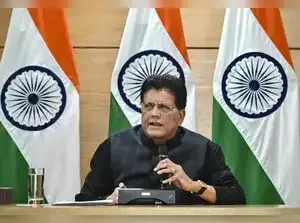
India’s long-negotiated trade agreement with the United States is set to open new opportunities for exporters and MSMEs, while safeguarding farmers' interests and sensitive sectors, Commerce and Industry Minister Piyush Goyal told the Lok Sabha on Wednesday.
Goyal said the deal was finalised after nearly a year of negotiations, adding that India had secured tariff treatment more favourable than that offered to many other countries.
“After discussions spanning about a year, we have reached an agreement with the United States,” Goyal said, stressing that the pact would provide a competitive edge to Indian exporters in the world’s largest consumer market.
The minister said the agreement aligns with India’s broader industrial strategy of “Make in India, Design in India and Innovate in India for the world”, and would help Indian companies plug into global value chains while expanding market access in the US.
According to Goyal, the deal is expected to create new avenues for MSMEs and farmers, while ensuring that the interests of agriculture and other sensitive sectors remain protected. “Our priority has been to safeguard farmers and vulnerable sectors even as we expand trade,” he said.
On the trade deal's impact on domestic manufacturing, he said that the deal will help promote Viksit Bharat and Atmanirbhar Bharat initiatives. India-US trade deal will help promote initiatives like ‘Make in India’, ‘Design in India’ for the world, he said.
As per his statement in Lok Sabha, India's labour-intensive sectors will get an export boost in the US market. He assured that the country's priority is to ensure energy security for its citizens.
India's highest priority is to diversify energy sources in line with objective market conditions and the changing international scenario
"As India advances on the path of a developed India, we will need to enhance our capabilities in many sectors, including energy, aviation, data centres, nuclear energy, and others," he said adding that the US is the world leader in these sectors, so it is natural for India to focus on the possibilities of trade in these areas, which will lead not only to an expansion in the purchases but also in the country's exports.
"Last year, negotiators from both sides held detailed discussions on various levels. Keeping the important interests of both sides in mind, it is natural that both sides would want to safeguard their respective important and sensitive areas and ensure the best possible results," the minister said.
Prime Minister Narendra Modi and US President Donald Trump announced a trade deal between the two countries on February 2, slashing tariffs on India to 18% from 50%.
However, the complete details of the trade pact still remain undisclosed. Finance Minister Nirmala Sitharaman addressed concerns about market access for US farm products in an interview with Times Now saying, "I will assure you that farmers' interest, dairy interests are intact," clarifying that "red lines" were established before negotiations began to protect these sensitive sectors.
Agriculture and dairy have been the most sensitive and contentious parts of the India-US trade negotiations that have lasted for over a year.
Opposition parties are demanding that the prime minister Modi should come clear on the trade deal as it will impact sensitive sectors such as agriculture. The MPs disrupted the proceedings during the Budget Session, which was adjourned till 2 PM.
Post deal announcement, U.S. Secretary of Agriculture Brooker Rollings on X thanked Trump for taking care of American farmers, saying the deal will help export more American farm products to India’s massive market, lifting prices and pumping cash into rural America.
Earlier on Tuesday, the trade minister Goyal said that sensitive sectors such as agriculture and dairy have been protected in the deal.
“India has got the best deal in comparison to the countries in the neighborhood. Going forward the relationship between India and the U.S. will strengthen further,” Goyal said. “I can assure 1.4 billion people of India that this is a deal that will protect the interests of every Indian and the sensitive sectors.”
Goyal said the deal was finalised after nearly a year of negotiations, adding that India had secured tariff treatment more favourable than that offered to many other countries.
“After discussions spanning about a year, we have reached an agreement with the United States,” Goyal said, stressing that the pact would provide a competitive edge to Indian exporters in the world’s largest consumer market.
The minister said the agreement aligns with India’s broader industrial strategy of “Make in India, Design in India and Innovate in India for the world”, and would help Indian companies plug into global value chains while expanding market access in the US.
According to Goyal, the deal is expected to create new avenues for MSMEs and farmers, while ensuring that the interests of agriculture and other sensitive sectors remain protected. “Our priority has been to safeguard farmers and vulnerable sectors even as we expand trade,” he said.
On the trade deal's impact on domestic manufacturing, he said that the deal will help promote Viksit Bharat and Atmanirbhar Bharat initiatives. India-US trade deal will help promote initiatives like ‘Make in India’, ‘Design in India’ for the world, he said.
As per his statement in Lok Sabha, India's labour-intensive sectors will get an export boost in the US market. He assured that the country's priority is to ensure energy security for its citizens.
India's highest priority is to diversify energy sources in line with objective market conditions and the changing international scenario
"As India advances on the path of a developed India, we will need to enhance our capabilities in many sectors, including energy, aviation, data centres, nuclear energy, and others," he said adding that the US is the world leader in these sectors, so it is natural for India to focus on the possibilities of trade in these areas, which will lead not only to an expansion in the purchases but also in the country's exports.
"Last year, negotiators from both sides held detailed discussions on various levels. Keeping the important interests of both sides in mind, it is natural that both sides would want to safeguard their respective important and sensitive areas and ensure the best possible results," the minister said.
Prime Minister Narendra Modi and US President Donald Trump announced a trade deal between the two countries on February 2, slashing tariffs on India to 18% from 50%.
However, the complete details of the trade pact still remain undisclosed. Finance Minister Nirmala Sitharaman addressed concerns about market access for US farm products in an interview with Times Now saying, "I will assure you that farmers' interest, dairy interests are intact," clarifying that "red lines" were established before negotiations began to protect these sensitive sectors.
Agriculture and dairy have been the most sensitive and contentious parts of the India-US trade negotiations that have lasted for over a year.
Opposition parties are demanding that the prime minister Modi should come clear on the trade deal as it will impact sensitive sectors such as agriculture. The MPs disrupted the proceedings during the Budget Session, which was adjourned till 2 PM.
Post deal announcement, U.S. Secretary of Agriculture Brooker Rollings on X thanked Trump for taking care of American farmers, saying the deal will help export more American farm products to India’s massive market, lifting prices and pumping cash into rural America.
Earlier on Tuesday, the trade minister Goyal said that sensitive sectors such as agriculture and dairy have been protected in the deal.
“India has got the best deal in comparison to the countries in the neighborhood. Going forward the relationship between India and the U.S. will strengthen further,” Goyal said. “I can assure 1.4 billion people of India that this is a deal that will protect the interests of every Indian and the sensitive sectors.”