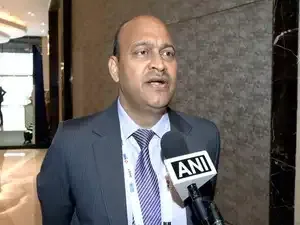
Mumbai: The government's recent announcement to introduce 100 per cent FDI in the insurance sector has granted "more power to the regulators," said LIC MD, Dinesh Pant.
He further noted that India's focus on its Insurance sector through major announcements in Budget 2026, along with recent policy changes such as GST reduction and the insurance amendment bill (announced in December) shows government's intent towards "recognition of insurance as a historical driver of economic growth and its importance in bridging India's protection gap."
In an interview to ANI, Pant emphasises on government's continued efforts towards achieving its goal of "Insurance for All by 2047."
He says, "The budget, along with recent policy changes, indicates the government's strong focus on the insurance sector."
Speaking about the recent GST reduction and the insurance amendment bill, he said, "Key reforms include GST reduction and the insurance amendment bill (December), which introduced 100% FDI, granted more powers to regulators, and reduced net worth requirements for insurers."
The government recently announced a reduction in GST on individual life and health insurance from 18 per cent to nil, effective September 22, 2025. All individual life insurance (Term, ULIP, Endowment) and health insurance (Individual, Family Floater, Senior Citizen) policies are now exempt from GST, helping insurance companies pass more savings to you.
This move is intended to make essential financial protection more affordable for the general public.
"The government is also pushing insurance companies to rethink expense allocation and improve the quality of services, particularly regarding distribution costs," said Pant in the interview.
Talking about the capex increase announced in Budget 2026. He said, "The budget increased capital expenditure (capex) from 11.4 to 12.2 lakh crore."
Pant views this as a significant improvement, especially given the 97 per cent capex utilisation in the previous year, which has a multiplier effect on the economy and infrastructure development. He also highlights the government's management of fiscal deficit and borrowing levels while increasing capex as "really appreciable."
Talking about the economic outlook, he said, "The GDP growth rate for FY26-27 is projected at 7.4%, an upgrade from 6.5%. Despite positive economic indicators, there has been market volatility and a weakening rupee following international trade deals."
He further noted that India's focus on its Insurance sector through major announcements in Budget 2026, along with recent policy changes such as GST reduction and the insurance amendment bill (announced in December) shows government's intent towards "recognition of insurance as a historical driver of economic growth and its importance in bridging India's protection gap."
In an interview to ANI, Pant emphasises on government's continued efforts towards achieving its goal of "Insurance for All by 2047."
He says, "The budget, along with recent policy changes, indicates the government's strong focus on the insurance sector."
Speaking about the recent GST reduction and the insurance amendment bill, he said, "Key reforms include GST reduction and the insurance amendment bill (December), which introduced 100% FDI, granted more powers to regulators, and reduced net worth requirements for insurers."
The government recently announced a reduction in GST on individual life and health insurance from 18 per cent to nil, effective September 22, 2025. All individual life insurance (Term, ULIP, Endowment) and health insurance (Individual, Family Floater, Senior Citizen) policies are now exempt from GST, helping insurance companies pass more savings to you.
This move is intended to make essential financial protection more affordable for the general public.
"The government is also pushing insurance companies to rethink expense allocation and improve the quality of services, particularly regarding distribution costs," said Pant in the interview.
Talking about the capex increase announced in Budget 2026. He said, "The budget increased capital expenditure (capex) from 11.4 to 12.2 lakh crore."
Pant views this as a significant improvement, especially given the 97 per cent capex utilisation in the previous year, which has a multiplier effect on the economy and infrastructure development. He also highlights the government's management of fiscal deficit and borrowing levels while increasing capex as "really appreciable."
Talking about the economic outlook, he said, "The GDP growth rate for FY26-27 is projected at 7.4%, an upgrade from 6.5%. Despite positive economic indicators, there has been market volatility and a weakening rupee following international trade deals."