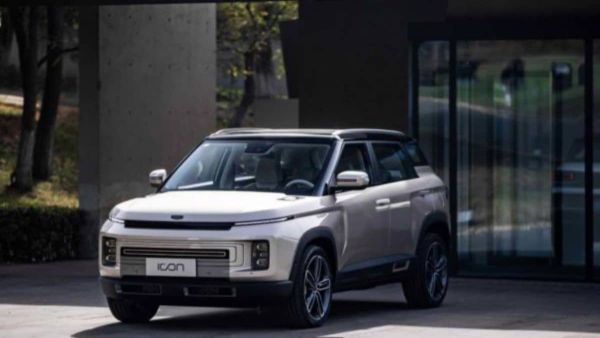
Ford and China’s Geely are in discussions about a potential partnership, eight people with knowledge of the ongoing talks said, as the world's carmakers look to share heavier technology and manufacturing costs.
The companies are in talks to have Geely use Ford factory space in Europe to produce vehicles for the region, three people familiar with the matter said. They also have discussed the potential framework for shared vehicle technologies, including for automated driving, according to two different people with knowledge of the talks.
The talks centered on European manufacturing are more advanced, two people said. Ford sent a delegation to China this week to intensify discussions, which followed meetings last week in Michigan between senior Geely executives and Ford leaders, some of the people said.
Talks between Geely and Ford have been underway for months, said five of the sources, who declined to be named because the discussions are private and ongoing. Reuters could not determine the full scope of the talks or if they would result in a deal, including for the US market.
Geely declined to comment. Ford said: "We have discussions with lots of companies all the time on a variety of topics. Sometimes they materialise, sometimes they don't."
Chinese automakers have effectively been shut out of the US market because of tariffs and restrictions imposed during the Biden administration, which cited national security risks from data collection and vehicle software. Any deal to bring advanced Chinese vehicle technology to the US market would likely draw scrutiny from the Trump administration and some lawmakers.
‘HUMBLING’ CHINESE TECHNOLOGY
A deal could help Ford in its race to catch up with global competitors in areas like connected-vehicle technology and autonomy, a priority for Tesla and a major focus for Chinese automakers. Ford CEO Jim Farley has been vocal about the need for his company to close a competitive gap with China.
In an interview at the Aspen Ideas Festival last year, Farley called China’s global lead in electric vehicles and connected-vehicle technology "the most humbling thing I have ever seen."
He also responded to questions about whether US President Donald Trump would nix a potential joint venture between Ford and a Chinese automaker.
“I don’t think so," Farley said. "I think as long as it has the right guardrails and we think about it the right way, no, I’ve found openness throughout the government to do this, because I think they know it’s required."
Manufacturing some cars using Ford’s European factory space would likely help Geely avoid the European Union's tariffs on China-made electric vehicles. In 2024, the EU introduced provisional tariffs of up to 37.6 per cent on imported Chinese EVs, warning of a potential flood of unfairly subsidised vehicles.
Ford’s plant in Valencia, Spain, would most likely be the factory involved in these talks, a person familiar with the matter said.
Several Chinese carmakers have made moves to set up production in Europe. Vehicles from Chinese automaker Leapmotor will be built at a Stellantis plant in Spain as part of a joint venture. Suppliers are also striking similar agreements, with China's Guangzhou Automobile Group and Xpeng building an electric model at a Magna International facility in Austria.
Geely has partnered with Renault in South Korea and Brazil to jointly produce and sell cars built on Geely technologies using the French automaker's factories and sales network. The strategy appears to be paying off, as Renault-branded car sales outside Europe rose 11 per cent in 2025 from a year earlier, compared with a 0.6 per cent decline in 2024.
GROWING FOCUS ON PARTNERSHIPS
Farley has also been outspoken about the need for partnerships and the automaker recently forged an EV production deal in Europe with Renault.
A commercial tie-up with Geely for vehicles or technology earmarked for the US would likely face scrutiny from American lawmakers, who previously slammed Ford's decision to license EV battery technologies from Chinese battery maker CATL for a plant in Michigan.
With proposed rules drafted under the Biden administration, the US Department of Commerce banned using communication technology and services from China and other "adversary" countries in connected vehicles sold and used in the US due to "national security" concerns.
The Trump administration recently pushed out Elizabeth "Liz" Cannon, a Commerce Department official whose office led the effort to bar Chinese cars and technologies from the US market, Reuters reported in January.
Those rules remain in place and the Trump administration so far has not signaled that it intends to modify them. Trump last month reiterated that he would welcome a Chinese automaker that wants to build cars on US soil if it brought investment and jobs.
Geely Auto, which includes the Zeekr and Lynk & Co brands, posted a 39 per cent jump in sales in 2025 to just over 3 million vehicles. Including other affiliate brands like Volvo Cars and Lotus, Geely is the second-largest Chinese automaker behind BYD.
Under founder Li Shufu, Geely has also been an active dealmaker in seeking out foreign partners. Geely bought Volvo from Ford in 2010 for $1.8 billion.
Last week, the Financial Times reported that Ford and Xiaomi held talks over a partnership that would have allowed Xiaomi to manufacture EVs in the US, citing people familiar with the matter. Ford and Xiaomi have both said the report was inaccurate.
-
The Sacred Tulsi Plant: Best Practices for Planting and Worship

-
Valentine's Day 2026: Untold tale of pagan roots, forbidden love, and global traditions of celebrating love

-
How to get a Farmer ID, where to apply, and what is the process?

-
The Science Behind Baby's First 90 Minutes After Birth

-
How much will it cost to install a 3-kilowatt solar panel, and is a government subsidy available for it?