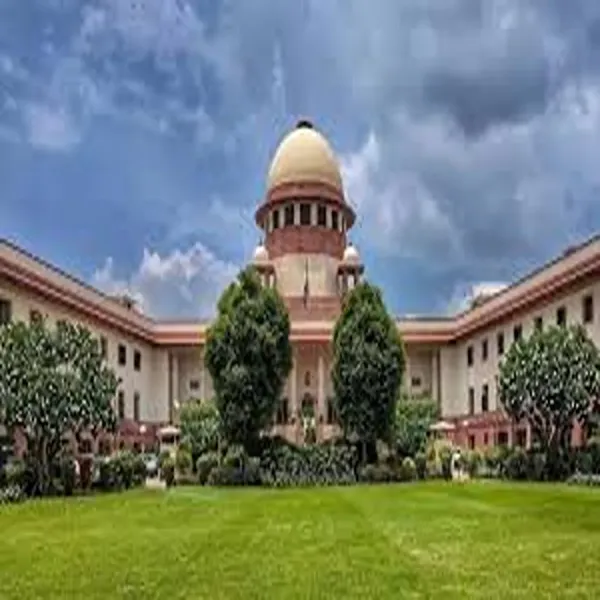
EnvironmentalClearance – India’s Supreme Court was on Thursday requested to form a new three-judge bench to reconsider a series of petitions challenging retrospective environmental approvals granted to projects that allegedly violated environmental regulations. The request was presented before a bench led by Chief Justice Surya Kant and Justice Joymalya Bagchi, where a counsel argued for a fresh judicial review of earlier rulings that permitted such approvals under specific conditions.
Call for Fresh Judicial Examination
During the proceedings, the lawyer emphasized the need for the matter to be heard again by a larger bench due to its significant environmental and financial implications. Responding briefly, Chief Justice Kant acknowledged the request and indicated that the court would examine the proposal. The appeals focus on the legality and policy framework surrounding approvals granted after projects had already begun operations without mandatory environmental clearance.
Earlier Ruling Opened Path for Post-Approval Mechanism
The controversy stems from a November 18, 2025 verdict delivered by a three-judge panel led by then Chief Justice B R Gavai. In a split 2:1 ruling, the bench allowed government agencies to grant environmental clearance retrospectively to projects that had violated regulations, provided that developers paid substantial penalties. The majority reasoned that refusing such approvals could result in massive economic losses, potentially rendering investments worth thousands of crores unproductive.
The decision also directed that pending petitions, including one filed by environmental advocacy group Vanshakti, be heard afresh. The judgment effectively reopened the debate around balancing environmental safeguards with economic development priorities.
Earlier Ban on Retrospective Clearances
Prior to the November ruling, a different bench comprising Justice A S Oka and Justice Ujjal Bhuyan had delivered a strong judgment on May 16, 2025. That order prohibited the Ministry of Environment, Forests and Climate Change and related authorities from granting environmental clearance after projects had already begun construction or operations in violation of legal requirements.
The earlier verdict was widely viewed as a reinforcement of environmental accountability, insisting that projects must obtain mandatory approvals before commencing work. However, the November judgment reversed that position, allowing regulators to consider post-facto approvals under defined penalty provisions.
Dissent Raises Environmental Concerns
Justice Ujjal Bhuyan, who was part of the earlier ruling and later authored a dissent in the November decision, expressed serious reservations about retrospective approvals. He argued that granting environmental clearance after project completion contradicts established environmental law principles. According to the dissent, such approvals undermine the precautionary principle and threaten the broader objective of sustainable development.
The dissent further noted that post-facto clearances are not recognized under existing environmental frameworks and could weaken enforcement mechanisms designed to protect natural resources and public health.
Revival of Controversial Regulatory Measures
The majority judgment also revived a 2017 government notification and a 2021 Office Memorandum that provided a regulatory pathway for projects operating without prior clearance to seek regularisation by paying penalties. These measures have remained contentious, with environmental groups arguing that they encourage violations by offering a route to legalise unauthorized projects after the fact.
Following the ruling, Justice Gavai instructed the court registry to place the matter before the Chief Justice for administrative orders aimed at ensuring a fresh hearing on petitions challenging these regulatory instruments. The upcoming judicial review is expected to examine whether retrospective approvals align with environmental governance standards and constitutional principles.
Broader Impact on Policy and Industry
The outcome of the fresh hearing could significantly influence infrastructure development, environmental policy, and regulatory enforcement in India. Industry stakeholders argue that retrospective approvals provide a pragmatic solution for projects stalled due to procedural delays. Meanwhile, environmental organizations maintain that allowing such clearances risks weakening compliance and accountability.
Legal observers believe that the Supreme Court’s eventual decision will clarify the balance between economic growth and environmental protection, setting a precedent for future regulatory disputes involving large-scale development projects.
-
T20 World Cup 2026: Suryakumar Yadav BREAKS silence on India-Pakistan boycott row, confirms team will…

-
Rohit Shetty house firing update: Police arrest another accused, who supplied weapon to shooter

-
Delhi HC rejects Rajpal Yadav’s final plea, directs actor to surrender in cheque bounce cases

-
Nick Jonas recalls Malti Marie undergoing six blood transfusions: ‘Priyanka and I did 12-hour shifts at the hospital for 3.5 months’

-
Sensex, Nifty fall sharply, snapping three-day rally amid global jitters