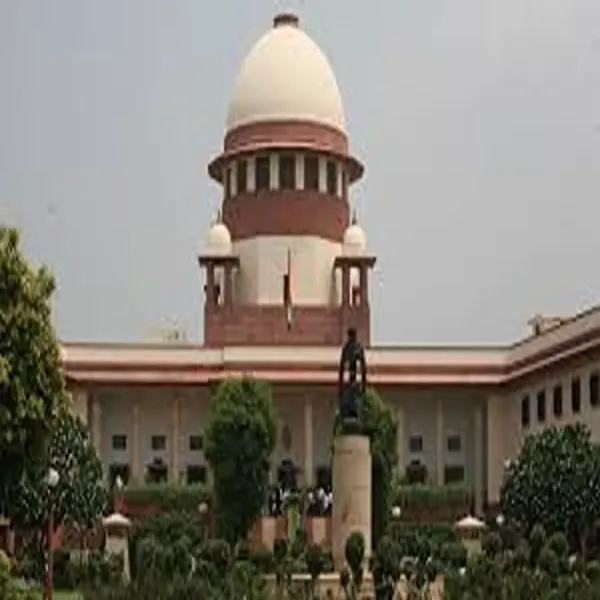
Judiciary – India’s Supreme Court on Wednesday overturned an interim ruling by the Madras High Court that had halted the implementation of ten legislative amendments passed by the Tamil Nadu Assembly. These amendments transfer the authority to appoint Vice-Chancellors of state-run universities from the Governor to the state government, reigniting a significant constitutional debate over administrative control in higher education institutions.
Supreme Court Questions High Court’s Urgency
A three-judge bench led by Chief Justice Surya Kant, along with Justices Joymalya Bagchi and Vipul Pancholi, criticized the speed with which a vacation bench of the Madras High Court issued the stay order in May 2025. The Supreme Court observed that the High Court appeared to have acted hastily without thoroughly examining the legal framework surrounding the amendments. As a result, the apex court nullified the interim stay and instructed that the case be reviewed afresh by a bench headed by the Chief Justice of the Madras High Court or another suitable bench.
The Supreme Court also expressed concern over why a vacation bench was dealing with matters involving constitutional validity of legislative measures, suggesting that such issues typically require comprehensive hearings and careful deliberation.
Direction for Fresh Hearing and Temporary Assurance
While setting aside the High Court’s earlier order, the Supreme Court directed the Madras High Court to complete its reconsideration of the case within six weeks. During the hearing, Tamil Nadu’s legal representatives informed the apex court that the state government would refrain from making any new Vice-Chancellor appointments until the High Court reaches a final decision on the legality of the amendments. The Supreme Court recorded this assurance as part of its order.
The state government had approached the apex court challenging the High Court’s decision and had additionally requested that the matter be transferred entirely to the Supreme Court for adjudication. However, the court chose to allow the High Court to rehear the case instead of shifting jurisdiction.
Background of the Legislative Amendments
The ten amendments in question were enacted to modify the governance structure of several state universities. These legislative changes came into effect after the Supreme Court earlier granted what is known as deemed assent in a separate case involving the Tamil Nadu Governor. This legal development allowed the bills to become law even without formal approval from the Governor.
The amendments were later challenged through a Public Interest Litigation filed by advocate K. Venkatachalapathy. The petition sought to declare the legislative changes invalid, arguing that they undermined established administrative procedures governing universities. A vacation bench comprising Justices G.R. Swaminathan and V. Lakshminarayan subsequently stayed the amendments after considering the petition.
State Raises Procedural and Constitutional Concerns
Senior advocate Abhishek Manu Singhvi, appearing on behalf of the Tamil Nadu government, told the Supreme Court that the High Court’s handling of the matter was legally flawed. He argued that the amendments had already come into force in April 2025, and the challenge was brought nearly a month later during the summer court vacation, yet was treated as an urgent matter.
Singhvi also stressed that legislative enactments are generally presumed to be constitutionally valid unless proven otherwise through detailed judicial examination. He contended that granting a stay before fully hearing arguments from all parties contradicted established judicial principles.
Jurisdictional Objection Raised by State Counsel
Another senior counsel representing the state, P. Wilson, raised concerns about the manner in which the Public Interest Litigation was filed. He argued that the petitioner should have approached the Madurai Bench of the Madras High Court since the petitioner’s territorial jurisdiction fell within that bench’s authority. According to Wilson, bypassing the appropriate bench raised procedural questions that needed to be addressed during the rehearing.
Implications for University Administration
The case carries wider implications for administrative control in public universities and the balance of power between constitutional authorities and elected governments. The final verdict from the Madras High Court is expected to influence how higher education institutions in Tamil Nadu are governed and could potentially shape similar governance debates in other states.
-
BIG Relief For BJP MP Anurag Thakur! SC Lifts 9-Year Ban On Ex-BCCI President, Allows Him To Hold Office
-
IND Vs USA, ICC T20 World Cup 2026: Captain Suryakumar Yadav Issues Washington Sundar Injury Update Ahead Of Tournament Opener

-
'She Gave Us A Motivational Speech...': Janki Bodiwala On Her Experience Of Working With Rani Mukerji In Mardaani 3 | Exclusive

-
TSMC to make advanced AI semiconductors in Japan in boost for its chipmaking ambitions

-
China warns of security risks linked to OpenClaw open-source AI agent