For over a decade, India’s ride-hailing story has followed a familiar arc with deep discounts, rapid expansion, growing dependence and rising discontent. Drivers have protested shrinking earnings, users have complained about surge pricing and cancellations, and platforms have quietly recalibrated their models under regulatory and financial pressure.
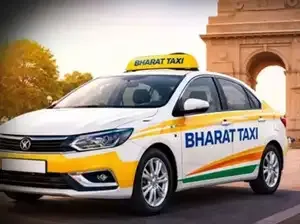
On Thursday, the government-backed Bharat Taxi officially entered this crowded marketplace, pitching itself as something fundamentally different: world’s first cooperative-owned ride-hailing platform, where drivers are not contractors but owners.
Also Read: Amit Shah launches Bharat Taxi, says ‘Sarathi hi malik’ as govt unveils cooperative cab service
Launched by Union Cooperation Minister and Home Minister Amit Shah after a two-month pilot, Bharat Taxi is aiming to position itself as a people-centric alternative to aggregator-led mobility, promising zero commission, surge-free pricing, and collective ownership for drivers (called Sarathis) under the cooperative model.
The Bharat Taxi app allows users to book autos, bike taxis, and cabs (including economy, sedan, XL and priority options) through a single interface. It is currently available on both the Google Play Store and Apple App Store.
Unlike conventional ride-hailing platforms that charge drivers commission rates of 20-30% per trip, Bharat Taxi operates on a zero-commission model, with profits distributed directly among driver-members, according to the Ministry of Cooperation.
The platform has also introduced initiatives such as “Bike Didi”, under which over 150 women drivers have already joined, aiming to address safety concerns while expanding livelihood opportunities.
According to a PTI report, around Rs 10 crore has been distributed directly to drivers, alongside social security benefits such as health insurance, accident cover, and retirement savings.
Also Read: Bharat Taxi begins trials in Delhi and Gujarat. Here's all you need to about this Uber alternative
But the platform’s core pitch is structural rather than technological.
“Conceived as a community-owned alternative to conventional aggregator-based mobility services, Bharat Taxi seeks to redefine urban transport by placing drivers at the centre of the platform,” the Ministry of Cooperation said in its launch note.
Built around the slogan “Sarathi Hi Malik” (the driver is the owner), the cooperative approach allows drivers to hold shares in the platform. During Thursday’s launch, top-performing Sarathis were honoured for their contributions with certificates.
Yet this growth has come with structural friction.
A 2023 survey by the Indian Federation of App-based Transport Workers (IFAT) found that 74% of Uber and Ola drivers considered incentive systems unfair and confusing, while 65% reported a significant drop in income compared to pre-2020 levels. High commissions, opaque incentive rules, and limited grievance redressal have fuelled repeated driver protests across cities.
Also Read: Uber misses on profit outlook, names new CFO for robotaxi future
At the same time, global ride-hailing giants are shifting focus. Uber, for instance, is investing heavily in autonomous vehicle (AV) infrastructure, even as margins tighten. According to Mint, India is Uber’s third-largest market, with users logging 11.6 billion kilometres in 2025, but future capital is increasingly being directed toward long-term AV ambitions rather than driver-centric reforms.
Rapido, which began with bike taxis, claims around 50% market share across categories and operates in nearly 450 cities, with plans to expand to 800 locations by March 2026, its vice-president of finance told The New Indian Express. Rapido has positioned itself firmly as a mass-market player, focusing on affordability and scale.
Meanwhile, Namma Yatri, a Bengaluru-born, subscription-based platform developed in collaboration with drivers’ unions, has already demonstrated that alternatives to commission-heavy models can gain traction. According to Rest of World, Namma Yatri facilitates nearly 1,90,000 rides a day and has helped 6,38,000 drivers earn over $175 million since launch, forcing incumbents to tweak their own pricing models.
Government-backed experiments are also multiplying. The Delhi Metro Rail Corporation’s Momentum 2.0 app now integrates autos and bike taxis, while public authorities have openly signalled interest in driver-owned platforms.
Also Read: Delhi Metro to start bike taxis, autos and cabs from these 10 stations from January 31
"In three years, Bharat Taxi will be rolled out across the country, from Kashmir to Kanyakumari and Dwarka to Kamakhya," Shah said after launching the platform.
Whether Bharat Taxi can scale while maintaining service quality and avoid the trust issues that have plagued earlier alternatives remains an open question.
On Thursday, the government-backed Bharat Taxi officially entered this crowded marketplace, pitching itself as something fundamentally different: world’s first cooperative-owned ride-hailing platform, where drivers are not contractors but owners.
Also Read: Amit Shah launches Bharat Taxi, says ‘Sarathi hi malik’ as govt unveils cooperative cab service
Launched by Union Cooperation Minister and Home Minister Amit Shah after a two-month pilot, Bharat Taxi is aiming to position itself as a people-centric alternative to aggregator-led mobility, promising zero commission, surge-free pricing, and collective ownership for drivers (called Sarathis) under the cooperative model.
What is Bharat Taxi?
Bharat Taxi is a digital mobility platform developed by Sahakar Taxi Cooperative Limited, a Multi-State Cooperative Society, and is backed by the Ministry of Cooperation.The Bharat Taxi app allows users to book autos, bike taxis, and cabs (including economy, sedan, XL and priority options) through a single interface. It is currently available on both the Google Play Store and Apple App Store.
Unlike conventional ride-hailing platforms that charge drivers commission rates of 20-30% per trip, Bharat Taxi operates on a zero-commission model, with profits distributed directly among driver-members, according to the Ministry of Cooperation.
The platform has also introduced initiatives such as “Bike Didi”, under which over 150 women drivers have already joined, aiming to address safety concerns while expanding livelihood opportunities.
Early traction and pilot rollout
According to government data, Bharat Taxi has already onboarded over 3 lakh drivers and more than 6.7 lakh users, with around 10,000 rides completed daily across Delhi-NCR and Gujarat’s Saurashtra region, where the pilot was conducted.According to a PTI report, around Rs 10 crore has been distributed directly to drivers, alongside social security benefits such as health insurance, accident cover, and retirement savings.
Also Read: Bharat Taxi begins trials in Delhi and Gujarat. Here's all you need to about this Uber alternative
Safety, transparency and ownership
For riders, Bharat Taxi is pitching safety and predictability as key differentiators. The app includes a one-tap SOS button linked to local police control rooms, emergency contact alerts, a loud in-app siren, and live ride tracking that can be shared with family and friends.But the platform’s core pitch is structural rather than technological.
“Conceived as a community-owned alternative to conventional aggregator-based mobility services, Bharat Taxi seeks to redefine urban transport by placing drivers at the centre of the platform,” the Ministry of Cooperation said in its launch note.
Built around the slogan “Sarathi Hi Malik” (the driver is the owner), the cooperative approach allows drivers to hold shares in the platform. During Thursday’s launch, top-performing Sarathis were honoured for their contributions with certificates.
Why now? A market at an inflection point
India’s taxi market is projected to grow from $21.07 billion in 2025 to $44.3 billion by 2032, at a Compound Annual Growth Rate (CAGR) of 11.2%, according to Persistence Market Research’s data from April 2025. Ride-hailing alone is expected to account for 58.6% of the market in 2025, driven by demand for last-mile connectivity and app-based convenience.Yet this growth has come with structural friction.
A 2023 survey by the Indian Federation of App-based Transport Workers (IFAT) found that 74% of Uber and Ola drivers considered incentive systems unfair and confusing, while 65% reported a significant drop in income compared to pre-2020 levels. High commissions, opaque incentive rules, and limited grievance redressal have fuelled repeated driver protests across cities.
Also Read: Uber misses on profit outlook, names new CFO for robotaxi future
At the same time, global ride-hailing giants are shifting focus. Uber, for instance, is investing heavily in autonomous vehicle (AV) infrastructure, even as margins tighten. According to Mint, India is Uber’s third-largest market, with users logging 11.6 billion kilometres in 2025, but future capital is increasingly being directed toward long-term AV ambitions rather than driver-centric reforms.
A crowded but evolving competitive landscape
Bharat Taxi enters a market dominated by aggressive, well-funded players.Rapido, which began with bike taxis, claims around 50% market share across categories and operates in nearly 450 cities, with plans to expand to 800 locations by March 2026, its vice-president of finance told The New Indian Express. Rapido has positioned itself firmly as a mass-market player, focusing on affordability and scale.
Meanwhile, Namma Yatri, a Bengaluru-born, subscription-based platform developed in collaboration with drivers’ unions, has already demonstrated that alternatives to commission-heavy models can gain traction. According to Rest of World, Namma Yatri facilitates nearly 1,90,000 rides a day and has helped 6,38,000 drivers earn over $175 million since launch, forcing incumbents to tweak their own pricing models.
Government-backed experiments are also multiplying. The Delhi Metro Rail Corporation’s Momentum 2.0 app now integrates autos and bike taxis, while public authorities have openly signalled interest in driver-owned platforms.
Also Read: Delhi Metro to start bike taxis, autos and cabs from these 10 stations from January 31
A test of scale and trust
The Ministry of Cooperation has outlined ambitious plans: nationwide expansion within two years, support centres in every state, deeper integration with India’s digital public infrastructure, and partnerships across public and private stakeholders."In three years, Bharat Taxi will be rolled out across the country, from Kashmir to Kanyakumari and Dwarka to Kamakhya," Shah said after launching the platform.
Whether Bharat Taxi can scale while maintaining service quality and avoid the trust issues that have plagued earlier alternatives remains an open question.