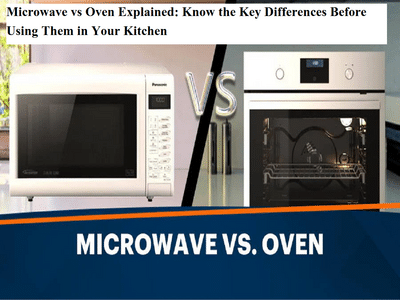
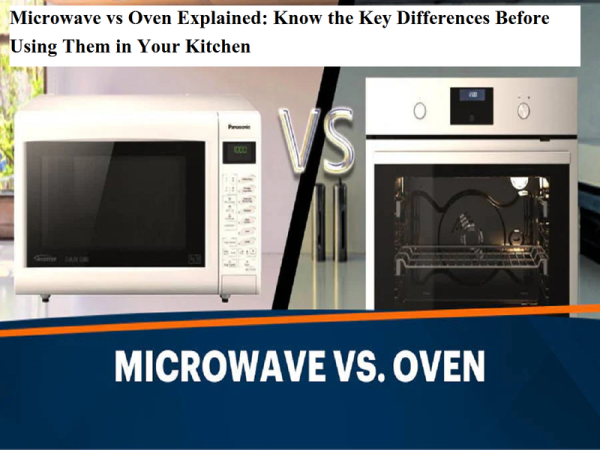
Many people use microwave ovens and conventional ovens daily, yet a large number still assume that both appliances work the same way. While they may look similar and are often placed side by side in modern kitchens, a microwave and an oven function very differently. Understanding these differences can help you choose the right appliance for your cooking needs and improve both taste and efficiency.
Let’s break down the major differences between a microwave and an oven in simple terms.
How They Work: Technology Makes the Real DifferenceThe biggest distinction between a microwave and an oven lies in their cooking technology.
A microwave uses electromagnetic waves, commonly known as microwave radiation, to heat food. These waves directly target water molecules present inside the food, causing them to vibrate rapidly. This vibration generates heat from within, allowing food to warm up or cook extremely fast.
An oven, on the other hand, works through heating elements or rods that warm the air inside the chamber. This hot air then surrounds the food and cooks it slowly from the outside toward the inside. This method is ideal for baking, roasting, and grilling.
In simple words, a microwave heats food from the inside, while an oven cooks food gradually from the outside.
Cooking Speed: Which One Is Faster?If saving time is your priority, the microwave clearly wins.
A microwave can reheat leftovers, warm beverages, or cook simple meals in just a few minutes. It is perfect for busy mornings, quick snacks, or reheating food late at night.
An oven, however, requires preheating and a longer cooking duration. Baking and roasting involve slow, even cooking, which takes more time but delivers better texture for certain dishes.
Quick reheating? Choose a microwave.
Slow, detailed cooking? An oven is the better option.
Another major difference is the variety of dishes each appliance can handle.
A microwave is commonly used for:
- Reheating food
- Steaming vegetables
- Cooking instant meals
- Simple daily cooking
An oven is specifically designed for:
- Baking cakes, cookies, and bread
- Making pizza and pastries
- Roasting vegetables and meats
- Grilling dishes with a crispy finish
While some advanced microwaves claim to bake, they still cannot replicate the results achieved by an oven’s hot air circulation.
Taste, Texture, and Appearance of FoodTaste and texture play a crucial role in deciding which appliance to use.
Food cooked in a microwave usually turns out soft and moist. It does not develop a crispy or browned outer layer. This makes microwaves unsuitable for dishes that require crunch or a golden finish.
An oven, however, gives food a crisp exterior while keeping the inside tender. Whether it’s a pizza base, baked cookies, or roasted vegetables, ovens enhance flavor and texture significantly.
If you care about presentation and crunch, the oven is unmatched.
Electricity Consumption and Cost EfficiencyEnergy usage is another factor to consider.
Microwaves operate for shorter durations and complete tasks quickly, which makes them more energy-efficient for daily use. They are ideal for households that frequently reheat food or cook small portions.
Ovens take longer to heat up and remain on for extended periods during baking or roasting. Due to this prolonged usage, ovens generally consume more electricity than microwaves.
This is why ovens are better suited for occasional use, while microwaves are perfect for everyday cooking needs.
Which One Should You Choose?The choice between a microwave and an oven depends entirely on your lifestyle and cooking habits.
- If you value speed, convenience, and daily usability, a microwave is essential.
- If you enjoy baking, experimenting with recipes, and achieving professional-level textures, an oven is a must-have.
Many modern kitchens now include both appliances, as they serve different purposes and complement each other well.
Microwaves and ovens may look similar, but they are designed for completely different cooking styles. A microwave is about speed and convenience, while an oven is about precision, texture, and taste. Understanding these differences ensures better cooking results and smarter appliance usage.
Choosing the right appliance at the right time can elevate your cooking experience and save both time and energy.
-
Axar Patel: The Quiet Force Behind India’s Cricket Success

-
Telangana High Court Vacancy: Jobs available in the High Court for candidates from 7th pass to graduates; apply before the last date..

-
India Post GDS Vacancy: India Post GDS recruitment circle-wise vacancies released; see state-wise vacancies..

-
LIC Result 2026: LIC AAO, AE Main Exam results declared; so many candidates selected for interview..

-
'Pride Of Muslim Women': Zohran Mamdani Faces Backlash Over World Hijab Day Post