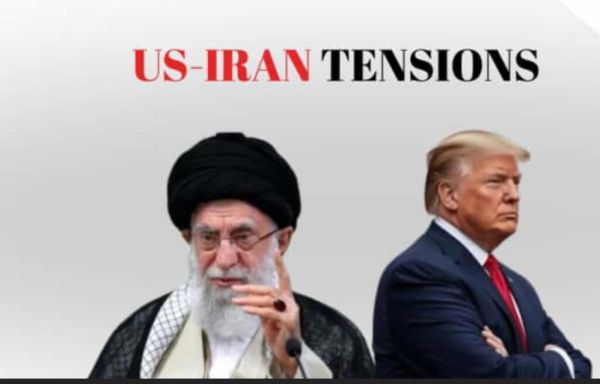
In early 2026, tensions rise in the **Middle East** due to threats from **President Donald Trump** amid US military deployments and a crackdown on nationwide anti-government protests in Iran (which have reportedly left thousands dead). Trump has deployed the **USS Abraham Lincoln** carrier strike group, additional warships, fighter aircraft and air defenses (including THAAD and Patriot systems) to the region, calling it a “huge fleet” that is ready to act “with speed and violence if necessary.” He warned that any failure by Iran to negotiate a new nuclear deal would lead to attacks “far worse” than **Operation Midnight Hammer** in June 2025**, when the US bombed three Iranian nuclear facilities (Fordo, Natanz and Isfahan) during the brief Iran-Israel war, causing severe damage to the program but not completely destroying it (according to US intelligence assessments, it was delayed by months happened).
Trump has pushed for demands that Iran end uranium enrichment, limit ballistic missiles and curb regional proxy influence – which Tehran sees as efforts at regime change. Iranian Supreme Leader **Ayatollah Ali Khamenei** warned on February 1, 2026 that a US attack would provoke a “regional war”, with officials threatening retaliation against US bases, Israel and shipping routes such as the Strait of Hormuz. MP **Alaeddin Boroujerdi** reiterated that civilian nuclear activity, missiles and drones are “red lines” for Iran that are non-negotiable.
A US attack – possibly limited strikes on IRGC bases, security forces, or leadership (possibly targeting Khamenei) – could backfire internally, uniting the Iranian people under the flag, strengthening the radicals or the IRGC, and triggering a succession crisis or military dominance. There is no unified liberal opposition to fill the power vacuum, and arming protesters or separatist groups (e.g. MEK, PJAK, Jaysh al-Adl) has been suggested by people like Senator **Ted Cruz** (who urged arming protesters in late January 2026).
At the regional level, escalating tensions could involve proxies (Houthis, Hezbollah), shut down key waterways, drive up global oil prices, and trigger a broader conflict involving Israel, the Gulf states, or US allies. Diplomatically, indirect talks are being planned or underway (through Oman or Istanbul) to reduce tensions, but mutual distrust remains amid warnings of a long, costly war.