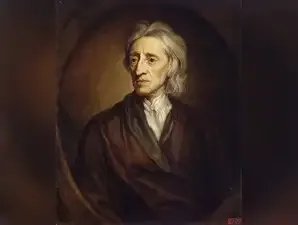
Quote of the day by John Locke: People find inspiration and insight from quotes, whether on social media, in classrooms or at work, because quotes serve as compact reflections that encourage us to pause and think deeply about life’s big questions, challenges and values. Daily quotes can motivate individuals to approach their goals with renewed energy, prompt introspection in times of uncertainty, and build emotional resilience by offering perspective in just a few words. As per LifeHack report, inspirational quotes help frame a positive mindset, comfort us in hardship, remind us we’re not alone, and reinforce confidence by spotlighting universal human experiences. In an age flooded with information, a well-chosen quote can cut through noise, shape thought and spark meaningful conversation.
“No man’s knowledge here can go beyond his experience,” as per BrainyQuote.
Raised in a family sympathetic to Puritan values, Locke grew up during the English Civil Wars, an experience that likely influenced his lifelong rejection of absolute monarchy, as per a Britannica report. He was educated at Westminster School and later at Oxford, where he found traditional teaching dull but became deeply engaged with new scientific ideas emerging at the time. His thinking aligned closely with figures such as Robert Boyle and Isaac Newton, reinforcing his belief that knowledge comes from observation and experience.
Locke died in 1704, but his influence on liberalism, education, science and human rights continues to shape modern thought.
Quote of the Day Today: John Locke on Knowledge and Experience
Quote of the day by John Locke:“No man’s knowledge here can go beyond his experience,” as per BrainyQuote.
Quote of the Day February 5: Meaning of John Locke’s Quote on Experience and Understanding
This thought-provoking line comes from An Essay Concerning Human Understanding by 17th-century philosopher John Locke. Locke’s work lays the foundation of empiricism, the view that all knowledge arises from sensory experience rather than innate ideas.Quote of the Day Explained: How Life Experiences Shape Human Knowledge
By saying “no man’s knowledge…can go beyond his experience,” Locke meant that what we know is rooted in what we have seen, heard, felt or otherwise encountered in life. The mind begins as a blank slate, and ideas are built through observation and reflection on those experiences. Someone told about rainbows may learn the words for them, but only direct experience teaches the true nature of the sight.Why John Locke’s Words Still Resonate Today
Locke’s insight remains relevant today: no matter how much we read or hear, true understanding is anchored to lived or observed reality, underscoring the importance of experience as the foundation of meaningful knowledge.John Locke’s Influence on Modern Philosophy and Education
John Locke was one of those thinkers whose ideas quietly reshaped the modern world. Born on August 29, 1632, in Wrington, England, and living through a period of civil war, political upheaval and scientific discovery, Locke’s life was deeply intertwined with the forces that shaped his philosophy.Raised in a family sympathetic to Puritan values, Locke grew up during the English Civil Wars, an experience that likely influenced his lifelong rejection of absolute monarchy, as per a Britannica report. He was educated at Westminster School and later at Oxford, where he found traditional teaching dull but became deeply engaged with new scientific ideas emerging at the time. His thinking aligned closely with figures such as Robert Boyle and Isaac Newton, reinforcing his belief that knowledge comes from observation and experience.
John Locke and the Foundations of Empiricism
Locke is best known for laying the foundations of empiricism, the idea that the human mind begins as a blank slate and gains knowledge through experience. This principle became central to his landmark work, An Essay Concerning Human Understanding.John Locke’s Political Ideas and Lasting Global Impact
In politics, Locke argued for natural rights, religious toleration, and government based on a social contract. His ideas, especially in Two Treatises of Government, went on to influence the Glorious Revolution in England and later the United States Declaration of Independence.Locke died in 1704, but his influence on liberalism, education, science and human rights continues to shape modern thought.
Famous Quotes by Philosopher John Locke
Here are a few more quotes by John Locke.- "The end of law is not to abolish or restrain, but to preserve and enlarge freedom. For in all the states of created beings capable of law, where there is no law, there is no freedom," as per BrainyQuote.
- "I have always thought the actions of men the best interpreters of their thoughts," as per BrainyQuote.
- "To love our neighbor as ourselves is such a truth for regulating human society, that by that alone one might determine all the cases in social morality," as per BrainyQuote.
- "Things of this world are in so constant a flux, that nothing remains long in the same state," as per BrainyQuote.
- "It is one thing to show a man that he is in an error, and another to put him in possession of the truth," as per BrainyQuote.