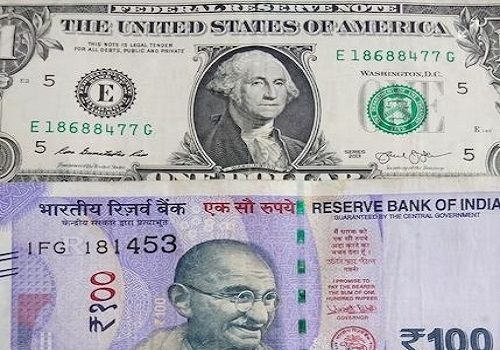
The Indian rupee opened higher compared to the US dollar in early trade on Friday, February 6, boosted by the Reserve Bank of India’s stable policy stance and record-high foreign exchange reserves. Following recent volatility, the local currency strengthened as markets absorbed the RBI’s decision to keep interest rates constant while keeping its position as neutral.
RBI’s Policy Hold Boosts Sentiment:
The RBI Monetary Policy Committee concluded its February review on Thursday, keeping the repo rate at 6.25 percent for the seventh consecutive meeting since the August 2025 rises. Governor Sanjay Malhotra maintained a moderate posture, balancing inflation risks with growth support under global uncertainty. Inflation has risen to 0.71 percent in November 2025 from multi-year lows, led by food costs, raising doubts about further reductions. By January 30, forex reserves had reached an all-time high of $723.8 billion, enough to cover nearly 11 months of imports and enhance rupee defense.
This liquidity support, which has increased from $668 billion in March 2025, is the result of FX swaps and rising gold prices, giving the RBI ammunition against market volatility. The rupee has fluctuated between 89 and 92 in the last two months, falling 5.8 percent since April due to US tariff rises then recovering over Re 1 following the India-US deal. Early quotes showed the currency strengthening approximately 37 paise to 91.56, but spot data showed USD/INR at 90.62-90.65, up 0.3-0.38 percent from Thursday’s closing of 90.31. Traders expect continued FPI inflows following tariff cuts to 18%.
Factors Supporting Rupee Recovery:
With swaps like the $5 billion December auction boosting rupees while accumulating dollars, India’s growth in reserves offers solace. In light of the dollar’s strength, this arrangement relieves pressure by covering 94% of external debt. Although recognizing trade deal relief, the RBI raised concerns about currency volatility. Despite conflicting inflation signals from new CPI weights that could raise readings by 20–30 basis points, the agreement reduced US taxes on Indian exports, which raised hopes. Global indications also played a role: Indian IT stocks dropped $22.5 billion after the RBI halt, affecting equities, while the US moved its focus from financial stability to growth. Gujarat ranked third for international tourists, which added macro growth, but shares were down. Forecasts for the dollar-rupee vary; Trading Economics predicts 91.44 by the end of the quarter, while Dollarrupee.in is currently trading at 90.6550, with a range of 90.18 to 90.84. BookMyForex forecasted 90.27 to 90.75, signaling post-surge consolidation.
Broader Market Reactions:
As expected, Indian equities held firm following the RBI’s neutral call, with GDP and CPI expectations remaining unchanged. The central bank raised its FY27 forecast, showing resilience despite no rate hike. Forex traders monitor non-deliverable forwards for bias, with RBI interventions limiting extremes. The rupee’s 0.82 percent monthly weakness contradicts weekly gains from deal excitement, with the currency down 3.23 percent year on year but expected to reach 90.22 in 12 months. Past maximums reached 92.29 in January 2026, highlighting the RBI’s caution. High reserves ($723.8 billion) provide 11 months of import cover, a significant buffer compared to March levels.
Outlook Amid Global Headwinds:
The RBI’s pause corresponds with moderate growth and rising prices, preventing premature relaxation. The rupee’s strength in early Friday trade indicates policy continuity, reserve heft, and trade deal tailwind. Investors are bracing for US data and tariff rollouts, but India is well-positioned due to domestic buffers. Early gains indicate stability, but volatility remains elevated 92.17, low 91.28 the previous week. As the RBI promotes stability, the rupee seeks a stronger foundation, aided by a forex arsenal and a conservative strategy.
-
Hyderabad techie turned burglar arrested in Andhra Pradesh

-
USA, Pakistan eye improvements with bat in another T20 World Cup showdown
-
SC sets aside HC order staying decision to shift HP OBC Commission from Shimla
-
Bombay HC grants bail to accused in Baba Siddique murder case

-
Opposition to move resolution to remove LS Speaker Birla from office