
Listen to this article in summarized format
Loading...
××
Subscribe to

Unlock AI Briefing and Premium Content
Subscribe NowWhat's Included
- Exclusive Stories
- Daily ePaper Access
- Smart Market Tools
- Curated Investment Ideas
- Ad-lite Experience
Subscription

In this age of deepfake and AI-engineered doppelgangering, there's a beeline to courts for personality protection. Hardly a week goes by without a public figure securing a legal shield against his or her name, face, and voice against commercial exploitation. This week, Delhi High Court agreed to pass orders protecting actor Vivek Oberoi's personality rights by restraining entities from using his name, image and identity without his consent. It comes a year after Scarlett Johansson made news, warning about the 'misuse of AI' after a deepfake video purported to show her sending a message of protest that she hadn't sent.
AI-enabled 'deep mimicry' isn't a horrible tool by itself. The tech can, indeed, be used to endorse something without the endorsers having to be physically 'there'. For endorsers, too, this can open up two revenue streams: a higher one in which they 'really' are there to endorse a product; a lower one by which they 'send' their lookalike/soundalike emissary in the form of a copy. Today, it's deepfake - yesterday's stand-in. Tomorrow, it can be a sophisticated hologram marking the celebrity's 'presence' at an event without him or her being there.
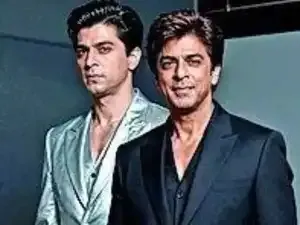
The issue really boils down to consent - with consumers of the creative/creation being aware of the difference between, say, SRK endorsing a brand, and an 'AI SRK' doing the same. The right to publicity is an evolving area of law, and standards vary across countries where claims can arise. The age of communication requires a special framework to address the issue, especially when content is being synthesised by AI. Specific laws that juxtapose privacy and publicity may become inevitable at some point. Common law will have to yield to civil law on the matter for the sake of harmonisation. Allowing judges to hand down protection to the personality of individual celebrities may not be the most efficient way of going about it. Public opinion may have to be sought to delineate personality. That will provide a basis for universal protection, instead of individual cases.
AI-enabled 'deep mimicry' isn't a horrible tool by itself. The tech can, indeed, be used to endorse something without the endorsers having to be physically 'there'. For endorsers, too, this can open up two revenue streams: a higher one in which they 'really' are there to endorse a product; a lower one by which they 'send' their lookalike/soundalike emissary in the form of a copy. Today, it's deepfake - yesterday's stand-in. Tomorrow, it can be a sophisticated hologram marking the celebrity's 'presence' at an event without him or her being there.
The issue really boils down to consent - with consumers of the creative/creation being aware of the difference between, say, SRK endorsing a brand, and an 'AI SRK' doing the same. The right to publicity is an evolving area of law, and standards vary across countries where claims can arise. The age of communication requires a special framework to address the issue, especially when content is being synthesised by AI. Specific laws that juxtapose privacy and publicity may become inevitable at some point. Common law will have to yield to civil law on the matter for the sake of harmonisation. Allowing judges to hand down protection to the personality of individual celebrities may not be the most efficient way of going about it. Public opinion may have to be sought to delineate personality. That will provide a basis for universal protection, instead of individual cases.