
Listen to this article in summarized format
Loading...
××
Subscribe to

Unlock AI Briefing and Premium Content
Subscribe NowWhat's Included
- Exclusive Stories
- Daily ePaper Access
- Smart Market Tools
- Curated Investment Ideas
- Ad-lite Experience
Subscription

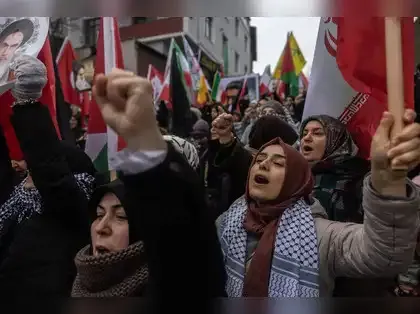
Oxford: Iran recently underwent one of the most intensive episodes of state murder in history. The numbers suggest over 33,000 people were killed in 48 hrs. Now that internet is partially restored in the country, videos are emerging of a reality that exceeds comprehension.
Information is sketchy, and the true scale of what is being called 'genocide under digital darkness' will only become clear once the Islamic Republic regime has fallen. At least 42,000 were reportedly arrested during the protests, many of whom await execution.
One might have expected such vast state violence to dominate the international agenda. Yet, it has received limited media coverage and even less response from world leaders.
One of the reasons for this international abandonment seems to be the rallying cry that so many Iranians use to express their defiance: 'Javid shah!' (Long live the king!) Many, especially in the West, seem to be more offended by this phrase than by the fact that people are killed for uttering it - leaving many Iranians with the impression that the West is resigned to the Islamic Republic remaining in power, and that they have nowhere to turn.
It has taken time for exiled crown prince Reza Pahlavi to become the accepted figurehead of the Iranian freedom struggle. In recent weeks, thousands have died shouting their desire for his return as king. And, yet, how much Iranians are asked to justify these careful decisions to Western interrogators. Many question his legitimacy, while others point out, without any evidence, that Pahlavi hopes to build a new dictatorship in Iran.
At last month's Jaipur Literature Festival, journalists from US and Britain contemptuously 'psychoanalysed' Iranians' supposedly 'envious' mindset toward the West, reflecting a broader suspicion that their political desires stem from intellectual deficiency or external manipulation. A great majority of Iranians want to overturn everything that has happened in the last 47 yrs in favour of secular government and democracy. They want the territorial integrity of Iran to be maintained.
Many believe Pahlavi, as the heir to the constitutional monarchy, is the only viable figurehead for a democratic transition, after which, according to his repeated statements, the crown prince intends to hold a referendum concerning the form of government. If voices on the ground are anything to go by, such a referendum would almost certainly result in a constitutional monarchy.
Monarchy is Iran's oldest institution. 'Javid shah' expresses allegiance, not just to an individual but also to a political culture. Even when actual shahs have been dethroned or contested, the idea of monarchy has persisted in language, ritual and historical consciousness. Ferdowsi's Shahnameh, Iran's national epic, is not merely a chronicle of kings but a meditation on rightful authority. This tradition is not opposed to democracy. The Constitutional Revolution of 1906, which drew on both modern political thought and Iran's long-standing traditions of justice and governance, split power between monarch and elected parliament.
Subsequent events, WW2 and the ensuing crisis of political authority prevented the consolidation of full democracy. Nevertheless, Iran enjoyed significant social freedoms, a relatively independent judiciary, and sustained economic and cultural development. Iran's democratic development was violently interrupted in 1979, when the new regime decided political authority could come only from god. The present uprising seeks to correct that disastrous wrong turn.
Many of the most furious diatribes against Iran's political hopes, ironically, come from Britain, whose constitutional monarchy has symbolised democracy and political moderation for 3 centuries. Some of the most responsible members of the international community - the Netherlands, Belgium, Norway, Denmark and Sweden - are constitutional monarchies.
The Spanish monarchy returned after a 36-yr hiatus to preside over the transition from dictatorship to democracy, a precedent explicitly invoked by Iranian protesters. The Norwegian parliament just voted overwhelmingly in favour of maintaining the country's monarchy. So, what's the problem?
Apparently, Westerners believe that the privileges of constitutional monarchies are for them alone. Western media seem incapable of understanding the implications of their own professed values of self-determination, according to which it is up to each population to choose how they are governed. This muddle is the West's, not for others, including Iranians, to solve. The international community's role is to accept the choices of an oppressed population, to raise the alarm of its emergency, and to support a struggle against a brutal and illegitimate regime.
The writer is a visiting fellow, Oxford University
Information is sketchy, and the true scale of what is being called 'genocide under digital darkness' will only become clear once the Islamic Republic regime has fallen. At least 42,000 were reportedly arrested during the protests, many of whom await execution.
One might have expected such vast state violence to dominate the international agenda. Yet, it has received limited media coverage and even less response from world leaders.
One of the reasons for this international abandonment seems to be the rallying cry that so many Iranians use to express their defiance: 'Javid shah!' (Long live the king!) Many, especially in the West, seem to be more offended by this phrase than by the fact that people are killed for uttering it - leaving many Iranians with the impression that the West is resigned to the Islamic Republic remaining in power, and that they have nowhere to turn.
It has taken time for exiled crown prince Reza Pahlavi to become the accepted figurehead of the Iranian freedom struggle. In recent weeks, thousands have died shouting their desire for his return as king. And, yet, how much Iranians are asked to justify these careful decisions to Western interrogators. Many question his legitimacy, while others point out, without any evidence, that Pahlavi hopes to build a new dictatorship in Iran.
At last month's Jaipur Literature Festival, journalists from US and Britain contemptuously 'psychoanalysed' Iranians' supposedly 'envious' mindset toward the West, reflecting a broader suspicion that their political desires stem from intellectual deficiency or external manipulation. A great majority of Iranians want to overturn everything that has happened in the last 47 yrs in favour of secular government and democracy. They want the territorial integrity of Iran to be maintained.
Many believe Pahlavi, as the heir to the constitutional monarchy, is the only viable figurehead for a democratic transition, after which, according to his repeated statements, the crown prince intends to hold a referendum concerning the form of government. If voices on the ground are anything to go by, such a referendum would almost certainly result in a constitutional monarchy.
Monarchy is Iran's oldest institution. 'Javid shah' expresses allegiance, not just to an individual but also to a political culture. Even when actual shahs have been dethroned or contested, the idea of monarchy has persisted in language, ritual and historical consciousness. Ferdowsi's Shahnameh, Iran's national epic, is not merely a chronicle of kings but a meditation on rightful authority. This tradition is not opposed to democracy. The Constitutional Revolution of 1906, which drew on both modern political thought and Iran's long-standing traditions of justice and governance, split power between monarch and elected parliament.
Subsequent events, WW2 and the ensuing crisis of political authority prevented the consolidation of full democracy. Nevertheless, Iran enjoyed significant social freedoms, a relatively independent judiciary, and sustained economic and cultural development. Iran's democratic development was violently interrupted in 1979, when the new regime decided political authority could come only from god. The present uprising seeks to correct that disastrous wrong turn.
Many of the most furious diatribes against Iran's political hopes, ironically, come from Britain, whose constitutional monarchy has symbolised democracy and political moderation for 3 centuries. Some of the most responsible members of the international community - the Netherlands, Belgium, Norway, Denmark and Sweden - are constitutional monarchies.
The Spanish monarchy returned after a 36-yr hiatus to preside over the transition from dictatorship to democracy, a precedent explicitly invoked by Iranian protesters. The Norwegian parliament just voted overwhelmingly in favour of maintaining the country's monarchy. So, what's the problem?
Apparently, Westerners believe that the privileges of constitutional monarchies are for them alone. Western media seem incapable of understanding the implications of their own professed values of self-determination, according to which it is up to each population to choose how they are governed. This muddle is the West's, not for others, including Iranians, to solve. The international community's role is to accept the choices of an oppressed population, to raise the alarm of its emergency, and to support a struggle against a brutal and illegitimate regime.
The writer is a visiting fellow, Oxford University
(Disclaimer: The opinions expressed in this column are that of the writer. The facts and opinions expressed here do not reflect the views of www.economictimes.com.)



Maryam Aslany
The writer is a Marie Curie fellow, Yale University