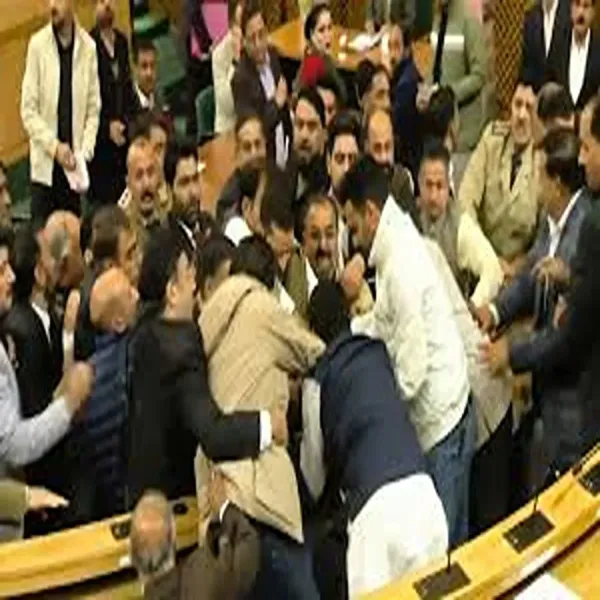
AssemblyDebate – Tensions flared in the Jammu and Kashmir Legislative Assembly on Saturday as members of the ruling National Conference and the Opposition Bharatiya Janata Party confronted each other over the question of the region’s former special status.
Heated Start to the Discussion
The uproar began when National Conference legislator Javid Baig raised the issue during a discussion in the House. His remarks on the constitutional position of the Union Territory immediately drew objections from BJP members, setting off a sharp exchange across the aisle.
Leader of the Opposition Sunil Sharma challenged the very use of the term “special status.” He argued that the phrase does not appear in the Constitution and said he was willing to face consequences if proven wrong reminded members that slogans would not alter constitutional text.
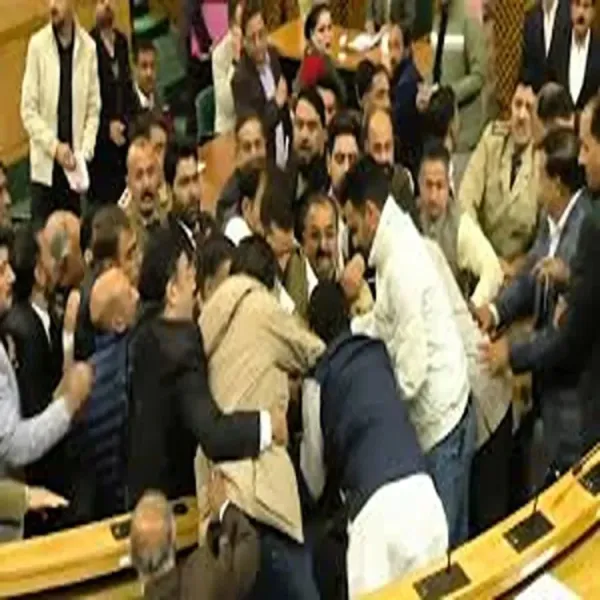
His comments triggered loud protests from treasury benches, where several members voiced support for Article 370. BJP legislators responded with counter-slogans, and the situation briefly descended into disorder before proceedings resumed.
Background of the Constitutional Change
The debate revisited a pivotal moment in August 2019, when Parliament revoked the provisions of Article 370, ending the special constitutional arrangement that had applied to the former state. On the same day, the region was reorganized into two Union Territories — Ladakh and Jammu and Kashmir.
The constitutional change followed a prolonged period of Central rule. Governance had shifted to New Delhi in June 2017 after the resignation of then Chief Minister Mehbooba Mufti. Her government collapsed when the BJP withdrew its support from the coalition led by the Jammu and Kashmir Peoples Democratic Party.
President’s Rule was later imposed and remained in place until it was lifted on October 13, 2024, paving the way for fresh Assembly elections and the formation of an elected government.
Political Landscape After 2024 Elections
Following the 2024 Assembly polls, Omar Abdullah assumed office as Chief Minister. In the 90-member Assembly, the National Conference secured 41 seats, emerging as the single largest party. The Indian National Congress, with six legislators, extended outside support to the government.
The BJP holds 29 seats, making it the principal Opposition force and the second-largest party in the House. Other parties represented in the Assembly include the Communist Party of India with one member, the Aam Aadmi Party with one, the Awami Ittehad Party with one, and the Jammu and Kashmir Peoples Conference with a single legislator.
In addition, six Independent members were elected, five of whom later joined the National Conference, strengthening the ruling party’s position.
Continuing Political Sensitivities
Saturday’s confrontation underscores that the question of Jammu and Kashmir’s constitutional past remains politically sensitive even years after the abrogation of Article 370. While the BJP maintains that the matter is settled and constitutionally clear, the National Conference continues to advocate restoration of the earlier framework.
Despite the brief disruption, Assembly business eventually moved forward. However, the intensity of the exchange reflected the enduring divisions within the House on issues tied to identity, governance, and constitutional interpretation.
With a new elected government in place after years of Central administration, debates over the region’s political future are expected to remain central to legislative proceedings in the months ahead.
-
T20 World Cup 2026: Full List Of Players Ruled Out And Injury Updates
-
PM Modi Wins Hearts In Malaysia With Tamil Bonding, Warm Banter
-
IND VS USA Toss Update: India Batting First In ICC T20 World Cup 2026 Opener, Jasprit Bumrah Unwell
-
Sikkim State Lottery Result: February 07, 2026, 6 PM Live - Watch Streaming Of Winners List Of Dear Elite Saturday Weekly Draw
-
Hardik Pandya Flaunts New 'Platinum Blonde' Look As India All-Rounder Changes Hairstyle For ICC T20 World Cup 2026