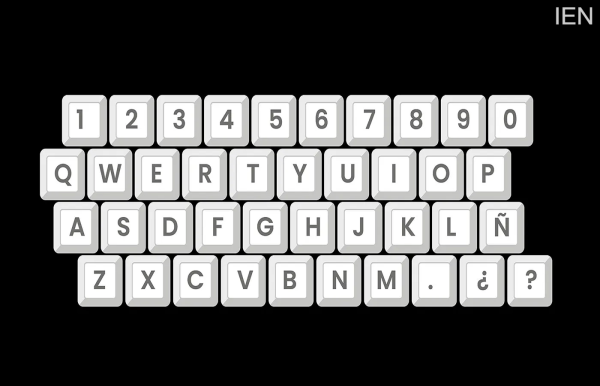
Have you ever wondered why keyboard letters are not arranged in a simple ABCDE sequence? At first glance, it might seem logical to place letters in alphabetical order to make typing easier and faster. However, the real reason behind the familiar QWERTY keyboard layout is actually the opposite — it was designed to slow down typing, not speed it up.
This unusual design dates back to the early days of mechanical typewriters, where engineering limitations shaped how modern keyboards evolved. What began as a practical workaround later became a global standard, influencing how billions of people type today.
Let’s explore why keyboard letters are arranged the way they are, how the QWERTY layout was created, and why it has never been replaced.
The Original Problem: Early Typewriters Kept Jamming
In the 1870s, the first mechanical typewriters arranged letters in alphabetical order (ABCDE...). While this layout seemed intuitive, it created a major problem.
When typists typed too quickly:
-
The metal arms (typebars) that struck ink onto paper would collide
-
The machine would jam frequently
-
Typing had to stop repeatedly to untangle stuck keys
-
Productivity slowed down significantly
In short, the faster people typed, the more the machine malfunctioned. This made alphabetical layouts impractical for mechanical typewriters.
The Birth of the QWERTY Keyboard Layout
To solve this issue, Christopher Latham Sholes, the inventor of one of the first successful typewriters, introduced a new keyboard design — now known as the QWERTY layout.
Instead of arranging letters alphabetically, Sholes:
-
Separated commonly used letters like E, T, A, I, and O
-
Spread high-frequency letters across the keyboard
-
Forced typists’ fingers to move farther, reducing typing speed
-
Minimized the chances of mechanical key collisions
By slowing down typing slightly, the typewriter worked more smoothly, reducing jams and improving overall efficiency.
Ironically, QWERTY was designed to slow users down, yet it later became the most widely used keyboard layout in the world.
Why the QWERTY Layout Became the Global Standard
As typewriters became more popular, QWERTY gained widespread adoption. Over time:
-
Typists trained extensively on the QWERTY layout
-
Businesses, schools, and manufacturers standardized it
-
The layout became deeply embedded in typing habits and education
When computers eventually replaced typewriters, QWERTY transitioned seamlessly into the digital era, even though modern keyboards no longer face mechanical jamming issues.
Why Hasn’t the Keyboard Layout Been Changed?
A logical question arises: If modern keyboards don’t jam, why not switch to an alphabetical or faster layout?
The main reason is muscle memory.
Billions of people worldwide have:
-
Learned to type using QWERTY
-
Developed years of muscle memory
-
Built professional skills around this layout
Changing the keyboard format today would:
-
Require massive retraining
-
Temporarily reduce typing efficiency
-
Disrupt global workflows in offices, schools, and industries
Even though more efficient layouts like Dvorak and Colemak exist, QWERTY remains dominant because the cost of change outweighs the benefits.
A Layout Born From a Limitation That Shaped the Digital World
What started as a technical fix for mechanical typewriters has evolved into a universal typing standard. The QWERTY layout is a perfect example of how historical limitations can influence modern technology long after the original problem disappears.
Today, we continue to use a keyboard design that was created not to make typing faster, but to make machines work better.
Final Thoughts
The reason keyboard letters aren’t arranged in ABCDE order has nothing to do with modern efficiency — it’s rooted in the mechanical challenges of early typewriters. The QWERTY layout was designed to slow typing speed, prevent machine jams, and improve reliability.
Despite advancements in technology, QWERTY remains unchanged due to habit, muscle memory, and global standardization.
So next time you type, remember — your keyboard layout is a legacy of 19th-century engineering, still shaping how the modern world communicates.
-
BRS, BJP obstructing Telangana projects, alleges Revanth Reddy

-
Telangana Model Schools invite applications for academic year 2026-27

-
The 'breathtaking' sunshine island that's 30C in March with direct flights from the UK

-
Qualcomm India achieves 2nm chip design tape-out: What it means?

-
NHS says 'memory problems' could be sign of vitamin deficiency