Highlights
- The transparent smartphone project is yet to see a day in the sun.
- There are significant hurdles to tackle, like hiding the battery, ensuring durability, and making no parts visible.
- The present fabrications are more of a technology showcase than usable in terms of the benefits they bring.
- So far, the transparency has the potential of being a branding factor, but not much in terms of practical use.
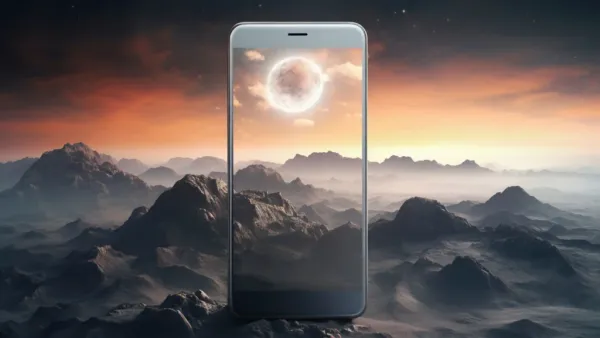
Transparent smartphones have been a part of the tech imagination for quite some time. They have been the center of attention in various exhibits, patent registrations, concept videos, and so on, giving consumers a glimpse of the future where they can literally see through their phones.
The thought is very much like a futuristic, minimalist, and almost cinematic style – an aesthetic jump over the current glass-and-metal slabs used in the making of phones.
However, it is a fact that smartphones with transparent screens are still not a part of the consumer market universally. No major company has announced a fully transparent phone for the general public and has no plans to do so in the near future; however, there is always public and press attention, if not a major one, surrounding the whole transparent smartphone scenario.
The question then arises: are transparent smartphones a reality and a feature of the coming generation of mobile devices, or really just bait tech tricks to grab the eye?
Determining the factors involved requires looking into the existing prototypes, the real supply chain concerns, the limitations of engineering, and the question of whether or not transparency indeed adds any significant value to everyday smartphone use.
What Do We Mean by a Transparent Smartphone?
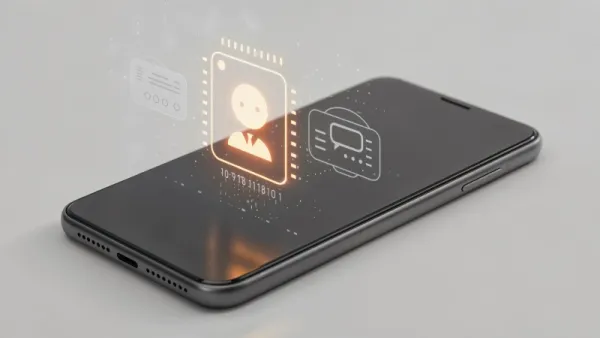
A transparent smartphone would be one that the user could see through nearly all the parts of the device, and at the same time, all the functions – display, battery, camera, processor, and connectivity – would remain active and uninterrupted.
Nevertheless, in reality, the transparency cuts across a spectrum. The majority of the present-day concepts include partially transparent displays, back panels that are see-through, and UI illusions that are transparent rather than actual hardware transparency.
No phone that is available commercially today is totally transparent in the manner that early concept art proposed.
Industry Experiments and Prototype Demonstrations
Technology companies, among other groups, have engaged in trials with either transparent or semi-transparent devices over the years.
Xiaomi and other companies like it have introduced mobile devices that are equipped with see-through back panels exposing the inner parts, mainly as a luxury feature. The aesthetics of such designs are rather limited and draw upon the traditional configurations of the hardware under the glass.
The display-producing companies, among them Samsung and LG, have presented transparent OLEDs that can be used for advertisements, car heads-up displays, and store installations, to name a few. These displays are remarkable, but their precision is allowed only for use in devices that are not touch-enabled, need to be battery efficient, and have to be durable.
In other words, though the transparent display technology is there, the question of its incorporation into an efficient smartphone has not been answered yet.
The Display Challenge
The display is a challenge that must be faced first when making a smartphone with transparency.
Transparent OLED displays are made of light-emitting pixels encased in transparent substrates. In addition to this, the process of producing images on the see-through surface results in very low brightness and contrast levels compared to the classical screen.
What is necessary for a mobile phone?
- Brightness level sufficient for outdoor visibility
- Offering a very deep contrast for reading
- Power-saving mode for all-day battery life
Transparent screens suffer in all these aspects. To overcome this issue, manufacturers usually put some dark layers behind the display, which renders the transparency feature useless.
Power and Parts Restrictions
Even if the display problems were resolved, the internal parts would still be a much bigger obstacle to overcome. Modern smartphones rely on lithium-ion batteries, which are always opaque, no matter what their chemical composition is. Presently, there is no way to make battery technology transparent without compromising on safety, capacity, or lifespan.
Batteries alone stop full transparency since they take up a considerable part of the phone’s internal volume. The same goes for the rest of the components: processors, camera sensors, speakers, antennas, and cooling systems – all bearing no transparency considerations at their design stage. The introduction of visibility opens up a new set of difficulties, namely:
- visual clutter
- electromagnetic interference
- heat dissipation challenges
Engineering around these issues adds cost and complexity without enhancing performance.
Durability and Repairability Concerns
Smartphones have already been a problem with being too fragile. A transparent design would probably worsen this case.
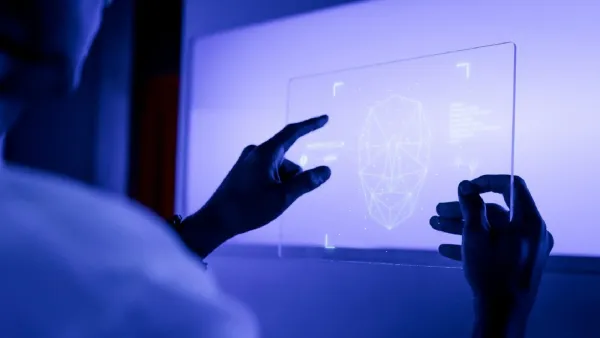
To obtain a transparent effect, it is necessary to resort to specialized glass or polymers with the following attributes:
- scratch-prone
- Cracking under stress
- more difficult to repair or replace
Moreover, the completely transparent cases reveal the internal damage more clearly, which in turn might lead to an increase in the perceived defect rates even when the internal functionality is not affected.
The situation from the consumer trust angle creates more problems than benefits.
Does Transparency Add Practical Value?
This is the question of major concern – and the current answer to it seems to be negative.
Transparency is not able to:
- prolong battery life
- make the performance better
- raise the usability of the device
- lighten the device
- make the repairs easier
The only thing that it does is to provide aesthetic and brand novelties. However, visual innovation is significant, but mass adoption is usually achieved by providing users with the benefits.
Consumers usually rank their needs as follows:
- battery life
- camera quality
- Software reliability
- durability
Transparency is not a major step towards any of these necessities.
Why Companies Keep Teasing Transparent Phones
The existence of transparent cellphones sans practical value is a giant question that continues to be unanswered through their recurrent presence.
The marketing and future signaling are the grounds for the answer, however.
Transparent concepts assist firms in:
- showing off their display innovations
- leading the way in design
- drawing Attention from the media
- Making Defensive Patents
Prototypes are often created not with mass production in mind. They are instead used as technology statements reinforcing a company’s forward-thinking image without having to go through the commitment of commercial viability.
Potential Niche Applications
Transparent devices may find niche use cases, though mass-market adoption seems unlikely.
These include:
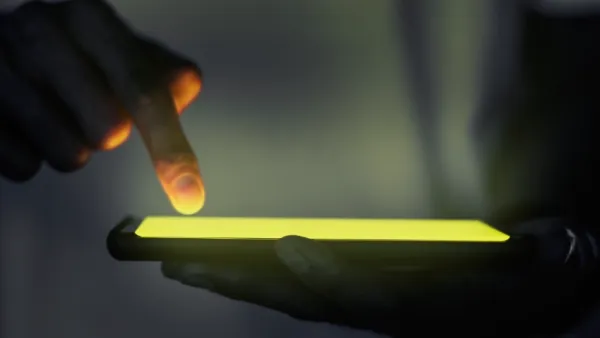
- augmented reality interfaces
- industrial or medical visualization tools
- design-focused limited editions
- experimental developer hardware
In such contexts, transparency serves a functional or symbolic role rather than a consumer one.
The Future Outlook
For transparent smartphones to become viable, several breakthroughs would be required:
- safe, transparent energy storage
- compact transparent semiconductors
- displays with high brightness and efficiency
- affordable manufacturing processes
None of these seem to be coming up very soon. While transparency experts expect design evolution – thinner bezels, under-display components, and foldable screens – to be fairly radical, most do not expect the same for transparency.
Conclusion
Transparent smartphones are still an attractive concept, but they are mainly a concept rather than a product. The display technology has made huge progress; however, the main hardware limitations – batteries and main components – are still blocking the way to full transparency.
Moreover, transparency has not addressed any user concerns. It is hard to imagine that it will be accepted by consumers if it does not provide any benefits, as it will come at a higher price, be less durable, and involve engineering trade-offs.
To sum up, transparent smartphones will still be presented as prototypes and tech demos in the near future – helpful for inspiration and branding, but not ready to take over the role of the practical, opaque devices that consumers use every day.
Ultimately, transparency might be a sign of things to come – but it is still the case that practicality is the main driver of the present.
-
Anbumani Ramadoss urges TN govt to address noon-meal workers' demands

-
New Aadhaar App Changes: How to Update Mobile Number, Address, and Lock Biometrics Easily
-
Tiger suspected in fatal attack on man in MP's forest range

-
The common household devices that are quietly 'eating' your Wi-Fi speed

-
Delhi minister Kapil Mishra hails Union Budget for focus on creative economy