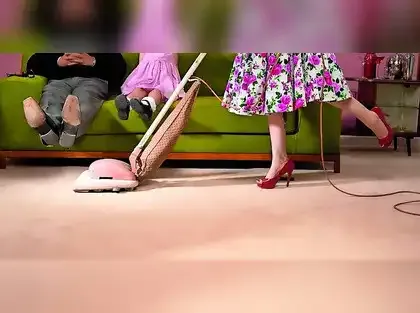
London: There was a time when my mother covered her head with her pallu in the presence of her in-laws. She also had an MA degree and went to work. This was in the early '70s. I often wondered how she managed this with her Sadhana-like hairdo. To me, she was the traditional wife, maintaining home and hearth. The non-traditional part: going to work.
As years passed, the pallu slipped from her head, not as rebellion, but as if the very air in the city had changed. And by the time I arrived at my in-laws some 25 years later, this wasn't even part of the stream of consciousness.
Women like Gloria Steinem and Betty Friedan didn't hate domestic work. They opposed the idea that being a housewife was the only or proper role for a woman. They critiqued the '50s-'60s 'feminine mystique,' in which women were told their lives should revolve around husband and children, and were stigmatised if they wanted careers or independence. Much before their time, Virginia Woolf had written A Room of One's Own in 1929.
So, imagine my slightly horrified amusement when 'tradwife' appeared to be one of the most googled terms, and a lifestyle choice. The young are choosing this as a way of life, romanticising it, in some kind of Edenic return to the kitchen garden.
An amalgam of the words 'traditional' and 'wife,' the tradwife tribe is made up of women who promote traditional gender roles, often on social media. They wear the kitchen and home manager role like a badge of honour, and their Insta feeds look straight out of a '50s American magazine, or a very beautifully kept Amish farm.
One remembers Phyllis Schlafly in the Reagan era for opposing the '70s Equal Rights Amendment (ERA), immortalised by Cate Blanchett in 2020 miniseries Mrs America. So, an antithesis to women's lib by women is not new.
Tradwife aesthetics have been associated with US far-right politics, particularly alt-right and alt-lite movements, advocating for gender roles in which the man holds social and political power, and women, for the most part, are confined to the home as wives and mothers. Researchers have identified differing political views among tradwives, ranging from conservatism to right-wing extremism.
Sometime in the 2020s, digital creators like Nara Smith and Hannah Neeleman, famous as Ballerina Farm, projected a vision of the near-perfect traditional mother - some on farms, while others in more urban settings. A woman-and-home magazine lifestyle cutting across nostalgic decades.
The idea of a tradwife has always been present in the West. It became a distinct subculture as many women started feeling unseen by the fourth wave of feminism, which mainly centres around awareness of sexual assault. The tradwife is all about glorifying the role of the mother. It has been done before, politically, including during the Third Reich.
#Tradwife is a social media phenomenon. Videos performing domestic labour, such as cooking, cleaning, and caring for children, have gone viral. At the crux of it is the feeling that tradwife content made many people feel seen. Alena Kate Pettitt wrote about the woman at home feeling undervalued. She rose to fame during a 2020 BBC interview where she expressed her desire to serve her husband. However, not much later, Pettitt would go on to admit that the concept went on to 'become its own monster'.
And yet, there's an irony. Many tradwife internet celebrities earn an income outside the home. In addition to running their influencer businesses on social media, they sell books, baked goods, clothing lines, and secure sponsorships.
Is this, then, a way of merely repackaging nostalgia? Is the trend regressive? Or a smart relaunch of a way of life? I would be tempted to live in acceptance of people's choices if the demand for tradwives were not on the rise, from men influenced by years of toxic masculinity, wallowing in Andrew Tate rhetoric.
Choice needs to be defended. But regression should be avoided at all costs. And may the wise know the difference.
As years passed, the pallu slipped from her head, not as rebellion, but as if the very air in the city had changed. And by the time I arrived at my in-laws some 25 years later, this wasn't even part of the stream of consciousness.
Women like Gloria Steinem and Betty Friedan didn't hate domestic work. They opposed the idea that being a housewife was the only or proper role for a woman. They critiqued the '50s-'60s 'feminine mystique,' in which women were told their lives should revolve around husband and children, and were stigmatised if they wanted careers or independence. Much before their time, Virginia Woolf had written A Room of One's Own in 1929.
So, imagine my slightly horrified amusement when 'tradwife' appeared to be one of the most googled terms, and a lifestyle choice. The young are choosing this as a way of life, romanticising it, in some kind of Edenic return to the kitchen garden.
An amalgam of the words 'traditional' and 'wife,' the tradwife tribe is made up of women who promote traditional gender roles, often on social media. They wear the kitchen and home manager role like a badge of honour, and their Insta feeds look straight out of a '50s American magazine, or a very beautifully kept Amish farm.
One remembers Phyllis Schlafly in the Reagan era for opposing the '70s Equal Rights Amendment (ERA), immortalised by Cate Blanchett in 2020 miniseries Mrs America. So, an antithesis to women's lib by women is not new.
Tradwife aesthetics have been associated with US far-right politics, particularly alt-right and alt-lite movements, advocating for gender roles in which the man holds social and political power, and women, for the most part, are confined to the home as wives and mothers. Researchers have identified differing political views among tradwives, ranging from conservatism to right-wing extremism.
Sometime in the 2020s, digital creators like Nara Smith and Hannah Neeleman, famous as Ballerina Farm, projected a vision of the near-perfect traditional mother - some on farms, while others in more urban settings. A woman-and-home magazine lifestyle cutting across nostalgic decades.
The idea of a tradwife has always been present in the West. It became a distinct subculture as many women started feeling unseen by the fourth wave of feminism, which mainly centres around awareness of sexual assault. The tradwife is all about glorifying the role of the mother. It has been done before, politically, including during the Third Reich.
#Tradwife is a social media phenomenon. Videos performing domestic labour, such as cooking, cleaning, and caring for children, have gone viral. At the crux of it is the feeling that tradwife content made many people feel seen. Alena Kate Pettitt wrote about the woman at home feeling undervalued. She rose to fame during a 2020 BBC interview where she expressed her desire to serve her husband. However, not much later, Pettitt would go on to admit that the concept went on to 'become its own monster'.
And yet, there's an irony. Many tradwife internet celebrities earn an income outside the home. In addition to running their influencer businesses on social media, they sell books, baked goods, clothing lines, and secure sponsorships.
Is this, then, a way of merely repackaging nostalgia? Is the trend regressive? Or a smart relaunch of a way of life? I would be tempted to live in acceptance of people's choices if the demand for tradwives were not on the rise, from men influenced by years of toxic masculinity, wallowing in Andrew Tate rhetoric.
Choice needs to be defended. But regression should be avoided at all costs. And may the wise know the difference.
(Disclaimer: The opinions expressed in this column are that of the writer. The facts and opinions expressed here do not reflect the views of www.economictimes.com.)




Reshom Majumdar