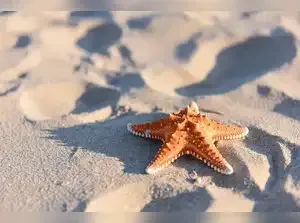
For centuries, starfish were described as simple animals with arms attached to a central body, but modern evolutionary biology has overturned that picture in a surprising way. Research now shows that what we casually call a “starfish” is better understood as an animal whose entire body plan is closer to a head without a trunk, rather than a head attached to a body. This conclusion is based on genetic, developmental, and anatomical studies that compare starfish with other animals across the evolutionary tree.
Starfish, more accurately called sea stars, belong to the echinoderm group, which also includes sea urchins and sea cucumbers. Unlike animals with clear front and back ends, echinoderms follow a radically different blueprint that scientists now recognise as deeply unusual among complex animals.
According to developmental biologist Christopher Lowe, whose team published influential findings in Nature, starfish lack the genetic signals that normally produce a trunk. Instead, the genes associated with head development extend across most of the animal’s body. In simple terms, the regions that would form a torso in other animals never appear in starfish at all. This indicates that the starfish's body is not missing arms or otherwise rearranged. It is missing an entire body region that most animals take for granted.
Marine biologists have found that this decentralised nervous system enables starfish to respond to their environment in all directions simultaneously. From an evolutionary perspective, this supports the view that the arms are not limbs attached to a body but rather repeated extensions of a head-like structure. In this sense, a starfish is not a body with arms. It is a ring of head-like regions arranged radially.
Researchers believe this transformation reflects an ancient evolutionary experiment in which the echinoderm lineage abandoned the traditional head-and-body layout in favour of a design better suited to life on the seafloor. By distributing sensory and feeding functions throughout the body, starfish can move, feed, and regenerate without relying on a single vulnerable centre.
If each arm already contains much of the genetic and structural information needed to function like a head, then rebuilding the rest of the animal does not require recreating a missing trunk. Scientists studying regeneration have found that the same head-associated genes reactivate during regrowth, guiding the process step by step. This regenerative capacity has drawn interest from biomedical researchers, who study echinoderms to better understand tissue repair and developmental plasticity.
What this discovery does change is how biologists think about animal body plans. It shows that evolution does not follow a single path toward increasing complexity or familiar shapes. Instead, it can discard entire body regions and still produce animals that are highly successful in their environments.
As Lowe explained in interviews following the research, starfish challenge the assumption that heads and bodies are fixed features of animal life. Their existence shows that evolution can rewrite the rules, not just bend them.
What crawls across the ocean floor is not a body with arms, but an animal built almost entirely from head-like structures, arranged in a circle, thriving without a trunk for hundreds of millions of years.
Image Credit: x/@grok
Starfish, more accurately called sea stars, belong to the echinoderm group, which also includes sea urchins and sea cucumbers. Unlike animals with clear front and back ends, echinoderms follow a radically different blueprint that scientists now recognise as deeply unusual among complex animals.
The Missing Trunk That Changed Everything
Most animals, including humans, develop along a basic plan that includes a head, a trunk, and often a tail. This structure is guided during embryonic development by groups of genes called Hox genes, which control where body regions form. When scientists examined Hox gene expression in starfish embryos, they found a striking pattern.According to developmental biologist Christopher Lowe, whose team published influential findings in Nature, starfish lack the genetic signals that normally produce a trunk. Instead, the genes associated with head development extend across most of the animal’s body. In simple terms, the regions that would form a torso in other animals never appear in starfish at all. This indicates that the starfish's body is not missing arms or otherwise rearranged. It is missing an entire body region that most animals take for granted.
Arms That Behave Like Heads
Each arm of a starfish contains features that, in other animals, are typically restricted to the head region. These include nerve networks, sensory cells, and feeding-related structures. The mouth sits on the underside at the centre, but sensory and neural processing is distributed throughout the arms rather than concentrated in a single brain.Marine biologists have found that this decentralised nervous system enables starfish to respond to their environment in all directions simultaneously. From an evolutionary perspective, this supports the view that the arms are not limbs attached to a body but rather repeated extensions of a head-like structure. In this sense, a starfish is not a body with arms. It is a ring of head-like regions arranged radially.
A Body Plan That Breaks the Rules
Starfish also lack bilateral symmetry, which is the left-right body plan shared by most animals with heads. Instead, adult starfish display fivefold radial symmetry, although their larvae briefly show bilateral symmetry before transforming. This shift happens during development, when the animal reorganises itself into its adult form.Researchers believe this transformation reflects an ancient evolutionary experiment in which the echinoderm lineage abandoned the traditional head-and-body layout in favour of a design better suited to life on the seafloor. By distributing sensory and feeding functions throughout the body, starfish can move, feed, and regenerate without relying on a single vulnerable centre.
Regeneration Makes More Sense Under This Model
Starfish are famous for their ability to regrow lost arms, and in some species, an entire animal can regenerate from a single arm fragment. Under the “giant head” model, this ability becomes easier to explain.If each arm already contains much of the genetic and structural information needed to function like a head, then rebuilding the rest of the animal does not require recreating a missing trunk. Scientists studying regeneration have found that the same head-associated genes reactivate during regrowth, guiding the process step by step. This regenerative capacity has drawn interest from biomedical researchers, who study echinoderms to better understand tissue repair and developmental plasticity.
What This Discovery Changes and What It Does Not
Scientists are careful to note that starfish are not literally heads in the way humans understand heads. They lack faces, jaws, or centralised brains. The term “giant head” is a conceptual tool that helps explain how their bodies are organised at a genetic and evolutionary level.What this discovery does change is how biologists think about animal body plans. It shows that evolution does not follow a single path toward increasing complexity or familiar shapes. Instead, it can discard entire body regions and still produce animals that are highly successful in their environments.
Why It Matters Beyond Starfish
Understanding the starfish body plan helps scientists reconstruct what early animal ancestors may have looked like and how flexible development can be. It also highlights how radically different survival strategies can emerge from the same basic genetic toolkit.As Lowe explained in interviews following the research, starfish challenge the assumption that heads and bodies are fixed features of animal life. Their existence shows that evolution can rewrite the rules, not just bend them.
A Familiar Creature, Rewritten by Science
Starfish may look simple and familiar, but beneath that familiar shape is one of the strangest body plans in the animal kingdom. They are not missing a body because of damage or degeneration. They never evolved one at all.What crawls across the ocean floor is not a body with arms, but an animal built almost entirely from head-like structures, arranged in a circle, thriving without a trunk for hundreds of millions of years.