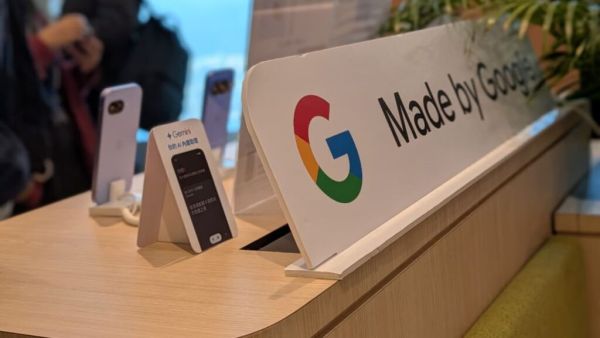
A 45-minute drive from Taipei’s main financial district, home to Taipei 101, one of the tallest buildings in the world, lies the sprawling Google campus. Located at the TPark campus in New Taipei City, Taiwan, it is Google’s largest hardware engineering hub outside the United States, housing labs dedicated to core hardware engineering and development testing. This is the engineering hub where many of the features that make their way into Pixel phones and companion devices such as the Pixel Watch and Pixel Buds are first designed and prototyped.
One wonders why anyone should care about a Pixel smartphone over Samsung Electronics Co.’s Galaxy S and Fold series or Apple Inc.’s iPhone. After all, Pixel holds less than 3 per cent of the global phone market share, despite it being seen as the fastest-growing smartphone brand with the broader market facing slower demand.
But Google’s aim with Pixel isn’t about sales numbers, as many might think, a typical goal for any major corporation. Instead, the purpose runs much deeper: to showcase the very best of Android in terms of software and Artificial Intelligence, designed on hardware that is distinctly Google. This sets Pixel apart from Android licensees such as Samsung and Xiaomi, even though those companies eventually get some of the features that Pixel first gets on its own devices.
“Silicon is one of the hardest things to get right because you are looking many years ahead. There’s a lot of fact-finding involved to understand where teams like Google DeepMind are headed, where the Android operating system team is going, and how we think user behaviour, expectations, and experiences will evolve. You have to put all of that together, take an educated guess about where the world will be, and then design silicon that’s ready when all of those pieces come together,” said Ventak Rapaka, Vice President of Product Management for the Pixel Ecosystems at Google, when asked whether Google designs software first for Pixel devices, prioritises hardware, or develops hardware, software, and silicon in parallel.
Google has an advantage over both its competitors and its OEM partners with Pixel, placing the company in a unique position. The world’s most valuable tech company not only develops Android, the operating system installed on more than three billion devices globally, many of them smartphones, but also designs its own silicon (for example, Pixel phones use Tensor processors) and builds AI features powered by the company’s Gemini AI models.
“It is a collaboration and a constant iterative collaboration across the full stack,” Rapaka told indianexpress.com last week in an interview at a Google campus in Taipei.
Rapaka, who returned to Google early last year after a brief hiatus, was instrumental in the development of the original Pixel smartphone in 2016. In fact, it was Rapaka who suggested the idea of a Pixel phone to Google CEO Sundar Pichai. He currently oversees the entire Pixel portfolio, including smartphones, watches, and other connected devices.
Story continues below this ad
“Hardware is similar, though it is less of a runway, but once you design it, you need to make sure everyone is aligned before moving forward, ensuring that all partners see the world in the same way. At the same time, you have to remain reactive as things change. The Pixel team is fortunate to have access to some of the brightest minds in the industry across the operating system, DeepMind, and our partners and suppliers which allows us to plan far into the future while still being responsive as things evolve,” he said.
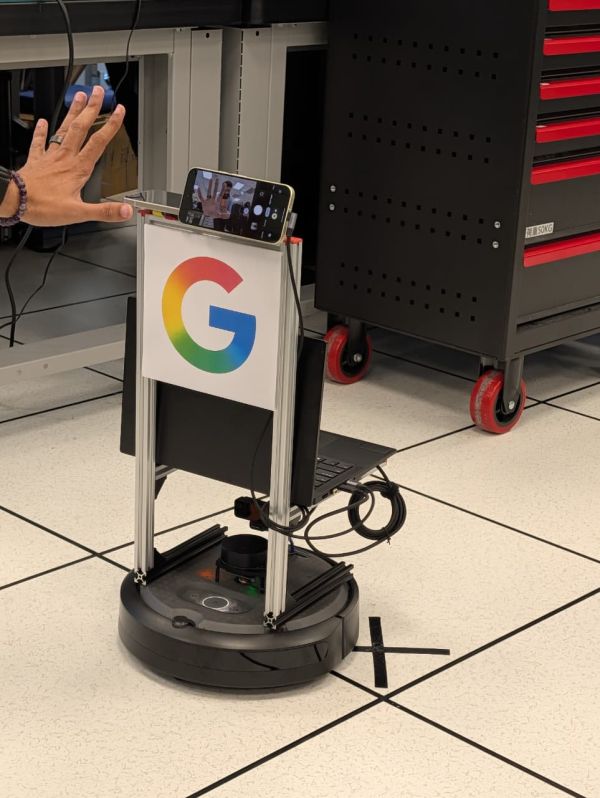
“I think the big difference is the ability to invest in a very deep, full-stack way with a multi-year product horizon. That wasn’t impossible with Nexus, but it’s a lot easier with Pixel because we have one vertical team,” he said.
The launch of a high-end Pixel phone line marked the end of the Nexus series, a once-popular smartphone lineup in the early 2010s among geeks and Android fans, developed with partner brands and known for its “pure Google” software experience and frequent updates.
A multi-year development lifecycle
“There’s often a desire to solve a problem in software, which then leads to requests to the hardware team – asking whether, in two or three years, we can have this capability in the device. Sometimes it works the other way around, where we hear from teams developing new hardware technologies about a new capability they’ve achieved, and they ask, ‘Is this something you think we can build on? What kind of software experiences could we create with this?’ We then collaborate on that front and brainstorm together. It really goes both ways, but the key piece is hardware because it has a multi-year development lifecycle and requires deep planning and coordination,” said Erik Kay, Vice President of Engineering, Android Platforms at Google, adding that hardware and software influence each other bidirectionally.
Story continues below this ad
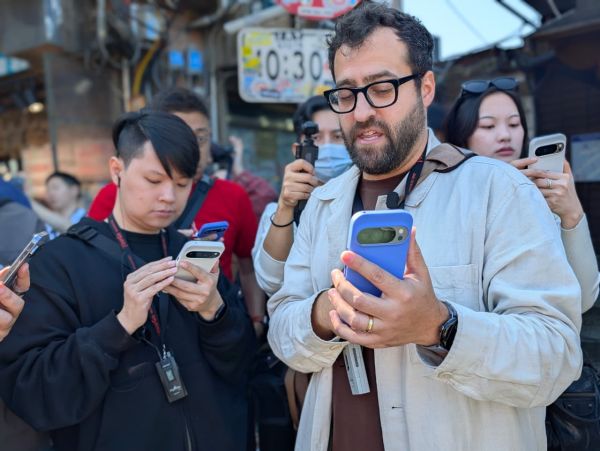
While Pixel phones blend hardware and software as Rapaka and Kay emphasised to deliver an experience closer to what Apple Inc.’s iPhone offers, even Google acknowledges that smartphone design has hit a plateau and that most modern phones work and behave similarly. However, Google’s big pivot toward artificial intelligence could make Pixel phones significantly different under the hood with each new generation, even if the external changes are not drastic. The latest case is the Pixel 10 series, which could easily be mistaken for last year’s Pixel 9 lineup, barring new colour options.
AI at the centre of it all
AI may be a buzzword in tech right now, but Kay described artificial intelligence as a “tool” to improve the user experience. In fact, he said AI has been foundational to nearly every product Google offers for a long time, even if many companies are only rolling it out now. He pointed to features such as Circle to Search, AI-powered theft detection that automatically locks a phone after suspicious movement, and automated scam detection in calls and messages, which helps protect users without requiring explicit intervention. According to Kay, the focus has been on making AI seamless and natural, deeply integrated into the user journey.

Pixel phones have long featured AI-driven capabilities, particularly in photography, but Google is now making artificial intelligence the pièce maîtresse of the Pixel experience. It’s a strategy that plays directly to Google’s strengths, which helps explain why the company is investing so much time, energy, and money into AI. Part of the reason why Pixel users get first access to many of these AI features (in fact, some remain exclusive to the Pixel devices) before they eventually roll out to the rest of the Android ecosystem.
Rapaka pointed to Google’s deep investments in research and its tight integration of AI and hardware, citing the Tensor chip, as key enablers of features such as voice recognition and computational photography. Pixel phones come with several exclusive features, including Magic Cue, a proactive assistant that pulls relevant information from across apps, such as surfacing hotel reservations during calls or suggesting contextual replies in Messages using data from Calendar or Gmail; Camera Coach, which uses generative AI to help frame better shots; and Pro Res Zoom, which improves distant images while intentionally avoiding people. You won’t find these features on any other Android smartphones, including flagship models from top-tier brands.
Story continues below this ad
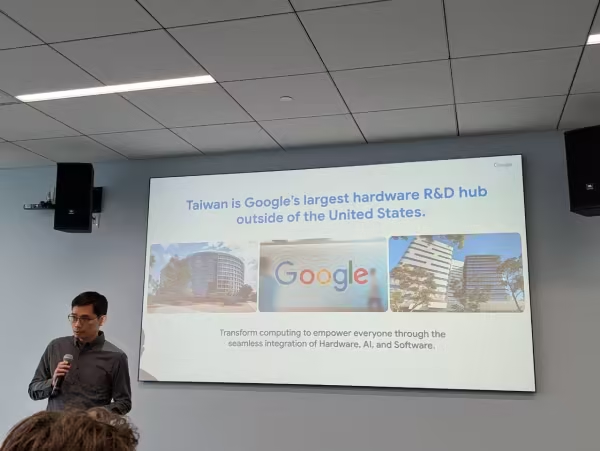
But it’s not easy to convince consumers to ditch their Samsung smartphones or iPhones for a Pixel phone. Google has struggled to persuade users to switch to Pixel, despite years of investment in AI and hardware. However, a resource-rich company like Google can continue investing to make the Pixel brand a stronger competitor to the iPhone. Experts and industry insiders say Pixel could still become a success, given enough time and the right approach – perhaps through lower-cost hardware, an expanded set of features, and more companion devices across different price points. It’s Pixel 9a, an entry smartphone in the Pixel series and only to be replaced with the Pixel 10a later this month, was a surprise hit in the US during the holiday season, according to Counterpoint. That shows there is a market for a Pixel phone in the mid-range premium segment, nonetheless.
The longterm advantage
Google may be going all in on AI as part of its broader strategy (it has to given the competition and billions of dollars at stake), but Pixel, as a brand, still occupies an important place. It acts as the heartbeat of the Android ecosystem, positioned right at its centre. With partners such as Samsung and Motorola relying on Google for key services and AI features, and with companies like Apple still struggling to find their footing in AI, this gives Mountain View (Google’s global HQ) a clear advantage as AI goes mainstream.
Even though Apple has recently announced that it will team up with Google to use Gemini models and cloud technology for future Apple foundational models, Rapaka said Google will continue to maintain exclusive Pixel experiences to preserve premium differentiation going forward.
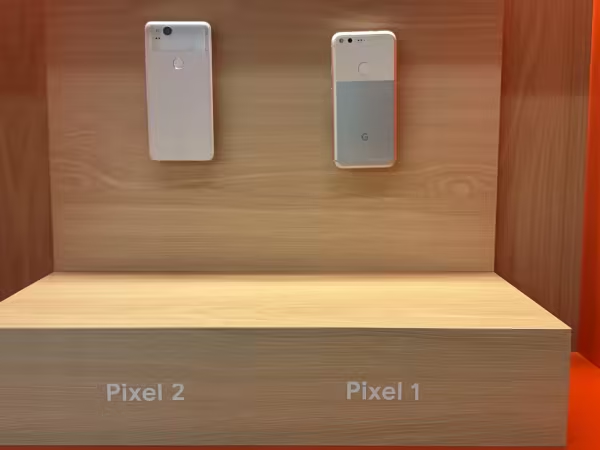
“A lot of what Google at large builds, we bring to market in the best possible way, but it’s ultimately for everyone, so people should expect to see it on other devices as well. At the same time, there are experiences we build explicitly and uniquely for Pixel users like ProRes Zoom, Camera Coach, or Magic Cue. Some of these may eventually make their way to other devices, which is great, but we will continue building distinctive experiences for Pixel,” he said.
Google wants Pixel to succeed, and any large company is more likely to back a product with confidence when it is fully committed. But at its core, Google remains a software company. When the first Pixel phone was introduced, its most important feature was the new Google Assistant, which replaced Google Now and Google Voice Search previously available on other Android smartphones with a more deeply integrated smart assistant. That remains true today. Newer Pixel phones serve as showcase devices for Gemini and other AI tools, debuting first on Google-branded hardware. This approach could help Google refine its own AI sales pitch, at least until the brand Pixel gets more mainstream.
At the same time, Google can’t behave like Apple, even though Pixel phones were initially intended to rival the iPhone. After all, Google controls Android, an operating system used by a wide range of manufacturers. It’s still a win for Google if companies like Samsung or Vivo sell more smartphones powered by Gemini and AI tools, as that expands reach and ultimately helps drive revenue and market share.
Kay highlighted that Android is built around an “open ecosystem” spanning phones, watches, tablets, TVs, and cars, with a focus on devices that connect naturally and work well together. Google’s vision, as executives like Kay and Rapaka made clear, is to ensure Android devices function as a single ecosystem, and the company has taken a series of steps to make that happen through improved cross-device and cross-OS interoperability.
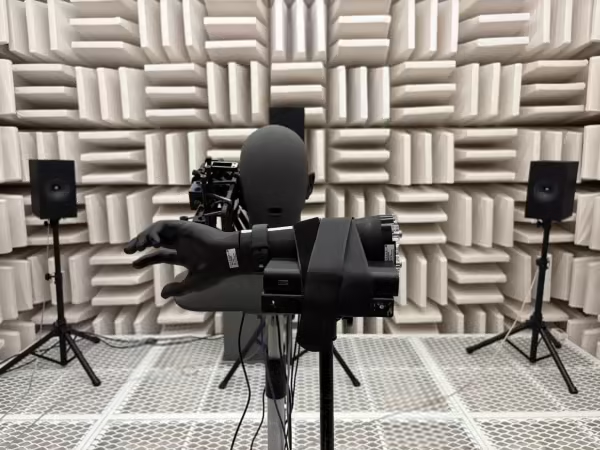
With Pixel at the centre of the Android ecosystem, Google is planning to expand AirDrop-style support to more Android devices beyond the latest Pixel 10. The feature allows users to send and receive files and photos between Apple devices and Android phones using Quick Share. “We spent a lot of time and energy making sure we could build something that was compatible not only with iPhones, but also with iPads and MacBooks,” Kay said. “Now that we have proven it out, we are working with our partners to expand it across the rest of the ecosystem, and you should see some exciting announcements very soon.”
Story continues below this ad
Smartphones are not going anywhere
As Google doubles down on Pixel and continues to expand the smartphone lineup, including foldables and may be its own smart glasses in the future, Rapaka made it clear that smartphones aren’t going anywhere despite many anticipating that smart glasses could end the era of phones.
“Phones are so good at so many things. They are the Goldilocks form factor. When you think about all the multipurpose capabilities a phone brings, immersive entertainment, connectivity, and local compute, there’s a lot they can do. I don’t think phones are going anywhere. Just look at laptops: they haven’t gone anywhere since phones showed up. In fact, I believe the laptop market is bigger now than it was when phones first launched. I don’t think that’s going to change. That doesn’t mean other types of devices won’t emerge, but phones are definitely here to stay.”
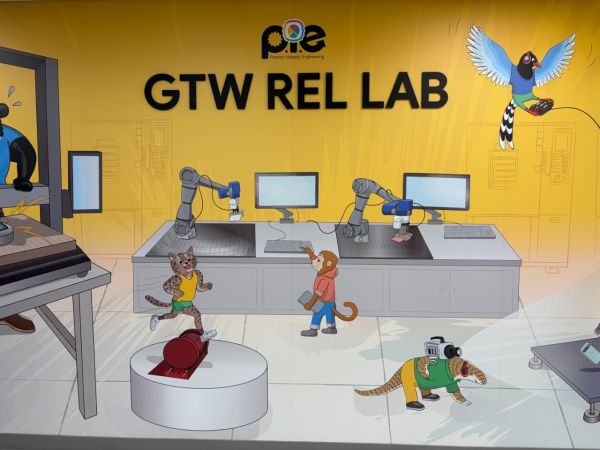
Rapaka predicts that devices will become more autonomous and context-aware. “I think they will be able to do a lot more things for us, sometimes more autonomously than we imagine today. To do that, they will need to build much richer context about the customer, the user, and their surroundings,” he said. “You should expect more of that agentic type of experience to show up across other aspects of Gemini and Android services, but we are still early,” Kay added.
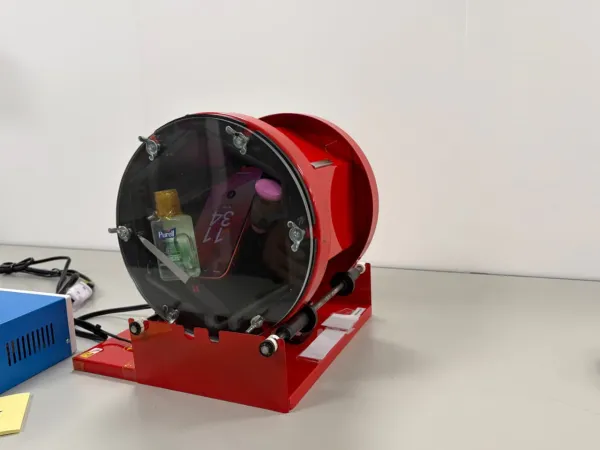
Google’s top executives continue to position Pixel phones as showcases for exclusive AI features and full-stack integration, highlighting the company’s hardware–software synergy while still supporting the broader Android ecosystem. AI is something Google is firmly committed to, even as questions remain about how the company will monetise its AI services. On the hardware front, Google has made notable progress, particularly with its Tensor chips, which have now been upgraded to the fifth generation and can be seen in the Pixel 10 series. The processor is developed in-house (after previously relying on third-party designs) in collaboration with Taiwan Semiconductor Manufacturing Co., the world’s leading mobile chipmaker, a move that closely resembles Apple Inc.
Story continues below this ad
But why should anyone buy a Pixel phone?
Perhaps the question Google still needs to answer is why consumers should buy a Pixel phone over an iPhone, or choose a smartphone from its partner like Samsung. That isn’t an easy challenge, even for Google, an undisputed leader in AI and software.
The stakes are high: Apple continues to perform strongly despite the absence of a clear AI strategy, with the iPhone delivering year-over-year growth in revenue and profits. At the same time, OpenAI is poised to seize the next big opportunity with an AI-based device currently being designed with former Apple design chief Jony Ive, the man behind the iPhone, iPad, and other iconic products.
The latest Pixel 10 lineup has proved that Google has come a long way, and the devices themselves have been well-received, but it remains to be seen if Pixel devices can move beyond geeks and enthusiasts to become truly mainstream one day.
-
Kritika Kamra-Gaurav Kapur Finalise Wedding 2 Months After Making Relationship Insta Official

-
Ramayana: Vikrant Massey Sets The Record Straight After Reports Of Raghav Juyal Replacing Him As Meghanad Go Viral

-
Jiiva's Thalaivar Thambi Thalaimayil Set For Bollywood Remake As Boney Kapoor Acquires Rights Of Tamil Hit

-
Captain Rohit Paudel Praises Nepal’s Resilience After Narrow Loss to England in T20 World Cup Opener

-
AI Imagines Ranveer Singh In Animal And Ranbir Kapoor In Dhurandhar, Fans Pick The 'Better Actor'