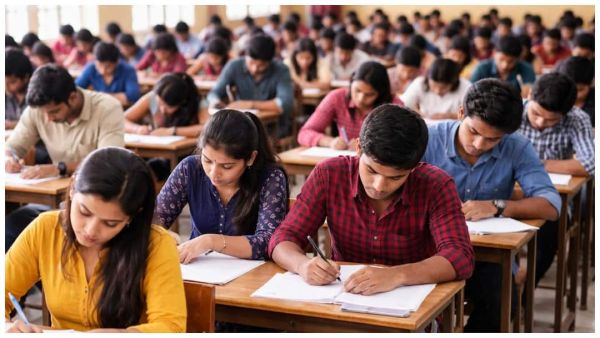
The Central Board of Secondary Education (CBSE) has introduced a set of significant changes to the 2026 board examination rules for Classes 10 and 12, which could affect how students, parents and schools prepare for next year’s exams. Under the revised guidelines, attendance, internal assessments and paper-writing norms have been tightened, and Class 10 students will have two opportunities to take board exams within the academic year. The board says these reforms are designed to improve fairness, reduce stress and ensure discipline, but students must adapt to the stricter requirements to retain eligibility.
Stricter Attendance & Assessment Rules
One of the most significant changes introduced for the 2026 board cycle is the mandatory attendance requirement. Students in Classes 9-10 and 11-12 must now meet a minimum of 75% attendance across the two-year period covering both years of study to be eligible to sit for their board examinations. This applies to regular classroom participation, and exceptions such as medical leave will generally require valid documentation to be considered.
Another key alteration is the enforcement of internal assessments. Marks earned in projects, practicals and periodic school tests are now essential; missing even a single internal evaluation could make a student ineligible for promotion or board exam registration under the board’s “Essential Repeat” category. Schools are expected to monitor these assessments closely and ensure compliance.
Two Exam Attempts & Paper-Writing Format
A major reform for 2026 is the introduction of a two-exam system for Class 10, with one examination scheduled in February-March and a second, optional session in May-June. Students are allowed to take both tests, and the best score among the two attempts will be counted towards the final result. However, to be eligible for the second exam, candidates must have appeared in at least three subjects in the first session.
In addition to the dual-exam format, CBSE has also updated guidelines for answer-sheet organisation. In subjects like Science and Social Science, students must write answers in strictly defined sections of the answer booklet. Any responses placed outside the designated sections may not be evaluated, even if the content is correct , a change intended to streamline evaluation and reduce examiner ambiguity.
These reforms form part of CBSE’s broader effort to align with the National Education Policy 2020 and encourage continuous learning over rote memorisation. Parents, educators and students are advised to familiarise themselves with the updated rules and prepare accordingly to avoid last-minute surprises in the 2026 board exams.
-
100% of Claude's code effectively AI-written: Anthropic CPO

-
Thought of the day by Sadhguru: 'When pain, misery, or anger happen, it is time to look within you, not around you'

-
Bharat Ratna for Veer Savarkar will enhance its prestige: RSS Chief Mohan Bhagwat
-
US trade deal terms unfair, says Siddaramaiah, seeks PM’s resignation
-
India will stop importing fruits, vegetables, flowers: Union Minister Chouhan