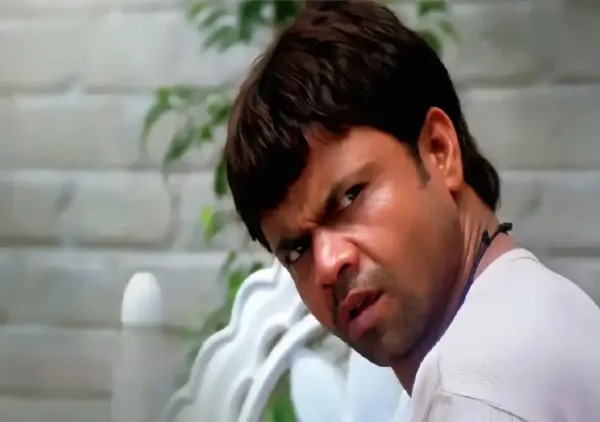
Delhi: Bollywood actor Rajpal Yadav has surrendered at Tihar Jail after the Delhi High Court declined to grant further relief in a long-running cheque bounce and loan default case linked to a ₹5 crore borrowing taken for his 2012 film project. The development follows years of litigation, missed repayment deadlines and repeated undertakings before the court that were not fulfilled, ultimately leading to the enforcement of his six-month sentence.
Known widely for his comic roles in Hindi cinema, the actor is now at the centre of a serious financial and legal dispute that dates back more than a decade and has moved through multiple judicial stages.
Loan taken for film production
The case traces back to 2010, when Rajpal Yadav took a loan of ₹5 crore from Delhi-based Murali Projects Pvt Ltd to finance his directorial debut Ata Pata Laapata, which was released in 2012. The film did not perform well at the box office, triggering financial stress and repayment difficulties.
According to court records referenced in proceedings, Yadav issued several cheques to the lender as part of repayment commitments. However, seven of these cheques were dishonoured upon presentation, leading the company to initiate legal action under Section 138 of the Negotiable Instruments Act, which deals with cheque bounce offences.
After trial, a magisterial court in April 2018 convicted Rajpal Yadav and his wife Radha in the matter. The court sentenced him to six months of simple imprisonment. The conviction and sentence were later upheld by a Sessions Court in early 2019 after appeal.
High Court relief and conditional suspension
Yadav subsequently approached the Delhi High Court through a revision petition, seeking relief from the sentence. In June 2024, the High Court granted temporary suspension of the sentence, giving him an opportunity to settle the outstanding dues.
During hearings, the court directed the actor to demonstrate “sincere and genuine measures” toward repayment. By then, with interest and legal costs, the outstanding liability had reportedly increased to around ₹9 crore.
The suspension order was conditional and linked to a structured repayment plan. The court made it clear that continued relief would depend on timely compliance and financial settlement efforts.
Missed deadlines and partial payments
Court proceedings later recorded that Yadav failed to adhere to several timelines he had proposed. In October 2025, he deposited ₹75 lakh through two demand drafts. However, the High Court observed that this covered only a small portion of the total liability.
Further undertakings included a promise to pay ₹40 lakh in December 2025 and clear the remaining balance by early 2026. These commitments were also not honoured within the agreed timeframes.
During subsequent hearings, the court expressed dissatisfaction with what it described as a repeated pattern of assurances without execution. Judicial observations noted a “lack of seriousness” in complying with undertakings given to the court.
Court rejects mercy plea
The matter reached a decisive stage in early February 2026. Justice Swarana Kanta Sharma of the Delhi High Court noted that judicial leniency cannot continue indefinitely when orders are not followed.
The actor filed a last-minute plea seeking a one-week extension to arrange funds. On February 4, 2026, the court rejected the request, observing that nearly 20 earlier undertakings had not been fulfilled. The order stressed that courts must prioritise compliance and accountability over repeated concessions.
The judge stated that celebrity status cannot be grounds for special treatment and that the legal system must apply uniformly to all litigants.
Surrender at Tihar Jail
On February 5, 2026, Yadav appeared before the court again through counsel, who offered a fresh cheque of ₹25 lakh along with a revised payment schedule. The High Court declined to recall or defer the surrender order, maintaining that sufficient opportunities had already been granted.
Following the order, Rajpal Yadav surrendered before Tihar Jail authorities at around 4 pm the same day to serve the six-month sentence awarded in the cheque bounce case.
The High Court has also directed that the amounts already deposited with the Registrar General be released to the complainant company as part of partial recovery.
Legal and industry implications
Legal experts note that the case highlights how cheque bounce convictions can lead to imprisonment if settlement terms are not honoured, even when higher courts grant conditional relief. Suspension of sentence, they point out, is not equivalent to cancellation and depends strictly on compliance.
For the film industry, the episode serves as a reminder of the financial risks associated with self-funded productions and informal financing structures. While Rajpal Yadav continues to be recognised for his long career in comedy and character roles, the present case underscores the legal consequences of unresolved commercial liabilities.
Conclusion
The surrender of Rajpal Yadav marks the latest and most serious turn in a dispute that began with a film loan in 2010 and moved through multiple courts over the years. With the High Court refusing further extensions and enforcing the sentence, the matter now shifts from litigation to sentence execution, closing a prolonged chapter of legal relief attempts and missed repayment commitments.
-
Josh Foulger to lead Dixon's IT hardware biz

-
T20 World Cup: Pakistan set to withdraw India boycott after Bangladesh nudge; Naqvi says decision likely in 24 hours

-
Lok Sabha adjourned amid standoff over Rahul Gandhi’s demand to speak before budget debate
-
P Chidambaram slams Budget as 'cautious, parsimonious, forgettable'; BJP calls it aspirational
-
Congress women MPs write to Speaker Om Birla, reject claims of planned unrest in Lok Sabha