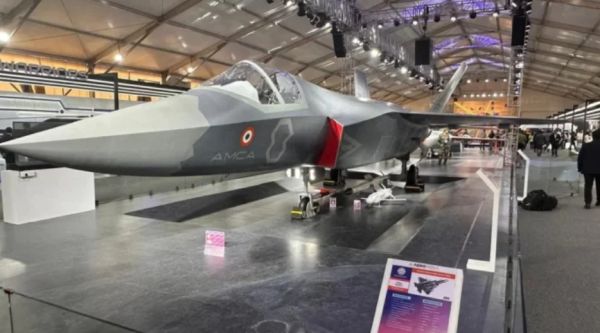
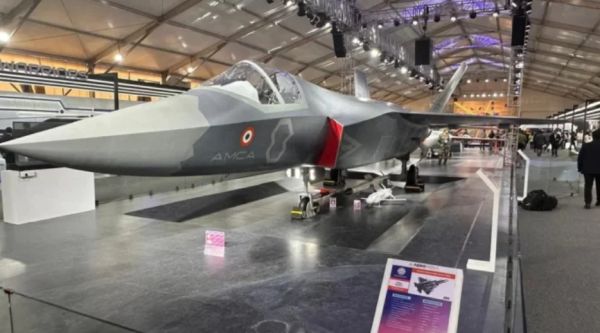
Amid continued delays in the Hindustan Aeronautics Limited (HAL)-led Tejas Light Combat Aircraft (LCA) project, questions are being raised over India’s efforts to build a fifth-generation fighter jet through its **Advanced Medium Combat Aircraft (AMCA)** programme. The Indian Air Force (IAF) has ordered 180 Tejas Mk1A in two phases (83 in 2021 and 97 in 2025), but deliveries are delayed.
As of February 2026, HAL reports five Mk1A aircraft are fully ready for delivery—with major systems (radar, EW suite, weapons) integrated—and nine more have been built and flown, awaiting GE F404-IN20 engines. HAL aims to deliver these five aircraft by March 2026 and increase annual production to 24, but the IAF plans a comprehensive review in May 2026, with an emphasis on complete operational configuration and Service Qualitative Requirements (SQRs), before acceptance. Engine supply disruptions from GE Aerospace remain, although HAL says the situation looks positive with recent deliveries being in line with plans. The first induction, originally expected in 2024–2025, has now been pushed to mid-2026 or later.
The delay in Tejas highlights the challenges in indigenous production, including supply chain problems and hurdles in integration. Allegations of internal inefficiencies, including claims by retired Air Marshal Diptendu Choudhary that some HAL employees delayed work for year-end bonuses, have surfaced in the media and social media, though not officially confirmed and not corroborated by recent reports. HAL is heavily dependent on foreign engines (GE for Tejas), limiting autonomy and impacting IAF squadron strength amid the retirement of the MiG-21.
As for AMCA, reports suggest that HAL has been left out of the initial shortlist for prototype development (five aircraft + test specimen), with private consortia—Tata Advanced Systems, Larsen & Toubro (with partners), and Bharat Forge—proceeding after technical evaluation. The reason behind this has been attributed to HAL’s large order book, which is putting pressure on its capacity. HAL says it has not received any official communication about the exclusion and plans to bid for future production phases (after 2035).
This shift towards private participation aims to accelerate self-reliance under Atmanirbhar Bharat, but raises questions about HAL’s role in future programmes. While HAL shows the infrastructure and expertise, the delay in Tejas has sparked debate on trusting it for AMCA’s high-stakes timeline. If coordination with ADA is successful, private sector-led execution could mitigate the risks. India will have to balance public-private dynamics to achieve air supremacy against regional threats.
-
Maha Shivaratri 2026: Kashi Vishwanath To Srisaila Mallikarjuna, 6 Must-Visit Shiva Temples

-
India vs Pakistan T20 World Cup Fixture Back on the Table as PCB Initiates Discussions With ICC: Report

-
Jr NTR's Look In Dragon Gets An Upgrade, Actor Spotted All Bulked Up For New Shoot Schedule In Jordan

-
Mardaani 3 And Border 2 Reap Benefits At Box Office As New Releases Vadh 2, Bhabiji Ghar Par Hain Register Muted Collections

-
Inside Pictures From Sonam Kapoor's Baby Shower Show Glowing Mom-To-Be In Pastel Green Lehenga