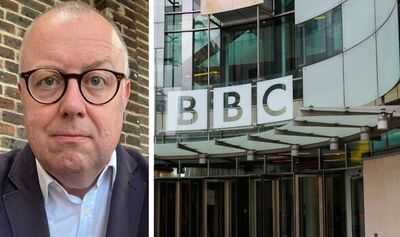
The time has come to scrap the BBC licence fee as it is no longer a fair or realistic way of funding the country's public service broadcaster. In an age where people are used to choosing to pay-per-view or subscribe to services, an archaic licence which is enforceable by fines, and legal prosecution, is ludicrous in the modern age. And getting rid of the licence fee would also stop the aggressive and intimidating tactics used by TV Licensing in their tracks. This awful and pernicious enforcement organisation operates on behalf of the BBC.
Last year, a 69-year-old man with dementia was convicted of not keeping up payments for his TV licence under the Single Justice Procedure which is a process often used by TV Licensing in legal proceedings. This form of fast-track prosecution rarely allows for mitigation due to the high turnover of cases. In this case, the man in question had handed control of his financial affairs over to his daughter and she had missed a TV licence fee bill whilst dealing with other financial matters.
While the magistrate accepted the pensioner's guilty plea - despite clear questions over his mental capacity and state of mind, the magistrate decided not to issue a fine, though the man had to pay £50 in costs and settle a £26 "victim surcharge".
The only victim in this sorry saga was him and his experience was by no means an isolated case.
An 89-year-old widower has received fifty-three letters by TV Licensing which have been described as "threatening" for non-payment of a TV Licence which he disputes.
This is a form of harassment by anybody's standards.
Putting the enforcement issues to one side, the BBC needs to accept that it is no longer the much-loved national treasure that it still thinks it is. Its reputation has taken a proper kicking over the last few decades with scandals involving Jimmy Saville and Huw Edwards, along with editorial decisions that have resulted in concerns over bias in how stories are reported - notably anything related to the Middle East, climate change and trans-issues.
The BBC also has a serious case of double standards when it comes to religious matters where comedy programmes seem happy to make light of Christianity but would never dare to make fun of or criticise Islam.
And this is before the general wokeness of the organisation that still has an air of 'nanny knows best' about it, especially with BBC1's The One Show which treats its viewers as 5-year-olds at times.
Recent changes to BBC local radio suggest that they care little for maturer audiences. These changes saw older presenters lose their programmes to younger replacements, along with a 'hipper' music policy designed to attract an audience already catered for by commercial radio.
Last week's local radio audience figures show that these decisions have failed with some once great stations in certain parts of England having lost up to a third to half their audiences in the last four years. Perversely, it is the older generations who grew up with the BBC that are more likely to remain loyal to it.
However, there is a place for public service broadcasting in the country to fill the gaps not covered by the private sector.
Commercial radio has understandably given up on local radio in any meaningful sense as it cannot make money out of it so the BBC should be overdelivering in this area.
There are fantastic programmes across BBC TV and radio channels that would be considered niche but would never be broadcast in the commercial world as they would not be financially viable. Long may they continue.
As the BBC heads towards its charter renewal at the end of 2027 and its senior execs and politicians try to work out the future, the licence fee must go.
First set-up in 1946, it is no longer right for modern times and is no more than just another tax made payable by law.
It should be replaced by a government grant to fund public service broadcasting.
Access to websites, podcasts and streaming services should be via subscription.
And as our country fully moves towards digital broadcasting via smart TVs, access to channels should also be via subscription.
According to Parliament's Public Accounts Committee, the BBC lost more than £1billion last year as a record number of people stopped paying the licence fee - the writing is clearly on the wall for this outdated form of funding.
If the BBC wants to survive, it must scrap its tax.
-
T20 World Cup 2026 Group B Points Table: Sri Lanka secure top spot after Kamindu Mendis fiery knock
-
Maha Shivaratri 2026: Kashi Vishwanath To Srisaila Mallikarjuna, 6 Must-Visit Shiva Temples

-
India vs Pakistan T20 World Cup Fixture Back on the Table as PCB Initiates Discussions With ICC: Report
-
Jr NTR's Look In Dragon Gets An Upgrade, Actor Spotted All Bulked Up For New Shoot Schedule In Jordan
-
Mardaani 3 And Border 2 Reap Benefits At Box Office As New Releases Vadh 2, Bhabiji Ghar Par Hain Register Muted Collections