Rising living costs, high urban density, and growing awareness of waste have contributed to the emergence and growth of these models.
Alongside this expansion, questions have surfaced about how kindness is structured and managed in digital environments, who benefits from these systems, and how platforms address the risks of misuse or unintended pressure on participants.
Global data highlight the scale of the challenge these platforms seek to address. According to the United Nations Environment Programme, more than one billion meals were wasted globally each day in 2022, while hundreds of millions of people continued to face food insecurity. The World Bank has projected that global solid waste could reach 3.4 billion tonnes by 2050, with East Asia and the Pacific among the fastest-growing regions.
These figures suggest that the issue is less about the availability of resources than about their distribution and accessibility. Sharing platforms have developed in response to this imbalance, aiming to connect surplus with need. However, as such platforms grow, new operational and ethical challenges have emerged.
Digital tools have simplified the process of sharing, allowing goods to be transferred quickly between users. At the same time, participation on some platforms has created new forms of social pressure. Recipients may feel compelled to explain or justify their circumstances, while donors are often encouraged to document their actions publicly through images or videos.
Researchers examining altruism in digital environments have noted that these dynamics can affect trust within online communities. When receiving assistance is perceived as conditional or subject to judgment, individuals in vulnerable situations may become more reluctant to participate. Similarly, when acts of giving are closely tied to public visibility, attention can shift away from the exchange itself.
In response, several sharing platforms in Asia have begun to reassess not only what is shared, but also how sharing is structured. Rather than prioritizing rapid growth, some have introduced ethical guidelines designed to clarify expectations and protect participants.
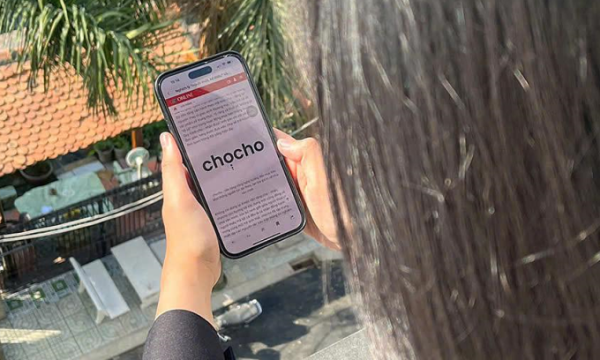
One example is chọcho, a platform focused on the free sharing of pre-owned items. Described as “the world’s first video platform for free giving and receiving,” chọcho does not operate as a commercial marketplace and does not involve financial transactions. According to the platform, its role is to connect surplus goods with individual needs, without replacing charitable organizations.
|
User readding an article about chọcho. Photo courtesy of chọcho |
Chọcho’s operating principles emphasize voluntarism, with no rankings, scores, or competitive metrics. Users are not required to disclose personal circumstances, and the platform states that giving and receiving are treated as equal interactions rather than hierarchical relationships.
The platform also places limits on content that could compromise privacy or dignity. Material that exploits personal hardship or uses emotional narratives primarily to attract attention is restricted. In addition, chọcho outlines measures to prevent disguised commercial activity, advertising, or the use of sharing for personal promotion.
According to the platform, these rules are intended to preserve trust and prevent commercialization from overshadowing the purpose of sharing. The system is designed to function without distinctions based on social status, gender, or religious belief, and focuses on facilitating small-scale exchanges rather than rapid expansion.
As digital sharing ecosystems in Asia continue to develop, questions remain about how such platforms can balance scale with ethical safeguards. While guidelines alone cannot guarantee trust, observers note that clear frameworks may help address risks that have affected other online communities.
In regions where surplus and scarcity coexist, the structure governing digital sharing has become an increasingly important consideration. For platforms like chọcho, establishing clear rules is positioned not as a means of controlling participation, but as a way to manage expectations and protect users as online sharing continues to evolve.
-
Sikkim State Lottery Result: February 9, 2026, 6 PM Live - Watch Streaming Of Winners List Of Dear Legend Monday Weekly Draw

-
T20 World Cup 2026 Group B Points Table: Zimbabwe rise to top after Blessing Muzarabani wrecks Oman

-
IOCL Apprentice Recruitment: Apply Now for 637 Positions

-
Thomas Frank issues three-word Dejan Kulusevski update as Tottenham suffer fresh injury blow

-
Unnao case: Decide on Sengar's plea for sentence suspension in custodial death case, SC tells HC