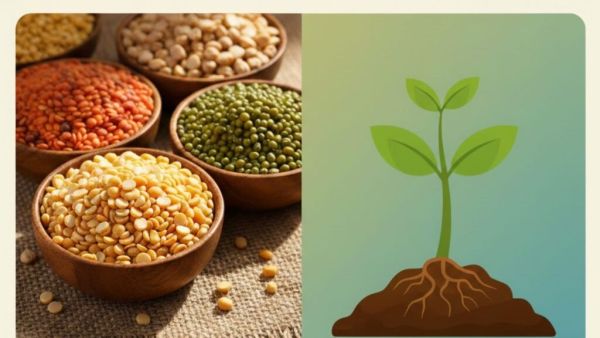
Importance Of Pulses: World Pulses Day is celebrated every year on 10 February. Its main objective is not only to raise awareness about this cheapest source of protein but also to ensure future food security. India has today become an example for the world in the production of pulses.
Dal has the highest place in Indian kitchen. Be it pigeon pea, moong or lentils, pulses not only enhance the taste but are also a treasure trove of health. To spread the importance of pulses in health and nutritional security to the whole world, the United Nations started celebrating World Pulses Day from the year 2019.
Pulse Hub of the World
India today plays a leading role in both production and consumption of pulses in the world. India’s share in global pulses production is about 24 percent. That means every fourth bowl of pulses in the world comes from the soil of India. According to data, India’s pulses production has increased from 140 lakh tonnes to 240 lakh tonnes. During the year 2020-21, India has also proved its economic strength by exporting pulses worth about Rs 2116 crore.
Boon for farming and environment
Pulses are beneficial not only for humans but also for the earth. According to agricultural experts, the cultivation of pulses requires very less water as compared to other crops. While 13,000 liters of water is used to prepare one kg of beef, one kg of pulses is prepared in just 1250 liters of water.
Apart from this, pulses increase the natural fertility of the soil through nitrogen fixation. This means that farmers need less additional, expensive synthetic fertilizers, which reduces farming costs and improves soil health.
Pulses are a treasure of health
Pulses are the biggest source of protein for vegetarians. They are low-fat, rich in fiber and gluten-free. They are low in sodium which makes them an ideal superfood for heart patients and people suffering from diabetes.
World Pulses Day reminds us that pulses are not just a dish but the foundation of a sustainable future. The self-reliance campaign of the Government of India and the hard work of the farmers have today made the country self-reliant in this sector, which is not only helping in fighting malnutrition but also strengthening the rural economy.
-
When winter is on its way, be sure to follow these rules before putting the blanket away in the closet

-
Valentine Day 2026: It will not cost even Rs 500! This Valentine, romance with your partner at these places in Delhi-NCR

-
March 17 Launch With 200MP And 6000mAh

-
Why is the speed of old phones slow? Know the reason and solution.

-
BWF’s revamped tour, India’s shrinking footprint: What changed and why it matters