A team of astronomers from the University of Milan recently discovered a massive galaxy. This galaxy was discovered using the James Webb Telescope. The uniqueness of this galaxy is that its color and appearance resemble a potato, which is why scientists are calling it the "Red Potato." This galaxy is located billions of light-years from Earth.
The Red Potato is 110 billion times heavier than our Sun.
This galaxy is 110 billion times heavier than our Sun. This galaxy is as massive as it is mysterious because, despite the abundance of star-forming gas surrounding it, the formation of new stars has virtually stopped. Normally, galaxies this large give birth to hundreds of new stars each year, but this rate is much slower in the Red Potato. It has been officially named MQN01 J004131.9-493704.
Investigations revealed that another galaxy nearby is emitting very powerful X-ray jets. These rays disturb the surrounding gas so much that the 'Red Potato' cannot utilize them. Simply put, the noise from its neighbor has completely halted the galaxy's progress.
What is the James Webb Telescope (JWST)?
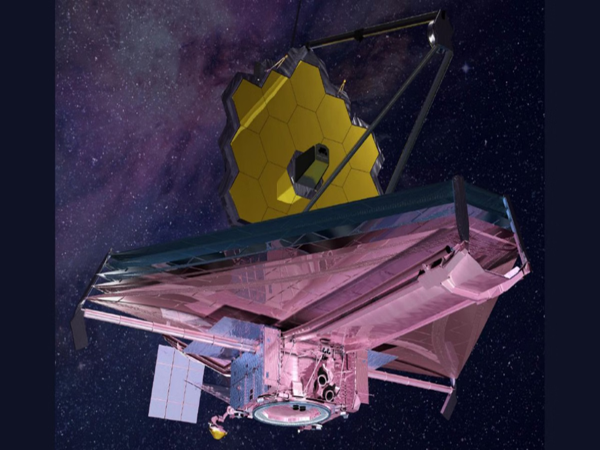
The James Webb Telescope has replaced the aging Hubble Telescope. You can consider it the world's most powerful camera deployed in space. It was launched on December 25, 2021. Major organizations like NASA and the European Space Agency have spent billions of dollars to build it. This telescope works on 'heat vision,' or infrared technology. Just as infrared glasses detect heat in the dark, this telescope can see stars hidden by dust and smoke.
The telescope is equipped with gold-coated mirrors.
This telescope features a mirror approximately 6.5 meters (21 feet) wide, coated with a thin layer of gold. This is because gold reflects infrared waves the most. To protect the telescope from the sun's heat, it has a tennis court-sized sunshield. This helps keep the telescope at a temperature as cold as -233°C, which is essential for the infrared sensor to function.
What does the James Webb Telescope do?
It is located approximately 1.5 million kilometers from Earth, allowing it to observe the depths of space without obstruction. When we look at a distant galaxy, we are actually looking into its past, billions of years old, because its light takes so long to reach us. James Webb is trying to show us the first flashes of the universe, the Big Bang.
The primary function of this telescope is to look into the far reaches of the universe, where we have never been able to see before. This effort, it explores stars and galaxies, looking for gases like water, oxygen, or methane, which could indicate that life might be possible there.
Disclaimer: This content has been sourced and edited from Amar Ujala. While we have made modifications for clarity and presentation, the original content belongs to its respective authors and website. We do not claim ownership of the content.
-
Is Allu Arjun’s big Bollywood debut with Bhansali still possible?

-
T20 World Cup 2026 Points Table Update: Group A, B, C And D Standings

-
Netflix Agrees To Rename ‘Ghooskhor Pandit’ After Matter Reaches Delhi High Court

-
Indian-origin Tesla VP Raj Jegannathan quits after 13 years

-
MIDASX Records Best Quarter Since Inception, 30% YoY Growth; SaaS Vertical Turns Cash-Flow Positive