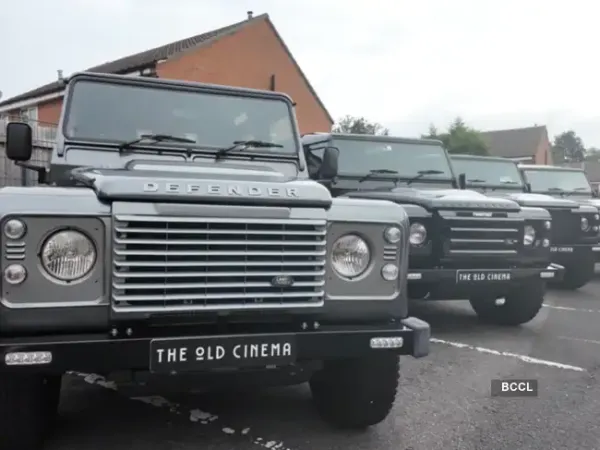
"Everyone thought we were nuts." In 2015, Charles Fawcett took a bold gamble that the car industry deemed reckless: he placed a bulk order for 240 brand-new Land Rover Defenders just as production of the iconic model was coming to an end. What appeared at the time to be a high-risk stunt has since become one of the most extraordinary automotive investment stories of the decade.
A Bold Bet on a Discontinued Classic
As per a TOI report, Fawcett was running Twisted Automotive, his Yorkshire-based company known for modifying Defenders. His plan was simple in concept but enormous in risk: buy as many of the outgoing model as possible, store them, and later rebuild each vehicle as a bespoke, high-end version once factory production dried up.
At the time, Fawcett admitted he didn’t even have the money or storage space. He borrowed every pound required, secured a 14.8% bulk discount, and negotiated payment on delivery. Each Defender, originally retailing for around £30,000, cost him roughly £22,600. Overall, the investment, including storage and preparation, topped £8 million.
"Everyone thought we were nuts," Fawcett later admitted. "Land Rover are very protective of their brand. They didn’t want people taking the product, changing it and making money off it."
From Utilitarian Workhorses to Six-Figure Machines
Twisted Automotive didn’t simply resell the Defenders. Each vehicle underwent a complete rebuild:
Fawcett revealed that around 1,500 labour hours went into every build, using components refined over 25 years. Early sales ranged from £70,000 to £90,000, a significant uplift from the purchase price, but as untouched Defenders became scarcer, demand skyrocketed.
By the early 2020s, Twisted Defenders were regularly selling for £180,000 to £320,000, with some later models fetching even higher prices in international markets. High-profile clients flocked to Twisted, and even Jeremy Clarkson publicly praised their reworked Defenders, according to TOI.
Scarcity Drives Value
Of the 240 original Defenders, Twisted received 239. By the mid-2020s, only a few dozen remained in Fawcett’s vaults. Fawcett openly stated that he planned to keep several for himself, ensuring that scarcity would continue to drive market value.
"History says outgoing models usually fall in value," he said. "We believed this one wouldn’t, and we needed it to."
£50 Million Outcome and a Business Transformed
By 2024, Fawcett revealed that Twisted Automotive had generated over £50 million from the project. The bold gamble not only created massive financial returns but also allowed the company to expand into other high-end restomod projects, fund engineering programmes, and grow the team.
The gamble demonstrated the power of believing in classic vehicles as appreciating assets. What started as a £8 million risk on borrowed money became a cornerstone of a thriving automotive business.
Lessons from the Twisted Defender Gamble
Fawcett’s story shows that sometimes, unconventional thinking pays off:
Inputs from TOI
A Bold Bet on a Discontinued Classic
As per a TOI report, Fawcett was running Twisted Automotive, his Yorkshire-based company known for modifying Defenders. His plan was simple in concept but enormous in risk: buy as many of the outgoing model as possible, store them, and later rebuild each vehicle as a bespoke, high-end version once factory production dried up.At the time, Fawcett admitted he didn’t even have the money or storage space. He borrowed every pound required, secured a 14.8% bulk discount, and negotiated payment on delivery. Each Defender, originally retailing for around £30,000, cost him roughly £22,600. Overall, the investment, including storage and preparation, topped £8 million.
"Everyone thought we were nuts," Fawcett later admitted. "Land Rover are very protective of their brand. They didn’t want people taking the product, changing it and making money off it."
From Utilitarian Workhorses to Six-Figure Machines
Twisted Automotive didn’t simply resell the Defenders. Each vehicle underwent a complete rebuild:- Modernised drivetrains
- Upgraded interiors
- Reworked suspension
- Extensive cosmetic enhancements
Fawcett revealed that around 1,500 labour hours went into every build, using components refined over 25 years. Early sales ranged from £70,000 to £90,000, a significant uplift from the purchase price, but as untouched Defenders became scarcer, demand skyrocketed.
By the early 2020s, Twisted Defenders were regularly selling for £180,000 to £320,000, with some later models fetching even higher prices in international markets. High-profile clients flocked to Twisted, and even Jeremy Clarkson publicly praised their reworked Defenders, according to TOI.
Scarcity Drives Value
Of the 240 original Defenders, Twisted received 239. By the mid-2020s, only a few dozen remained in Fawcett’s vaults. Fawcett openly stated that he planned to keep several for himself, ensuring that scarcity would continue to drive market value."History says outgoing models usually fall in value," he said. "We believed this one wouldn’t, and we needed it to."
£50 Million Outcome and a Business Transformed
By 2024, Fawcett revealed that Twisted Automotive had generated over £50 million from the project. The bold gamble not only created massive financial returns but also allowed the company to expand into other high-end restomod projects, fund engineering programmes, and grow the team.The gamble demonstrated the power of believing in classic vehicles as appreciating assets. What started as a £8 million risk on borrowed money became a cornerstone of a thriving automotive business.
Lessons from the Twisted Defender Gamble
Fawcett’s story shows that sometimes, unconventional thinking pays off:- Backing a belief others doubt can yield enormous returns
- Scarcity and discontinuation can turn utilitarian vehicles into high-value collectibles
- Long-term vision and meticulous craftsmanship can transform ordinary machines into bespoke investments
Inputs from TOI