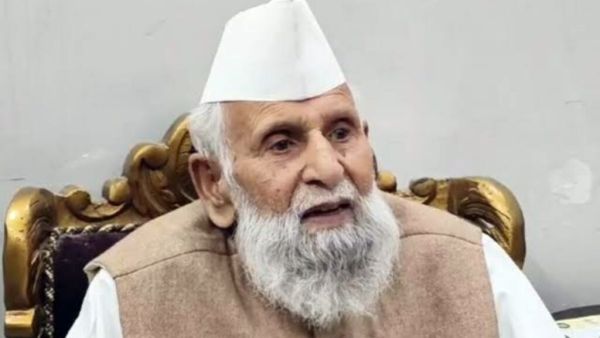
One name is resonating the most in Dhaka’s politics these days. Shafiqur Rahman Name of. Those foreign diplomats who once used to maintain distance, are now asking for time to meet them. The unexpected strength of Jamaat-e-Islami in opinion polls has brought this 67-year-old leader to the center of Bangladesh politics. The question is not just who he is, but whether he has become the most serious contender in the race for power in the country?
Who is Shafiqur Rahman?
Shafiqur Rahman took over the post of Amir (Chief) of Jamaat-e-Islami Bangladesh in 2019. He has been a former government doctor by profession. He made his political identity from Sylhet region. He has been leading the party since the time when the party was facing legal and political pressure.
What is the promise in the election manifesto?
Recently, through Zaman’s manifesto, he has made a big claim to the people of the country. He has said that by 2040 the GDP will reach 2 trillion dollars. Technology-based farming, investment in IT and manufacturing sector, strategy to increase foreign investment and corruption-free governance have been promised.
Is this possible?
Many economists in Dhaka consider his promises to be extremely ambitious. He says that the manifesto lacks a clear financial roadmap. However, according to analysts, this is more a political message than economic mathematics. He wants to establish Jamaat as an alternative in Bangladesh.
What do economists say about their claims?
Addressing the diplomats, Shafiqur Rahman said that he promised more foreign investment and increased government expenditure along with investment in technology-driven agriculture, manufacturing, information technology, education and healthcare. Economists in Dhaka have expressed doubt whether big promises can be financed. He has filled the manifesto with slogans but has given less in details. But analysts say that for the Jamaat’s leadership, the manifesto is more a signal of intent than financial mathematics.
For years, critics have tried to portray the Jamaat, Bangladesh’s largest Islamist party, as too bound by religious principles to rule over a young, diverse, forward-thinking population. On the contrary, the manifesto presents a credible alternative to a party that has been out of power for a long time. As a force that sees no contradiction between its religious base and the modern future of Bangladeshis.
listen to them people What is your opinion?
Until recently, Bangladesh’s business elite and foreign diplomats either maintained a distance from the Jamaat or were secretly associated with it. Now, they are doing so openly. Over the past few months, European, Western and even Indian diplomats have been trying to meet Rahman, a figure who until recently was considered almost politically untouchable by many at the international level.
For a leader whose party has been banned twice, including during the administration of ousted Prime Minister Sheikh Hasina, the upcoming election raises a question that few would have dared to ask even a year ago: Could Shafiqur Rahman become Bangladesh’s next Prime Minister?
‘I will fight for the people’
This change in the way the Jamaat and its leaders are being viewed is, at least to some extent, due to the political vacuum created in Bangladesh. The July 2024 uprising that ousted Sheikh Hasina did more than end her long rule. It upended the country’s political system, ending the familiar two-party system that had characterized Bangladeshi politics for decades. The rivalry between Hasina’s Awami League and the Bangladesh Nationalist Party (BNP).
A void was created due to Awami League being completely banned from the political field and BNP remaining the only major party. Initially many people thought that it would be filled by the student-led National Citizen Party (NCP). Instead, the Jamaat – which had been marginalized for a long time – took this place.
Former government doctor Rehman took over as the chief of Jamaat in 2019, at that time the party was banned during Hasina’s rule. In December 2022, he was arrested at midnight on charges of supporting militancy and was released only after getting bail after 15 months.
In March 2025, months after student protests ousted Hasina and an interim government was formed under the leadership of Nobel laureate Muhammad Yunus, Rehman’s name was removed from the list of accused in the case. Since then, his deliberate, emotional public appearances have attracted much attention.
At a major rally in Dhaka last July, Rahman collapsed twice on stage due to heat- illness, but defied doctors’ advice and returned to complete his speech. He told the crowd, “As long as Allah gives me life, I will fight for the people. If the Jamaat is elected, we will be servants, not masters. No minister will take plots or tax-free cars. There will be no extortion, no corruption. I want to tell the youth clearly. We are with you.” Supporters describe Shafiqur Rehman as friendly and morally strong. A leader who prefers disaster sites to drawing rooms, and shows peace in a country weary of conflict.
Rehman’s challenge is not just electoral, it is also a question of respect.
As new supporters are moving towards Jamaat, they are trying to relook at the party. He is trying to portray himself less as an Islamic force and more as an instrument of clean governance, discipline and change. Analysts say whether this change will be real or just an illusion, it will decide both Rehman’s leadership and the future of the Jamaat. He acknowledged the Jamaat’s “past mistakes” and apologized if the party had caused any harm. This language marks a slight change from an outright denial, while not naming specific duties or responsibilities.
Supporters say this reflects political realism rather than procrastination. This is an attempt to take the party out of its bad phase. Critics, on the contrary, consider this confusion to be deliberate, arguing that it softens the Jamaat’s image without confronting the reality of its past. “Our Constitution allows any Bangladeshi, regardless of religion, to become part of the party if they support our political, economic and social policies,” he said. Supporting our religious principles is not necessary for political participation.”
-
All 230 Michelin-starred restaurants in the UK mapped - where's your closest?

-
Winning Lotto numbers LIVE : Full National Lottery results with Thunderball on February 11

-
10 Tips To Stop Having Recurring Negative Thoughts That Drag You Down

-
Best activities to lower your risk of developing Alzheimer's disease by up to 40%

-
Royal Family garden party iced coffee recipe shared by Tom Parker Bowles