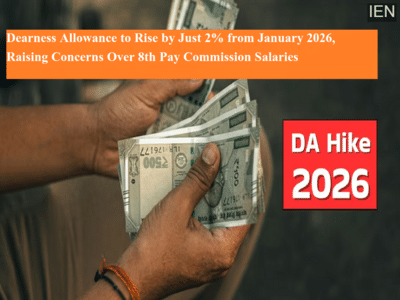
Central government employees and pensioners may receive a modest relief ahead of Holi, but the latest data suggests that the increase in Dearness Allowance (DA) from January 2026 will be limited to just 2%. As a result, DA and Dearness Relief (DR) are expected to rise from 58% to 60%, marking one of the slowest hikes in recent years.
What makes this revision particularly significant is that it is the first DA increase after the conclusion of the 7th Pay Commission’s tenure on December 31, 2025. Experts believe this slow pace could have long-term implications for salaries and pensions under the upcoming 8th Pay Commission.
Cabinet Approval Likely Before HoliAccording to sources, the Union Cabinet may approve the DA hike in the first or second week of March 2026, allowing employees and pensioners to benefit just before the festival season. Once approved, the revised DA rate will be implemented retrospectively from January 1, 2026.
However, expectations of a higher hike have been dampened by recent inflation data, which clearly points to a marginal increase.
CPI-IW Data Confirms Limited DA IncreaseThe Labour Bureau’s Consumer Price Index for Industrial Workers (CPI-IW) data for December 2025 has effectively sealed the outcome. The all-India CPI-IW index remained unchanged at 148.2 points in December, completing the required data set for DA calculation for the January–June 2026 period.
Based on the 12-month average CPI-IW from July to December 2025, DA works out to 60.34%. As per established practice, the government rounds off the decimal figure, fixing DA and DR at 60%. This confirms that the increase will be restricted to just 2 percentage points.
With this, all speculation around a higher DA hike has come to an end.
Among the Lowest DA Hikes in Over Seven YearsA 2% hike in DA is considered unusually low. Similar minimal increases were last seen in July 2018 and January 2025. Despite inflationary pressures not being fully under control, the current revision stands out as the smallest DA increase in more than seven years.
For employees and pensioners who were expecting stronger financial relief at the start of a new pay commission cycle, this development may come as a disappointment.
Why the January 2026 DA Revision Is CrucialThis DA hike is not just a routine adjustment—it plays a crucial role in shaping future pay structures. Since the 7th Pay Commission’s 10-year term has officially ended, the January 2026 DA revision is being viewed as a transition-phase increase ahead of the 8th Pay Commission.
Historically, the DA level at the time a new pay commission is implemented gets merged into the basic pay, after which DA is reset to zero. This merged DA directly influences the fitment factor, which determines the revised salary and pension levels.
8th Pay Commission Still in Early StagesAlthough the 8th Pay Commission has been constituted, its terms of reference do not specify an implementation date. The commission has been given up to 18 months to submit its recommendations. Past experience suggests that it may take an additional one to two years for the government to implement those recommendations.
This means that revised salaries and pensions under the 8th Pay Commission are unlikely before late 2027 or early 2028.
Slow DA Growth May Impact Fitment FactorThe pace of DA growth between January 2026 and the implementation of the 8th Pay Commission will be closely watched. If DA continues to rise slowly, the total DA available for merger into basic pay could remain limited.
This has led to growing speculation that the minimum fitment factor under the 8th Pay Commission may hover around 1.60, lower than what many employee unions had hoped for. A lower fitment factor would translate into a more modest increase in take-home pay and pension.
Future DA Hikes Will Shape Salary OutcomesThe DA revisions scheduled for January 2026, July 2026, January 2027, and July 2027 will collectively determine how much DA eventually gets merged when the new pay commission is implemented. Even small differences in DA percentages during this period can have a lasting impact on an employee’s entire career earnings and post-retirement benefits.
Final WordIn simple terms, a slower rise in Dearness Allowance today could mean restrained salary and pension growth tomorrow. While the January 2026 DA hike offers some relief, its limited scale highlights the challenges ahead for central government employees as they move toward the 8th Pay Commission era.
For now, all eyes remain on future inflation data and upcoming DA revisions, which will play a decisive role in shaping pay structures in the years to come.
-
Patanjali EarGrit Gold: Enhance Your Hearing With Herbs Like Fenugreek, Neem, And Bhringraj
-
IPL 2026: Delhi Capitals Appoint England Legend Ian Bell As Assistant Coach For Indian Premier League 19th Edition

-
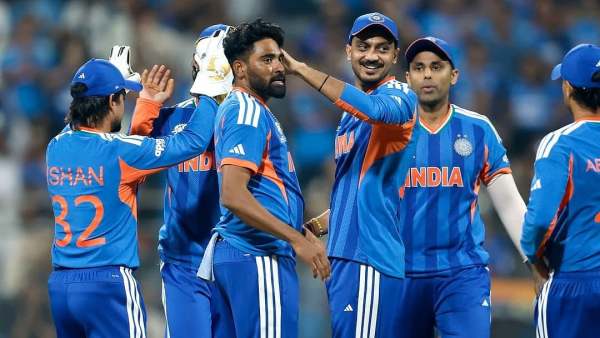
'Assumed We Were Going To Play...': India Coach Breaks Silence On IND Vs PAK T20 World Cup Boycott Controversy
-
Paromita Mukherjee Leads After Day 1 Of WIGA BPGC Ladies Open

-
King’s College London Announces Third Year Of Prestigious Vice-Chancellor's Awards For Indian Postgraduate Scholars