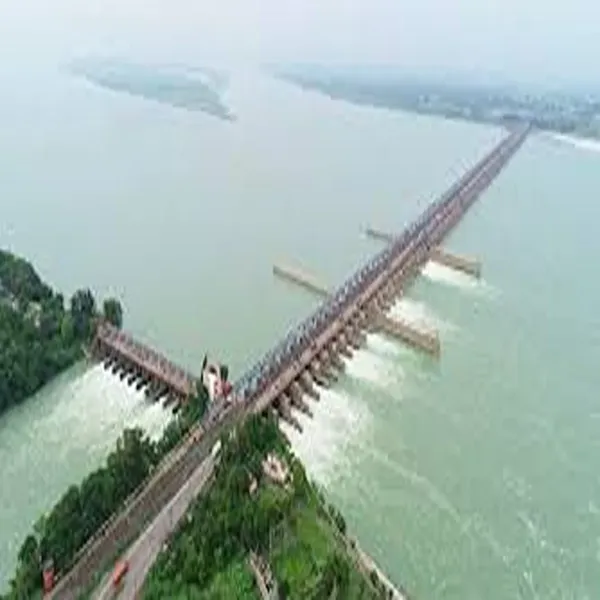
WaterTreaty – India has chosen to hold off on formal talks over the renewal of the Ganga River Water Treaty until Bangladesh completes its general elections early next year. Officials familiar with the matter say New Delhi believes discussions on a new framework should take place with a government that has secured a fresh public mandate.
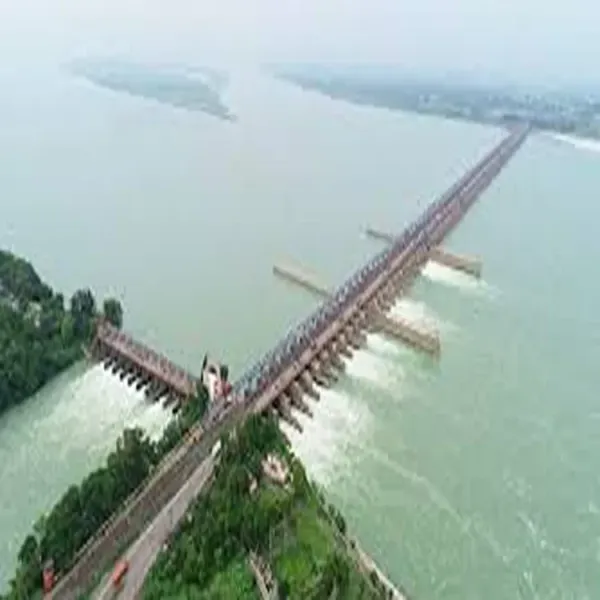
The current agreement between the two countries is due to expire at the end of 2026, prompting diplomatic and technical preparations on both sides. However, Indian authorities have made it clear that substantive negotiations will only begin after the political situation in Dhaka becomes clearer.
India Signals Cautious Approach
According to senior officials involved in the process, India has adopted a wait-and-watch stance regarding the future of the water-sharing arrangement. They indicated that Bangladesh’s top leadership has also informally conveyed that it would be appropriate to begin discussions once election results are declared.
Bangladesh is scheduled to hold its general elections on February 12, 2026. Indian officials argue that engaging with a government formed through an electoral process would provide stronger legitimacy to any long-term agreement on river water distribution.
Diplomatic sources say the approach is intended to ensure stability and continuity in a matter that directly affects millions of people in both countries.
Technical Engagement Continues
Even as political-level negotiations remain pending, technical cooperation under the existing framework has continued. In January, a delegation from India’s Central Water Commission visited the Farakka region along with a four-member team from Bangladesh. The visit was part of routine assessments conducted under the mechanism established by the 1996 treaty.
India, as the upper riparian country in the Ganga basin, plays a key role in regulating water flows at the Farakka Barrage. These joint inspections are considered essential for monitoring discharge levels and maintaining transparency between the two sides.
Officials described the January visit as preparatory groundwork aimed at ensuring a smooth transition before the agreement reaches its expiry date.
Diplomatic Contacts in Dhaka
In parallel with technical exchanges, diplomatic outreach has also taken place. In January 2026, India’s High Commissioner to Bangladesh, Pranay Verma, held a courtesy meeting in Dhaka with Tarique Rahman, chief of the Bangladesh Nationalist Party (BNP). While the details of the conversation were not disclosed, the meeting was viewed as part of broader engagement with political stakeholders in Bangladesh.
Such contacts are seen as significant given the evolving political landscape in the country. Analysts suggest that maintaining dialogue across party lines helps preserve bilateral channels during periods of uncertainty.
Background of the 1996 Treaty
The Ganga Water Treaty was signed on December 12, 1996, establishing a formula for sharing dry-season flows of the river, particularly at the Farakka Barrage. The agreement covers the lean period from March 11 to May 11 each year, when water levels typically decline.
Under the current arrangement, both countries receive 35,000 cusecs of water alternately for ten-day intervals during this period. The treaty was designed to remain in force for 30 years, after which it can be renewed by mutual consent.
India Seeks Revised Terms
Last May, the Indian government informed Dhaka that it would prefer renegotiating certain provisions rather than simply extending the pact in its present form. Indian authorities have cited rising domestic requirements and indicated a need for an additional 30,000 to 35,000 cusecs during the lean season.
The proposal has added another layer of complexity to the upcoming talks, as water allocation remains a sensitive issue tied to agriculture, livelihoods and regional stability.
Trust Deficit After Political Upheaval
Bilateral relations have faced strain since political turmoil in Bangladesh in 2024 led to the removal of the elected government. The change in leadership created uncertainty in diplomatic engagements and contributed to a degree of caution in New Delhi’s approach.
Observers note that while both countries have historically managed river-sharing issues through dialogue, rebuilding mutual trust will be critical ahead of any renewed agreement. With elections approaching in Bangladesh, India appears determined to wait for a clearer political mandate before shaping the next chapter of the Ganga water-sharing framework.
-
Single On Valentine's Day 2026? Fun Ways To Spend The Day Of Love By Yourself

-
Happy Hug Day 2026: Wishes, Messages, Quotes, Images To Send Your Lover On WhatsApp, Facebook And Instagram

-
Happy Hug Day 2026: Wishes, Messages, Quotes, Images To Send Your Lover On WhatsApp, Facebook And Instagram
-
Sanju Samson Likely To Replace Unwell Abhishek Sharma; Check India's Predicted Playing XI For T20 World Cup 2026 Clash vs Namibia
-
Sanju Samson Likely To Replace Unwell Abhishek Sharma; Check India's Predicted Playing XI For T20 World Cup 2026 Clash vs Namibia