
More than 24,500 people have signed a petition against changes to Alton Towers' new 'hidden disabilities' rules.
The theme park has made changes to its Ride Access Pass (RAP), which mean that people with ‘hidden disabilities’ such as ADHD and Autism, would be considered ineligible for the virtual queuing system.
Merlin Entertainment, which operates more than 30 top UK attractions, including major theme parks – Alton Towers, Thorpe Park and LEGOLAND Windsor – as well as popular landmarks, such as the London Eye and Madame Tussauds, announced the decision last Thursday, sparking public outrage.
Rebecca McAllister, 36, from Manchester, told the Mirror that she would no longer take her family to a theme park that cannot support her children’s needs. McAllister has four children, including a 16-year-old daughter diagnosed with ADHD and autism spectrum disorder, and a nine-year-old son currently undergoing assessments for both ADHD and autism.
“The crowds, the noises, the flashing lights, and especially the long waits and the queues – you can be waiting over two hours for one ride in the summer – the unpredictability of it all can be very overwhelming, especially for children with neurodivergentneeds,” she said.
• Man drowned in Plymouth marina as person charged with murder
• 'Fifty-three men came to our house to rape me - 11 words that changed my life'
Previously, visitors who struggle with crowds or queues could use the free pass, which allows them and up to three others to wait in a virtual queue rather than standing for long periods in physically crowded lines – often cutting waits of up to four hours.
Merlin said the change is being trialled because of a sharp rise in demand for the passes and complaints that the system “simply isn’t working” for disabled visitors due to longer wait times. Under the new rules, only those with certain Nimbus Access Card symbols, including “difficulty standing” and “urgent toilet needs”, will qualify for the virtual queue. Visitors whose cards show “difficulty with crowds” will be expected to join the normal queue.
Merlin has said that instead of virtual queuing, visitors with ADHD will be offered one free “essential companion ticket”, along with access to “sensory rooms” and “quiet spaces”. The chief operating officer at Merlin Entertainments, Rob Smith, said: “We remain deeply committed to creating inclusive experiences and ensuring all guests feel supported when visiting our attractions.
“This is an ongoing journey and we continue to listen, learn and adapt by working closely with our guests and trusted accessibility experts to better understand individual needs and put the right support in place”. But McAllister said the changes represent “the opposite of inclusion”.
"The queues are not convenient. They’re actually distressing, and that causes distress to other people that are waiting in the queue, because you’re mixing no needs with needs. I do think it’s targeting people with hidden disabilities. I feel like we are creating the idea that neurodivergent needs are less valid than others."
She warned that children with ADHD and autism are often misunderstood because their disabilities are not always visible.
“My son, for example, he will click and have flapping moments. He will have complete sensory meltdowns to the point where he’ll curl up in a ball and say I can’t do this, I need help.”
The restrictions are currently being trialled during February half-term, but McAllister fears they could become permanent and set a precedent across the leisure industry.
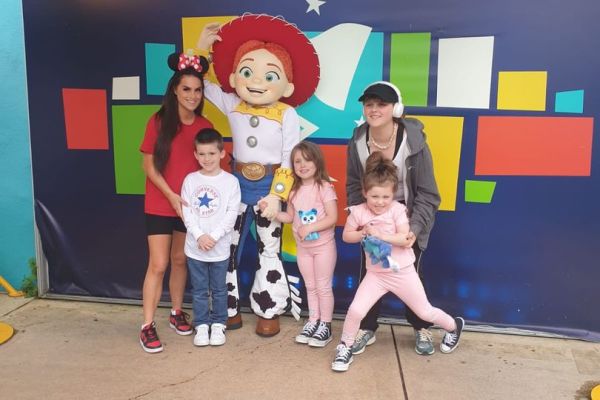
“If there’s no availability to support my children and their needs, there’s no need for me to go,” she said. “It’s a waste of money because it becomes a stress for me that day.
“If I’ve got two children that are completely overstimulated and overwhelmed then it’s going to be hard work for me and emotionally draining for them. Alton Towers isn’t cheap – it’s money I’d rather spend in an environment that supports my children and where they are going to feel included and welcome.”
She fears that if other businesses and brands take the same stance, those with conditions such as Autism and ADHD could become “outcast”.
Bobby Pratap, deputy CEO of Care ADHD, expressed his concern around the growing stigma around the condition as diagnosis rates rise.
“There’s been an under-diagnosis for many decades and the increased awareness means people are coming forward and for some services this means that there’s a huge new need.”
He stressed that ADHD can have a profound impact on daily life: “To get a clinician diagnoses, you need to demonstrate significant impairment in lots of areas of your life.
“We see people seriously suffering with their conditions. It impacts relationships, education, the criminal justice system, employment, and can lead to really serious consequences.”
-
Worker Promoted Despite Doing Bare Minimum & Being Incompetent Explains How Anyone Can Do It

-
4 Zodiac Signs Receive An Important Message From The Universe On February 12, 2026
-
Asia’s ‘most beautiful island’ experiences unprecedented rise in interest among Korean tourists

-
Hugs are not enough, hugs will tell how far the water of the relationship has flown
-
Is it right to drink water immediately after eating food? Know what effect it has on health