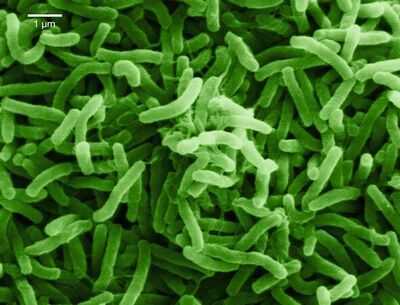
A pensioner has died from a cholera-like disease 125 years after the epidemic was wiped out in the UK. The dad-of-two, who was in his 80s, deteriorated last week after he fell ill at home with sickness and diarrhoea.
His family suspected it to be norovirus, but after his symptoms worsened he was admitted to hospital where he was quarantined. The UKHSA has confirmed that an individual tested positive for a type of bacteria called Non-toxigenic Vibrio cholerae. This is a strain of bacteria, but it does not lead to the waterborne bacterial disease that killed more than 100,000 people in the UK during Victorian times. The man sadly died yesterday afternoon at the George Eliot Hospital in Nuneaton, Warwickshire.
A source close to his family told The Sun: "They have no idea how he caught it. They were asked by doctors if he'd been abroad recently, but he hadn't. He lived at home with his youngest son.
"His eldest was allowed to be in the room with him in full PPE as his life ebbed away. It was incredibly traumatic. Doctors called them on Sunday and said he could have just hours to live. He clung on until Wednesday but withered away before their eyes."
The source claimed the family were told his clothes would have to be incinerated to prevent the infection from being spread.
Health experts are believed to be checking the test results to see if it was a false positive.
UKHSA did not confirm a cholera case. It confirmed to The Express that an individual was tested and results indicated they tested positive for Non-toxigenic Vibrio cholerae.
Cholera is usually transmitted by consuming food or water contaminated with the excrement of people carrying the disease, rather than casual contact with someone who has the disease, according to the Centre for Disease Control and Prevention.
However, regular hand washing is advised because infection can spread through touching surfaces contaminated with faeces from the infected person, and then it entering the body orally.
The disease first struck Britain in 1831 and, in its first wave, claimed the lives of more than 30,000 people. A second epidemic in 1848-1849 killed over 60,000 people.
Since it was novel in the UK and doctors did not yet understand that diseases were spread through bacteria, it was believed that the disease spread through bad smells and the air.
Edwin Chadwick, who was appointed to carry out an enquiry into sanitation, ordered that waste should be removed from the streets to reduce the smell, but this led to more cases because the sewage was pumped into the River Thames, and thus into drinking water.
John Snow proved that cholera was transmitted through tainted water after finding that a cesspit had leaked into the water supply.
This led to a huge step forward in sanitation, as the engineer Joseph Bazalgette was tasked with creating a new sewage system for London.
-
All 230 Michelin-starred restaurants in the UK mapped - where's your closest?

-
Winning Lotto numbers LIVE : Full National Lottery results with Thunderball on February 11

-
10 Tips To Stop Having Recurring Negative Thoughts That Drag You Down

-
Best activities to lower your risk of developing Alzheimer's disease by up to 40%

-
Royal Family garden party iced coffee recipe shared by Tom Parker Bowles