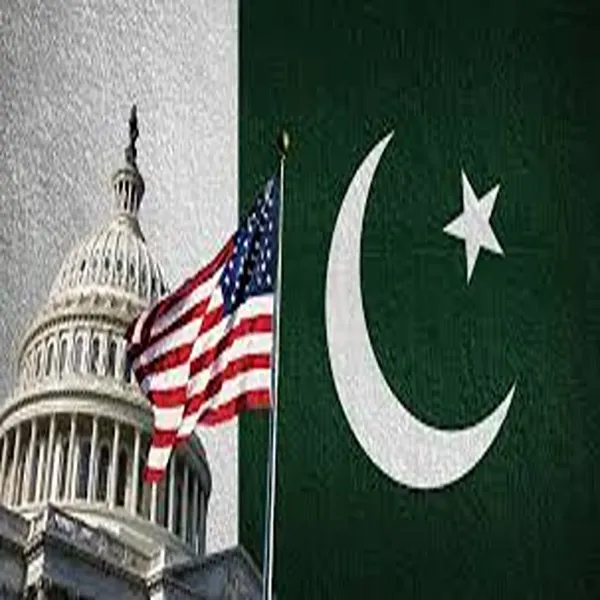
Pakistan – The United States has reaffirmed its engagement with Pakistan, describing the country as an important regional partner as Washington recalibrates its approach to South and Central Asia.
The remarks came during a congressional hearing where senior US officials outlined ongoing cooperation with Islamabad in areas ranging from critical minerals to counterterrorism, while lawmakers raised concerns about regional instability.
Focus on Economic and Mineral Cooperation
Appearing before a House subcommittee on US policy in South and Central Asia, Assistant Secretary of State for South and Central Asian Affairs Paul Kapur said the US is working to deepen economic ties with Pakistan.
He told lawmakers that Washington sees potential in Pakistan’s mineral reserves and is supporting initiatives to help develop the sector. According to Kapur, US government-backed financing is being paired with private sector expertise to unlock opportunities that could benefit both nations.
Trade and investment were also highlighted as areas of steady progress. Kapur noted that bilateral engagement in energy and agriculture is growing, reflecting a broader push to strengthen economic connectivity.
The renewed attention on Pakistan’s mineral resources aligns with wider US efforts to diversify global supply chains. In recent years, Washington has sought to reduce overreliance on single-country sources for key materials essential to emerging technologies and clean energy transitions.
Security Cooperation Remains Central
While economic collaboration featured prominently, security cooperation continues to form a cornerstone of US-Pakistan relations.
Kapur said ongoing counterterrorism coordination is aimed at helping Pakistan address internal security threats while also tackling transnational risks. He acknowledged the complex nature of combating extremist groups, noting that such networks often operate within civilian populations, making them difficult to identify and dismantle.
His comments referenced longstanding challenges in the region, including Pakistan’s historical interactions with militant organizations. The issue has shaped bilateral ties for decades and remains a sensitive element of the partnership.
US officials have consistently stressed that stability in South Asia is closely tied to global security, particularly given the region’s geopolitical significance and population scale.
Lawmakers Highlight Regional Tensions
During the hearing, members of Congress pointed to recent strains between Pakistan and India, warning of the consequences of escalation between two nuclear-armed neighbors.
Democratic Representative Sydney Kamlager-Dove referred to the most serious military confrontation between India and Pakistan in years, cautioning that tensions in a region home to nearly two billion people carry significant global implications. She described the situation as underscoring the continuing importance of US diplomatic engagement.
Kapur did not provide detailed commentary on the current state of relations between Islamabad and New Delhi but reiterated that US policy in South Asia is designed to maintain balance and prevent destabilizing dominance by any single actor.
He emphasized that a scenario in which a hostile power gains overwhelming influence in the region could create economic and strategic vulnerabilities extending far beyond South Asia.
Broader Strategic Calculations
The testimony suggested that Pakistan remains a consequential player in Washington’s regional calculations. Beyond security cooperation, the country is viewed as a potential hub for critical mineral development and as an influential actor in a strategically sensitive area.
US-Pakistan relations have experienced significant fluctuations over the past two decades. Cooperation intensified during counterterrorism operations following the September 11 attacks, while periods of tension emerged over policy differences related to Afghanistan and concerns about extremist networks.
Despite these shifts, the latest congressional hearing indicated a continued willingness on both sides to pursue practical engagement in areas of shared interest.
As geopolitical competition intensifies and supply chain security becomes a growing priority, Pakistan’s role in regional stability and resource development is likely to remain under close consideration in Washington’s evolving South Asia strategy.
-
'Elements of buffoonery': Hardeep Singh Puri hits back at Rahul Gandhi over Epstein files

-
Russian drone attack kills a father and 3 children in Ukraine while pregnant mother survives
-
Cloudflare stock (NET) surges on strong outlook - how AI agents are driving Cloudflare’s growth?

-
Indo-US trade deal handed over India’s data, hurt farmers: Rahul Gandhi

-
Are cover letters still relevant or are they Victorian-era essay? Employees debate whether HR actually reads them