
Listen to this article in summarized format
Loading...
××
Subscribe to

Unlock AI Briefing and Premium Content
Subscribe NowWhat's Included
- Exclusive Stories
- Daily ePaper Access
- Smart Market Tools
- Curated Investment Ideas
- Ad-lite Experience
Subscription

The Defence Acquisition Council (DAC) has approved the Rs 3.25 lakh crore deal for buying 114 Rafale fighter jets from French manufacturer Dassault. As per reports, the DAC meeting, chaired by Defence Minister Rajnath Singh, will also consider proposals to procure SCALP cruise missiles from France, P-8I maritime surveillance aircraft from the US and missiles for the Sudarshan S-400 long-range air defence system.
The council is also likely to clear an indigenous project for the procurement of around one lakh Vibhav point attack anti-tank mines developed by the Defence Research and Development Organisation. Multiple proposals related to the overhaul of the Indian Army’s armoured vehicle fleet are also expected to be discussed.
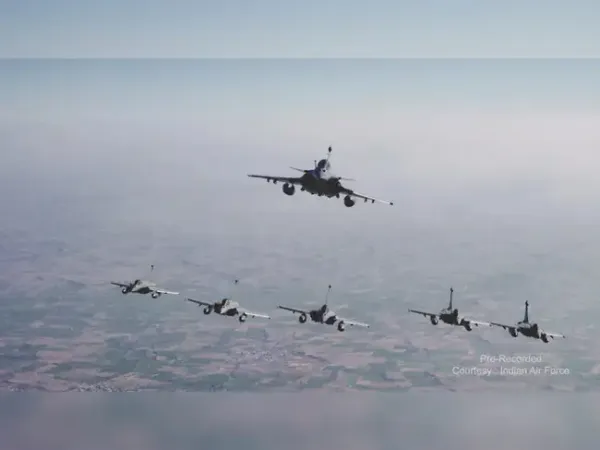
Following the performance of Rafale jets in Operation Sindoor and amid increasing regional threat perceptions, the Indian Air Force (IAF) plans to place procure more aircraft. The fleet strength of Rafale jets is projected to reach around 200 over the next 10 to 15 years.
During the operation, SCALP missiles were launched from Rafale fighter jets alongside BrahMos supersonic cruise missiles to terror target sites in Muridke and Bahawalpur districts. The missiles were subsequently used to strike Pakistan Air Force bases, with the IAF hitting 12 major air bases and destroying high-value assets, including fighter jets and surveillance aircraft on the ground, according to ANI.
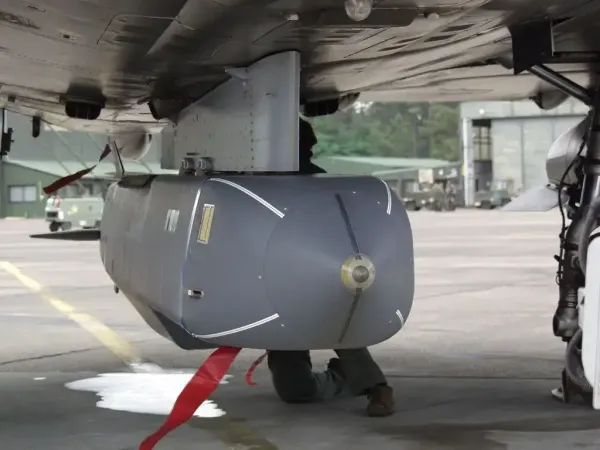
Designed for day-and-night operations in all weather conditions, the STORM SHADOW/SCALP navigation suite integrates inertial navigation (INS), GPS and terrain-referencing systems to provide accuracy.
After launch, it descends to a terrain-hugging altitude to reduce the risk of detection. As it nears the target, an onboard infrared seeker compares the live target image with a pre-stored reference image to deliver a precise strike while limiting collateral damage.
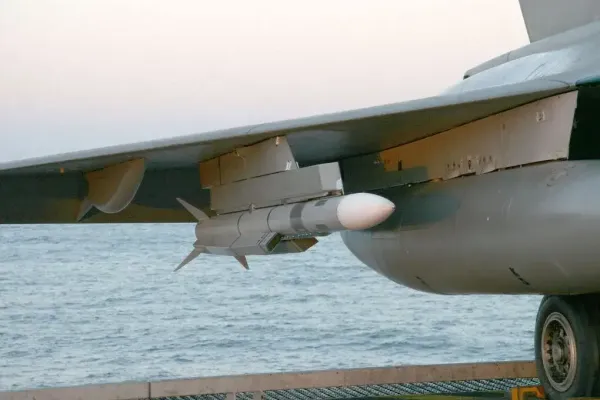
Equipped with a fragmentation warhead, METEOR is engineered to ensure maximum lethality against aerial targets. The missile measures 3.7 metres in length, weighs 190 kg and has a diameter of 178 mm. It is also integrated on fifth-generation fighter aircraft such as the F-35 Lightning II.
For the Indian Army, Acceptance of Necessity (AoN) has been granted for the procurement of Vibhav anti-tank mines, the overhaul of vehicle platforms for Armoured Recovery Vehicles (ARVs), T-72 tanks and Infantry Combat Vehicles (BMP-II), as well as the Air-Ship Based High Altitude Pseudo Satellite (AS-HAPS).
The Vibhav mines will be deployed as part of an anti-tank obstacle system aimed at slowing the advance of enemy mechanised forces. The overhaul of ARVs, T-72 tanks and BMP-II platforms is intended to extend the service life of these assets, ensuring improved readiness and operational effectiveness of the Indian Army.
The AS-HAPS is also included under the approval as part of capability enhancement measures. The AS-HAPS will be utilised towards carrying out persistent Intelligence, Surveillance and Reconnaissance, Electronic Intelligence, telecommunication and remote sensing for military purposes.
Acceptance of Necessity was accorded for the procurement of Electro-Optical/Infra-Red system for Dornier aircraft. The procurement will assist in enhancing the efficacy of maritime surveillance capability of the ICG.
The council is also likely to clear an indigenous project for the procurement of around one lakh Vibhav point attack anti-tank mines developed by the Defence Research and Development Organisation. Multiple proposals related to the overhaul of the Indian Army’s armoured vehicle fleet are also expected to be discussed.
Rafale deal will be 'mother of all defence deals'
India’s plan to procure 114 Rafale multirole fighter jets from France, described as the “mother of all defence deals”. The proposed deal would be at least five times larger than any previous military hardware contract signed by the country.Following the performance of Rafale jets in Operation Sindoor and amid increasing regional threat perceptions, the Indian Air Force (IAF) plans to place procure more aircraft. The fleet strength of Rafale jets is projected to reach around 200 over the next 10 to 15 years.
IAF Plans to buy Scalp and Meteor along with Rafale
The IAF is also planning to procure a significant number of SCALP cruise missiles for its existing Rafale fleet. India and France are in discussions on a major deal for the missiles, which were used during Operation Sindoor to strike the terrorist headquarters of Jaish-e-Mohamed and Lashkar-e-Taiba inside Pakistan. Defence officials told ANI that a decision on the procurement is expected soon.During the operation, SCALP missiles were launched from Rafale fighter jets alongside BrahMos supersonic cruise missiles to terror target sites in Muridke and Bahawalpur districts. The missiles were subsequently used to strike Pakistan Air Force bases, with the IAF hitting 12 major air bases and destroying high-value assets, including fighter jets and surveillance aircraft on the ground, according to ANI.
A fighter jet armed with SCALP missile.
What are the features of SCALP missile?
SCALP missile is an air-launched long range, conventionally armed, deep strike weapon made for pre-planned attacks against high value fixed or stationary targets such as hardened bunkers and key infrastructure. It is also called Storm Shadow and was Jointly developed by France and the UK. The missile weighs 1,300 kg and is 5.10 m long. It is in service with several air forces around the world including Royal Air Force, the French Air Force, the Italian Air Force and Indian Air Force.Designed for day-and-night operations in all weather conditions, the STORM SHADOW/SCALP navigation suite integrates inertial navigation (INS), GPS and terrain-referencing systems to provide accuracy.
After launch, it descends to a terrain-hugging altitude to reduce the risk of detection. As it nears the target, an onboard infrared seeker compares the live target image with a pre-stored reference image to deliver a precise strike while limiting collateral damage.
A fighter jet armed with a METEOR missile.
IAF also eyeing Meteor Missiles
The IAF is also in the process of ordering a large number of Meteor air-to-air missiles for its Rafale fleet. ANI had reported in October last year that a sum of Rs 1,500 crore maybe approved for its missiles. These missiles will also be integrated into the 26 Rafale Marine fighters ordered for the Indian Navy, which are expected to be delivered over the next three to four years.What is METEOR missile?
METEOR is a next-generation Beyond Visual Range Air-to-Air Missile (BVRAAM) system designed to deliver superior air combat capability. Powered by a ramjet motor, the missile maintains thrust all the way to target intercept, giving it the largest No Escape Zone among air-to-air missile systems—several times greater than current medium-range air-to-air missiles (MRAAMs).Equipped with a fragmentation warhead, METEOR is engineered to ensure maximum lethality against aerial targets. The missile measures 3.7 metres in length, weighs 190 kg and has a diameter of 178 mm. It is also integrated on fifth-generation fighter aircraft such as the F-35 Lightning II.
Other key proposals under discussion
The DAC meeting has also cleared the deal additional P-8I maritime surveillance and anti-submarine warfare aircraft. The Indian Navy already operates 12 of these aircraft to patrol its area of responsibility.For the Indian Army, Acceptance of Necessity (AoN) has been granted for the procurement of Vibhav anti-tank mines, the overhaul of vehicle platforms for Armoured Recovery Vehicles (ARVs), T-72 tanks and Infantry Combat Vehicles (BMP-II), as well as the Air-Ship Based High Altitude Pseudo Satellite (AS-HAPS).
The Vibhav mines will be deployed as part of an anti-tank obstacle system aimed at slowing the advance of enemy mechanised forces. The overhaul of ARVs, T-72 tanks and BMP-II platforms is intended to extend the service life of these assets, ensuring improved readiness and operational effectiveness of the Indian Army.
The AS-HAPS is also included under the approval as part of capability enhancement measures. The AS-HAPS will be utilised towards carrying out persistent Intelligence, Surveillance and Reconnaissance, Electronic Intelligence, telecommunication and remote sensing for military purposes.
Acceptance of Necessity was accorded for the procurement of Electro-Optical/Infra-Red system for Dornier aircraft. The procurement will assist in enhancing the efficacy of maritime surveillance capability of the ICG.