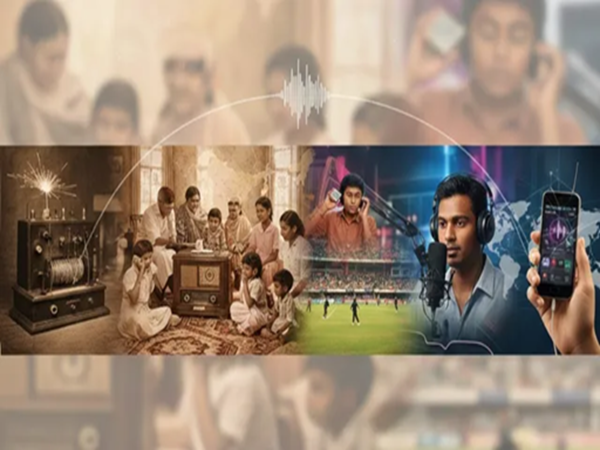
Today, February 13th, is celebrated as World Radio Day. Radio was once one of the most important means of information. It later became a means of entertainment. Now, from its small box-like form, the radio has evolved to online streaming. We're going to share this journey here.
1895: The First Signals Travel Through the Air
In 1895, Guglielmo Marconi successfully transmitted wireless signals in Italy. This marked the practical beginning of radio communication. By the early 1900s, radio signals were traveling across the ocean, changing global communication forever.
1920: Public Broadcasting Begins Worldwide
In 1920, regular public radio broadcasting began in the United States. News, music, and live announcements began reaching homes. Radio rapidly became a mass medium throughout Europe and the United States, especially during the 1930s and World War II.
1927: Radio Broadcasting Begins in India
In 1927, organized radio broadcasting began in India. By 1936, it was officially named All India Radio. This name was officially adopted by 1956. Radio became an important medium during India's independence movement and later became a bridge connecting rural and urban populations in independent India.
1950s: The Era of Box Radios
In the 1950s, large wooden box radios became common in homes across India and the world. Families gathered around them to listen to news bulletins, music, and dramas. In India, radio played a crucial role in nation-building by broadcasting in many regional languages.
1960s–1970s: The Transistor Revolution
The invention of the transistor changed everything. Portable radios became affordable and popular worldwide. In India, services like Vividh Bharati gained immense popularity for their film songs and entertainment. Cricket commentary became a cultural phenomenon through pocket radios.
1990s: FM Boom
In the 1990s, FM radio spread worldwide with its clear sound quality. India opened private FM channels, bringing energetic radio jockeys and city-focused programs. Radio adapted to modern urban lifestyles.
2000s: Radio Moved to Smartphones
With the advent of mobile phones in the 2000s, FM receivers were integrated into handsets. Listeners in India and around the world could listen anytime, anywhere. Radio became personal and portable in a new way.
2010s to Present: Online Streaming and Podcasts
Since the 2010s, internet streaming has transformed audio again. Older radio stations began broadcasting online, and podcasts have emerged as a global trend. In India, digital platforms have allowed regional voices to reach international audiences.
Today – February 13th, World Radio Day
Celebrated every year on February 13th, World Radio Day honors a medium that has transformed from bulky box sets to invisible digital streams. In India and around the world, radio informs, entertains, and connects billions of people. This proves that even as technology changes, the power of voice endures.
Disclaimer: This content has been sourced and edited from Dainik Jagran. While we have made modifications for clarity and presentation, the original content belongs to its respective authors and website. We do not claim ownership of the content.
-
T20 World Cup: Zimbabwe beat Australia by 23 runs in Colombo, repeat 2007 upset for Aussies

-
T20 WC: Muzarabani, Bennett star as Zimbabwe upset Australia by 23 runs

-
Lando Norris hits back at Max Verstappen with brutal eight-word retort after wild F1 rant

-
Lando Norris hits back at Max Verstappen with brutal eight-word retort after wild F1 rant
-
T20 World Cup shock: Australia on brink after 23-run loss to Zimbabwe; qualification race heats up