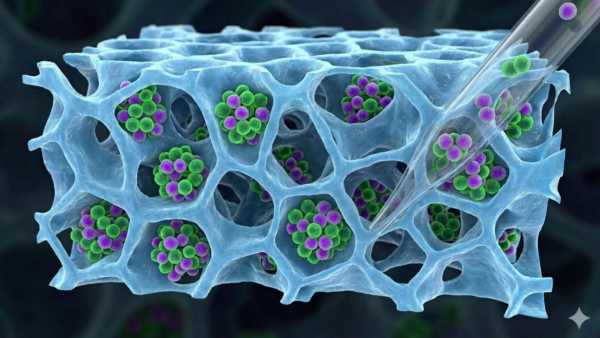
New Delhi: Researchers from IIT Bombay have developed a simpler and more efficient method to recover laboratory-grown T-cells for use in T-cell-based cancer immunotherapies such as CAR T-cell therapy. In these treatments, T-cells are taken from the blood of a patient, genetically modified to better recognise and attack cancer cells, expanded in large numbers outside the body, and then reinfused to fight tumours. The process demands a plentiful supply of healthy, functional T-cells that can be harvested without losing viability or activity, making gentle and effective cell recovery essential for therapeutic success.
Traditional culture methods rely on flat, two-dimensional plastic dishes which fail to replicate the complex, three-dimensional tissue environment that T-cells encounter in the body. To address this limitation, researchers use electrospun scaffolds composed of fine polycaprolactone fibres that form thin, porous mats resembling dense nets. These three-dimensional structures allow T-cells to migrate freely, resulting in faster proliferation and heightened activation compared to flat surfaces. However, cells often become deeply lodged between the fibres, particularly at junctions, and resist removal even with forceful flushing using growth medium, which reduces overall yield and complicates preparation for clinical use.
Three harvesting techniques were evaluated
The researchers compared three recovery techniques on T-cells cultured within these scaffolds, manual flushing with a medium, detachment using an enzyme and dissociation with a gentler enzyme blend. All recovered a similar total number of T-cells. The gentler enzyme blend delivered the highest proportion of viable cells. When monitored over a subsequent week of culture, the cells recovered with the enzyme exhibited elevated death rates and impaired clustering behaviour, which is critical for proliferation, while the cells recovered using the gentler enzyme blend showed better survival, normal cluster formation and sustained growth resembling healthy T-cells. This method preserves the essential immune functions more effectively, supporting a wider adoption of the three-dimensional scaffodls to improve cell quality and quantity in cancer therapies. Research has also indicated that scaffold-grown T-cells demonstrate enhanced cancer-fighting capabilities. A paper describing the research has been published in Biomaterials Science.
-
Dhoni’s record broken in T20 World Cup, Quinton de Kock created history 3 matches ago

-
Highest Paid Actors: 3 most expensive actors of the country, 75 year old Rajinikanth is at which number? But, who is on top? | Rajinikanth Thalaivar 174 Fees Highest Paid Actors India Pathaan Shah Rukh Khan Pushpa Allu Arjun

-
New drama of mother-in-law eloping with son-in-law, brother-in-law reveals – ‘She stayed at my house only for one day’ – News Himachali News Himachali

-
Solar Eclipse 2026: When will the first solar eclipse of the year occur? will there be sutak period or not

-
Budget Friendly Cafe: Cheap food, great ambiance…these are the 5 budget friendly cafes of Connaught Place.
