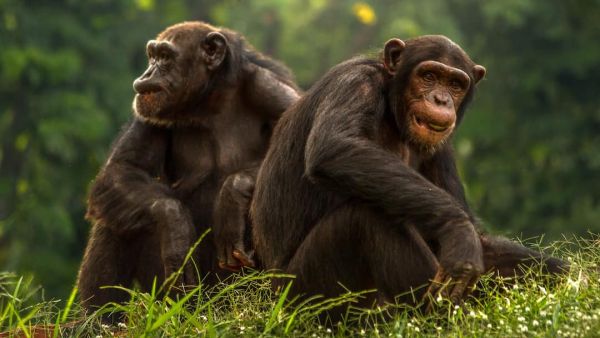
World Bonobo Day is observed every year on February 14 to shine a light on one of the most fascinating yet endangered great apes on Earth, the bonobo. Often lovingly referred to as the 'make love, not war' apes for their peaceful and cooperative social behaviour, bonobos continue to intrigue scientists and wildlife lovers alike.
Despite sharing nearly 99% of their DNA with humans, these remarkable primates remain lesser known than chimpanzees. World Bonobo Day 2025 serves as an important reminder of why awareness, conservation, and education about bonobos matter now more than ever.
Here are some interesting facts about bonobos that you should know:
Bonobos Share A Common Ancestor With Chimpanzees
Bonobos and chimpanzees both belong to the Pan genus and evolved from the same common ancestor over a million years ago. Although they share deep evolutionary roots, they developed distinct physical traits and social systems after separating. While chimpanzees are often associated with territorial aggression, bonobos are known for their calmer, more socially tolerant nature.
Bonobos Live In Only One Place On Earth
Wild bonobos are found exclusively in the rainforests south of the Congo River in the Democratic Republic of Congo. This limited geographic range makes them particularly vulnerable to environmental and human pressures. They are classified as Endangered by the International Union for Conservation of Nature (IUCN). Over the past two decades, their population has declined significantly, raising urgent concerns about their survival.
The Congo River Separates Bonobos And Chimpanzees
The Congo River acts as a natural boundary between bonobos and chimpanzees. Bonobos live south of the river, while chimpanzees are found to the north. Scientists believe their shared ancestor originally lived north of the river. When water levels dropped temporarily over a million years ago, some groups crossed, leading to separate evolutionary paths that shaped their unique social and physical traits.
Bonobo Societies Are Female-Led
One of the most striking differences between bonobos and other great apes lies in their social structure. Bonobos live in matriarchal groups, where the dominant individual is usually a female. Female status depends largely on forming and maintaining strong social bonds with other females. This system contrasts with chimpanzees and gorillas, where males typically hold dominance.
Males Stay Close To Their Mothers
Bonobo males maintain close physical and social relationships with their mothers throughout their lives. Mothers often support their sons during conflicts, especially against other males. These maternal bonds play a crucial role in shaping a male’s position within the group. Males also build strong social connections with other females.
Females Migrate To New Groups
Between the ages of six and ten, female bonobos leave their birth groups and join new ones. Unlike many other species, bonobos are welcoming toward newcomers. Immigrant females quickly form bonds with both males and other females in their new group. This movement helps maintain genetic diversity within populations.
They Are Known For Their Peaceful Nature
Bonobos are more socially tolerant and cooperative compared to chimpanzees. They often resolve tension through social bonding rather than aggression. Living in forests rich with food resources may have reduced the need for intense competition. This abundance likely contributed to their relatively peaceful social dynamics.
Highly Intelligent and Adaptable
Bonobos demonstrate impressive problem-solving skills and teamwork. Their cooperative nature allows them to work effectively together to achieve goals. They also modify their vocalisations depending on who they are communicating with. This flexible communication system reflects their cognitive complexity.
Physical Touch Reduces Conflict
Bonobos use hugging, touching, and other affiliative behaviours to ease tension and maintain harmony. Instead of escalating conflicts, they rely on physical closeness to restore calm. These interactions help build friendships and encourage cooperation. Their approach to conflict resolution remains one of their most fascinating traits.
Omnivorous Diet And Unique Communication
More than half of a bonobo’s diet consists of fruit and seeds. They also eat leaves, stems, bark, flowers, honey, and occasionally meat. To coordinate within their groups, bonobos rely on gestures, facial expressions, and vocalisations. They can even walk upright for short distances, though they primarily move on all fours.
-
Now adding Ayurveda to cancer treatment, big announcement of ‘Integration 2.0’ at Tata Smarak Kendra

-
Sony WF-1000XM6: ANC, QN3e Chipset, And 24-Hour Battery Life, Check All Specs And Price Premium Earbuds

-
Sony WF-1000XM6: ANC, QN3e Chipset, And 24-Hour Battery Life, Check All Specs And Price Premium Earbuds
-
Apple’s growing love for India! The new store that will be opened soon in ‘Ya’ city, the curiosity of tech lovers has increased

-
Sesko strikes late to rescue a point for Manchester United against West Ham